The Beatles – “A Day In The Life” Chords & Guitar Lesson
Behold…
The final song on the Beatles’ landmark album Sgt. Pepper’s Lonely Hearts Club Band.
It’s quite the adventure of a song, and an incredible way to finish off the album.
Below, I’m going to share with you some insider tips on the guitar style behind it.
So grab your axe, and let’s dive into this “A Day In The Life” chords and guitar lesson!
Who Wrote A Day In The Life?
“A Day in the Life” was written by John Lennon and Paul McCartney, and credited to the typical Lennon/McCartney songwriting partnership of the Beatles. It’s almost a mashup of two completely different songs, with Lennon primarily writing the first part and McCartney writing the contrasting section.
Lennon’s part is very abstract and dreamy, while McCartney’s contrasting section is more grounded and realistic. To me, this very much reflects both their unique personalities and writing styles sandwiched into one song.
“A Day In The Life” was recorded at Abbey Road Studios in London between January and February 1967. The recording process was very cutting edge. Lennon wanted the orchestral sections to sound like the world was “falling apart,” so producer George Martin arranged for a 40-piece orchestra to perform a massive ascending glissando, starting at the lowest notes of their instruments and climbing to the highest. This was recorded twice and layered to sound even larger.
It ends with this final massive E chord played on multiple pianos at once. As the chord rang out, they rode the faders up on the mixing console to make the last as long as possible, capturing every possible nuance until the last vibration stopped.
It’s legendary!
Upon its release, “A Day in the Life” received much praise and has since been ranked at or near the top of countless “greatest songs of all time” lists. Rolling Stone famously ranked it number one on its list of the 500 Greatest Songs of All Time for many years.
The song was also controversial at the time; the BBC temporarily banned it due to the phrase “I’d love to turn you on…”
Now, you may be wondering…
What is the tuning for A Day In The Life?
The tuning for "A Day In The Life” is standard tuning. Standard tuning is spelled: E, A, D, G, B, and E.
Here are the strings:
- E (6th string, lowest pitch)
- A (5th string)
- D (4th string)
- G (3rd string)
- B (2nd string)
- E (1st string, highest pitch)
All right!
Now that you know the tuning for “A Day In The Life,” let’s next talk about…
A Day In The Life Chords
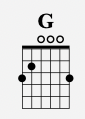
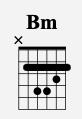
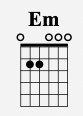
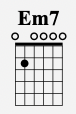
To play “A Day In The Life”, as recorded by The Beatles, you’ll need to know 13 main chords they are G, Bm, Em, Em7, C, C/B, Asus2, Am, F, E, D, E7, and A. These chords are a mix of open chords and bar chords. If bar chords are giving you all kinds of aches and pains, and you haven’t yet discovered how to play them effortlessly, go here: https://www.jonmaclennan.com/barchords
Let’s take a look at a few ways these shapes might show up on the fretboard.
G is played in a folk style using all 6 strings like this:
Bm is played as a bar chord in 2nd position like this:
Em is a beautiful open-sounding chord. It uses all 6 strings like this:
Em7 is just 1 finger like so:
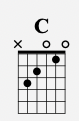
C is played in a typical (campfire) style like this:
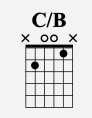
C/B is part of a descending bass line progression like so:
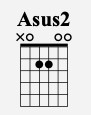
Asus2 has a beautiful, open sound to it. This one is played from the 5th string down like this:
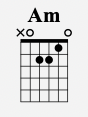
Am is also played from the 5th string down like so:
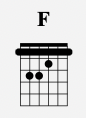
F is a bar chord played in 1st position and uses all 6 strings like this:
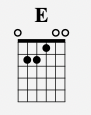
E comes in during the contrasting section and uses all 6 strings like so:
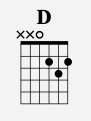
D is played from the 5th string down like this:
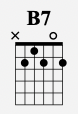
B7 is a bluesy style chord played like so:
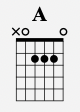
Finally, we have A. This one is played from the 5th string down like so:
If you’ve struggled to understand the fretboard for RHYTHM and LEAD guitar, and want to discover the easiest and fastest way. Then get your hands on my free Fretboard Guide PDF right here now:
Is A Day In The Life hard to play on guitar?
I would say playing “A Day In The Life” on guitar is going to require an intermediate skill level. The trickiest parts of the song are the bar chords and then the contrasting sections. The first part was written by John Lennon and it’s more guitar based. The second was written primarily by Paul McCartney, and it’s more piano based. So, take your time with this one.
What key is A Day In The Life in?
“A Day In The Life”, as recorded by The Beatles, is in the key of G major, for the first part, and then E major for the second. So the two primary scales being used would be the G major scale, which is built using the notes G, A, B, C, D, E, and F#, and the E major scale, which is built using the notes E, F#, G#, A, B, C#, and D#.
Let’s take a closer look at how all these chords relate in the key of G major and E major. Starting with…
G
Notes: G, B, D
Function: This is the I chord, the tonic of G major. It’s the home base where everything feels resolved and stable.
Bm
Notes: B, D, F#
Function: This is the iii chord in G major, built on the third degree of the scale. It often works as a passing or connecting chord. Bm shares two notes with G (B and D), so moving between these chords feels smooth and natural. This is heard, right at the top of the song.
Em
Notes: E, G, B
Function: This is the vi chord, the relative minor of G major. It has a reflective, emotional quality and is commonly used to soften a progression. Because it shares two notes with G (G and B), it feels closely related to the tonic and often works as an emotional detour that still feels grounded.
Em7
Notes: E, G, B, D
Function: This is a variation on the previous vi chord. It’s an extension that sounds slightly jazzy and more open.
C
Notes: C, E, G
Function: This is the IV chord in G major. C can create movement away from the tonic without creating strong tension. It has a warm, open sound and often acts as a setup chord, leading naturally toward D or resolving back to G.
C/B
Notes: B, C, E, G
Function: This is a C major chord with B in the bass. It’s used primarily for bass-line motion. C → C/B → Asus2
Asus2
Notes: A, B, E
Function: This chord is built on the second scale degree and functions as a suspended or unresolved version of an A chord.
Am
Notes: A, C, E
Function: This is the true ii chord in G major. Am has a gentle tension that pushes the progression forward without sounding harsh.
F
Notes: F, A, C
Function: This chord is non-diatonic in G major because the key contains F#, not F natural. F major is often borrowed from the parallel minor or used as a flat VII chord. It is sometimes called a sub-tonic and creates a bluesy or rock sound.
Now let’s look at the remaining chords as they relate to the key of E major. Starting with…
E
Notes: E, G#, B
Function: This is the I chord in E major. It’s home. Everything in the key ultimately wants to come back here.
D
Notes: D, F#, A
Function: This chord is non-diatonic in E major, since the key contains D#, not D natural. D major functions as a flat VII chord. It’s a sub-tonic (this time in the key of E major) and creates a bluesy or rock sound.
B7
Notes: B, D#, F#, A
Function: This is the V7 chord in E major, the dominant seventh. B7 has the strongest tension in the key and wants to resolve back to E.
A
Notes: A, C#, E
Function: This is the IV chord in E major.
All right!
That’s my theory breakdown.
Next, let’s look at…
What is the strumming pattern for A Day In The Life?
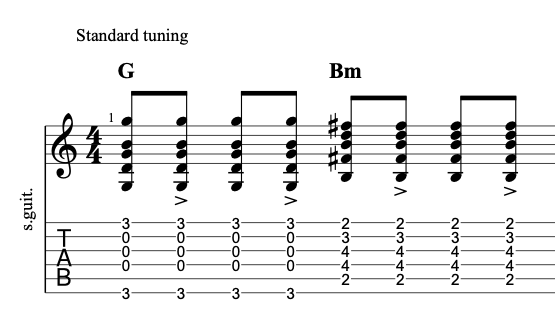
The main underlying feel for “A Day In The Life” is an acoustic folk-rock feel. Lennon does something interesting at the top for the strumming pattern. He plays 8th notes, which in 4/4 time, 8 notes divide each beat into 2 equal parts like this:
1 + 2 + 3 + 4 +
When counted out loud, it sounds like:
"One, and, two, and, three, and, four, and”
But Lennon accents the upbeats.
Here’s an example of a strumming pattern in the style of “A Day In The Life”:
Conclusion
To wrap it up, “A Day In The Life” is one epic way to finish off the album. From the Lennon opening to McCartney’s contrasting section. Back to Lennon, and then the final orchestral crescendo made it legendary.
Keep practicing, and if you want to learn songs way faster, better understand the fretboard for lead and rhythm, and not waste years spinning your wheels with guitar, grab my free fretboard guide here right now:
Jon MacLennan
Like this blog post? Get Jon’s best guitar lessons straight to your inbox.
Discover the 5 easiest and fastest ways to play the blues scale anywhere on the neck with this FREE PDF GUIDE
