The ULTIMATE Across the Universe Chords & Guitar Lesson
Here’s a song that transports you to another world!
John Lennon himself described it as “cosmic” songwriting.
Below, I’m going to share some insider tips on the guitar style behind it
So grab your axe, and let’s dive into this “Across the Universe” chords and guitar lesson!
Who Wrote Across the Universe?
“Across the Universe” was originally written by John Lennon. However, it is credited to the Lennon/McCartney songwriting partnership. During this time Lennon had been exploring Eastern spirituality, and the song’s most prominent lyric, “Jai Guru Deva Om” is a Sanskrit phrase which means "Victory to the divine teacher" or "Hail the divine guru".
This phrase was used by Maharishi Mahesh Yogi, Lennon’s spiritual teacher. The lyric is sung over and over, giving it a mantra-like effect set to music. Lennon later described “Across the Universe” as a piece of “cosmic” songwriting. It was one of his favorite songs.
The first studio recording was made in February 1968 at Abbey Road Studios. The Beatles tried different approaches, including bird sound effects, layered harmonies, and slowed-down tape speeds. The earliest official release wasn’t on a Beatles album, but on a charity compilation called No One’s Gonna Change Our World in December 1969. It later appeared on Let It Be (1970) in Spector’s version, with lush orchestration and choir overdubs. A stripped-down version was also released on Let It Be… Naked in 2003, closer to Lennon’s original vision.
Even though “Across the Universe” didn’t chart as a single, its influence is huge. It’s been covered by a ton of famous artists like David Bowie, Rufus Wainwright, and even Fiona Apple has an unbelievable version:
Rolling Stone ranked it among the greatest Beatles songs, praising its dreamlike imagery. In 2008, NASA literally beamed the song into space – sending it via radio waves toward the North Star, Polaris, as a symbolic gesture of peace on the 40th anniversary of its recording.
Now, you may be wondering…
What is the tuning for Across the Universe?
The tuning for "Across the Universe” is standard tuning. Standard tuning is spelled: E, A, D, G, B, and E.
Here are the strings:
- E (6th string, lowest pitch)
- A (5th string)
- D (4th string)
- G (3rd string)
- B (2nd string)
- E (1st string, highest pitch)
All right!
Now that you know the tuning for “Across the Universe”, let’s next talk about…
Across the Universe Chords
To play “Across the Universe”, you only need to know 7 main chords they are D, Bm, F#m, Em, A7, Gm, and G. Some of these chords are played in open position, while others use bar shapes. If bar chords are giving you all kinds of aches and pains, and you haven’t yet discovered how to play them effortlessly, go here: https://www.jonmaclennan.com/7mistakes
Let’s take a look at a few ways these shapes can be played on the fretboard:
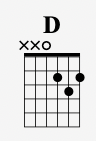
D is played in a typical (campfire) position from the 4th string down like this:
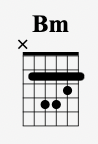
Bm is played in 2nd position from the 5th string down as a bar chord, like so:
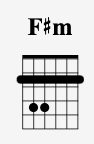
F#m stays in 2nd position as well, but this one uses all 6 strings like this:
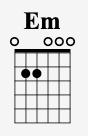
Em is a beautiful open-sounding chord using all 6 strings like so:
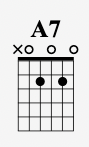
A7 is a great bluesy-sounding chord played from the 5th string down like this:
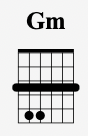
Gm is the same shape as F#m, just shifted up one fret, like so:
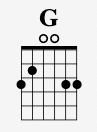
Finally, G is played using all 6 strings like this:
If you’ve struggled to understand the fretboard for RHYTHM and LEAD guitar, and want to discover the easiest and fastest way. Then get your hands on my free Fretboard Guide PDF right here now:
Is Across the Universe hard to play on guitar?
I would say playing “Across the Universe” on guitar is going to require an intermediate skill level. The trickiest parts are the intro riff, bar chords, and the time signature changes that come in throughout. Lennon would often change time signatures. He would add a beat here, or minus a beat there, and if a player isn’t paying attention can easily lose the beat. So, take your time with this one.
What key is Across the Universe in?
“Across the Universe”, as recorded by The Beatles, is in the key of D major. The primary scale for the song is the D major scale, which is built using the notes D, E, F#, G, A, B, and C#.
Let’s break down the chords and how they function in the key of D major:
D
Notes: D, F#, A
Function: This is the I chord, the tonic. It is the "home" chord in the key of D major. It provides a sense of rest and stability and is the central point of the song.
Bm
Notes: B, D, F#
Function: This is the vi chord, the submediant. It’s built on the sixth degree of the D major scale and is the relative minor of D major. This chord often creates a slightly melancholic feeling. You hear this right away at the beginning of the Verse.
F#m
Notes: F#, A, C#
Function: This is the iii chord, the mediant. It is built on the third degree of the D major scale. It can act as a substitute for the tonic chord, as it shares notes with D major, but provides a slightly different, more open sound.
Em
Notes: E, G, B
Function: This is the ii chord, the supertonic. It is built on the second degree of the D major scale. It functions as a predominant chord, meaning it's often used to lead to the dominant chord (A7) to create a strong sense of forward motion toward the tonic (D).
A7
Notes: A, C#, E, G
Function: This is the V7 chord, the dominant 7th. It is built on the fifth degree of the D major scale. It creates a very strong sense of tension and a powerful pull toward the tonic (D) due to the addition of the G note (the minor seventh).
Gm
Notes: G, B♭, D
Function: This is a iv chord, the minor subdominant. It is a non-diatonic or "borrowed" chord in the key of D major. It is typically borrowed from the parallel key of D minor. The Beatles used this chord move in countless hits. It’s unexpected but often a beautiful harmonic change.
G
Notes: G, B, D
Function: This is the IV chord, the subdominant. It is built on the fourth degree of the D major scale. This chord gives a nice move away from the tonic and provides a sense of forward motion without the strong tension of the dominant (V) chord.
All right!
So that’s the theory. Next, let’s look at…
What is the strumming pattern for Across the Universe?
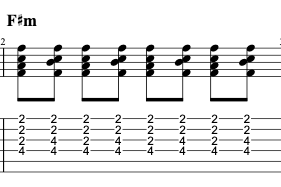
The main underlying feel for “Across the Universe” is a slow folk ballad based on 8th notes. In 4/4 time, 8th notes divide each beat into two equal parts, creating a steady, walking rhythm. The counting for 8th notes in a measure looks like this:
1 & 2 & 3 & 4 &
The numbers (1, 2, 3, 4) represent the main beats in the measure. The "&" divides each beat into two evenly spaced subdivisions.
When counted out loud, it sounds like:
"One-and, Two-and, Three-and, Four-and."
Here’s an example of a simple 8th note strumming pattern on an F#m in the style of “Across the Universe”:
Conclusion
Bottom line, Lennon hit it out of the park on this one!
There’s just something about the energy and flow of the song that is pure magic, and a ton of fun to play.
Keep practicing, and if you want to learn songs way faster, better understand the fretboard for lead and rhythm, and not waste years spinning your wheels with guitar, grab my free fretboard guide here right now:
Jon MacLennan
Like this blog post? Get Jon’s best guitar lessons straight to your inbox.
Discover the 5 easiest and fastest ways to play the blues scale anywhere on the neck with this FREE PDF GUIDE
