The ULTIMATE Act Naturally Chords & Guitar Lesson
Here’s a tune that was first recorded by Buck Owens and the Buckaroos in 1963.
In 1965, the Beatles recorded their version with Ringo Starr singing lead.
Below, I’m going to share some insider tips on the guitar style behind both of these versions.
So grab your axe, and let’s dive into this “Act Naturally” chords and guitar lesson!
Who Wrote Act Naturally?
“Act Naturally” was originally written by Johnny Russell and Voni Morrison, two songwriters in the country and Bakersfield, California music scene. The first recorded version of “Act Naturally” was done by Buck Owens and the Buckaroos in 1963. This cut became Owens’ first number one hit on the Billboard Country Singles chart.
The song has a light-hearted feel, which Ringo Starr later recorded super well with the Beatles. The Beatles’ version appeared on the UK version of Help! in 1965 and catapulted the song’s popularity. It was recorded at EMI Studios in London on June 17, 1965, and went on to become one of Ringo’s signature Beatles performances.
In 1989, Ringo Starr and Buck Owens recorded a duet version that reached number 27 on the Billboard Country chart and earned them a nomination for a Grammy Award for Best Country Vocal Collaboration.
And that’s one of the coolest things that came out of this: the friendship between Buck Owens and Ringo Starr. Despite coming from completely different worlds — Owens from Bakersfield honky-tonks and Ringo from Liverpool’s rock scene — they connected over a shared love for great songs.
Now, you may be wondering…
What is the tuning for Act Naturally?
The tuning for "Act Naturally” as recorded by The Beatles is Drop D tuning. Drop D tuning is spelled: D, A, D, G, B, and E.
Here are the strings:
- D (6th string, lowest pitch)
- A (5th string)
- D (4th string)
- G (3rd string)
- B (2nd string)
- E (1st string, highest pitch)
However, the Buck Owens version is standard tuning. Standard tuning is spelled: E, A, D, G, B, and E.
Here are the strings:
- E (6th string, lowest pitch)
- A (5th string)
- D (4th string)
- G (3rd string)
- B (2nd string)
- E (1st string, highest pitch)
All right!
Now that you know the tuning for “Act Naturally,” let’s next talk about…
Act Naturally Chords
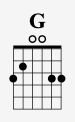
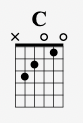
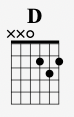
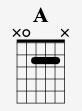
To play “Act Naturally”, you only need to know 4 main chord shapes they are G, C, D, and A. All of these chords are played in open position. This means there are no bar chords. However, there are two notes I will make below on whether you are playing it using a Drop D tuning or not.
Let’s take a look at a few ways these shapes can be played on the fretboard:
G can be played using all 6 strings like this:
C is played from the 5th string down like so:
D is played from the 4th string down like this:
Finally, A is played using just 1 finger like so:
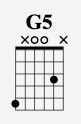
Now, if you are using a Drop D tuning, there are two changes that need to be made. The first is the G is played like this:
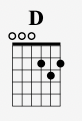
And the second is that the D can involve the 6th string open now, because it’s tuned to D like this:
If you’ve struggled to understand the fretboard for RHYTHM and LEAD guitar, and want to discover the easiest and fastest way. Then get your hands on my free Fretboard Guide PDF right here now:
Is Act Naturally hard to play on guitar?
I would say playing “Act Naturally” on guitar is going to require an intermediate skill level. The Buck Owens version is easier than the Beatles' version. The trickiest parts are the Drop D tuning chords and the riffs from the Beatles' version. You can always simplify those parts and just strum chords as well to make it easier.
What key is Act Naturally in?
“Act Naturally”, the Buck Owens and The Beatles’ version are both in the key of G major. The primary scale for the song is the G major scale, which is built using the notes G, A, B, C, D, E, and F#.
Let’s break down the main chords and how they function in the key of G major.
G
Notes: G, B, D
Function: This is the I chord, the tonic. It is the "home" chord in the key of G major.
C
Notes: C, E, G
Function: This is the IV chord, the subdominant. It is built on the fourth degree of the G major scale. It provides a stable, yet slight variation away from the I chord.
D
Notes: D, F♯, A
Function: This is the V chord, the dominant. It is built on the fifth degree of the G major scale. This one gives a strong sense of tension and a powerful, almost mandatory pull, wanting to resolve back to the tonic (I) chord.
A
Notes: A, C♯, E
Function: This is the V/V chord, a Secondary Dominant. This is a non-diatonic chord because it contains a C♯, which is outside the G major scale. Its function is to temporarily pull the harmony toward the D chord (V). You hear this leaving the Chorus section of “Act Naturall”. It builds the tension before the release back to the I chord.
All right!
So that’s the theory. Next, let’s look at…
What is the strumming pattern for Act Naturally?
The main underlying feel for “Act Naturally” is a light 8th note country swing feel. In 4/4 time with a swing feel, 8th notes are played unevenly. This means the first 8th note of the beat is longer (closer to a dotted quarter note) and the second 8th note is shorter (closer to an eighth note). This creates a characteristic shuffle, jazz, or blues rhythm.
The counting for swung 8th notes in a measure still uses the standard notation, but the performance is based on a triplet subdivision:
1 & 2 & 3 & 4 &
The actual duration of the notes divides the beat into a triplet figure, with the first 8th note taking up two-thirds of the beat and the second 8th note taking up the final one-third.
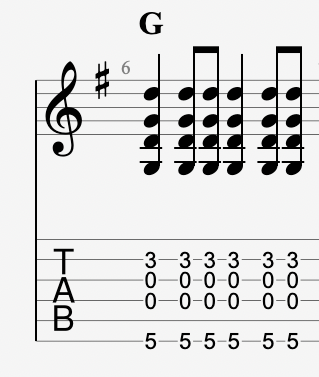
However, I wouldn’t strum all the 8th notes. Instead, I would combine a quarter note with two 8th notes like this:
Conclusion
To wrap it up: “Act Naturally” has quite an interesting backstory. It’s a great storytelling song that many generations of people still enjoy to this day.
So keep practicing, and if you want to learn songs way faster, better understand the fretboard for lead and rhythm, and not waste years spinning your wheels with guitar, grab my free fretboard guide here right now:
Jon MacLennan
Like this blog post? Get Jon’s best guitar lessons straight to your inbox.
Discover the 5 easiest and fastest ways to play the blues scale anywhere on the neck with this FREE PDF GUIDE
