The ULTIMATE – “Already Gone” Chords & Guitar Lesson
Here’s a song that marks a distinct transition in the Eagles’ sound.
They were moving from a lighter country-rock sound into a more aggressive rock sound.
The guitar parts are fantastic.
Below, I’m going to share some insider tips on the style behind it.
So grab your axe, and let’s dive into this “Already Gone” chords and guitar lesson!
Who wrote Already Gone?
“Already Gone” was recorded by the Eagles, but originally written by Jack Tempchin and Robb Strandlund. They didn’t make any big structural changes to the song the way they did with some other material — instead, they electrified it. The Eagles started moving away from the softer/sweeter vocal harmonies to more of a straight-up rock feel, which paved the way for later hits like “Hotel California”.
“Already Gone” was recorded for the Eagles’ third studio album, On the Border. The recording sessions were done in 1974 at Record Plant with Bill Szymczyk at the helm, producing.
Upon its release as a single from the album, “Already Gone” reached number 32 on the Billboard Hot 100 in late 1974, and it quickly became one of the Eagles’ most recognizable arena‑ready tracks. While it wasn’t as huge a hit as “Best of My Love” or “Take It Easy,” it's become a staple of classic rock radio and the Eagles concerts.
Another interesting detail is that Tempchin, who had also written their hit “Peaceful Easy Feeling,” continued to be an important songwriting influence on the band, even though he wasn’t a member.
Now, you may be wondering…
What is the tuning for Already Gone?
The tuning for "Already Gone” as recorded by the Eagles is standard tuning. Standard tuning is spelled: E, A, D, G, B, and E.
Here are the strings:
- E (6th string, lowest pitch)
- A (5th string)
- D (4th string)
- G (3rd string)
- B (2nd string)
- E (1st string, highest pitch)
All right!
Now that you know the tuning for “Already Gone,” let’s next talk about…
Already Gone Chords
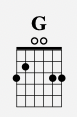
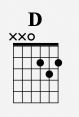
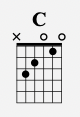
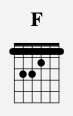
To play “Already Gone”, as recorded by the Eagles, you only need to know 4 main chords they are G, D, C, and F. These chords are a combination of bar and non-bar chord shapes.
If bar chords are giving you all kinds of aches and pains, and you haven’t yet discovered how to play them effortlessly, go here: https://www.jonmaclennan.com/barchords
Let’s take a look at a few ways these shapes might show up on the fretboard.
I play G using all 6 strings in the 3rd position like this:
D is played in a simple (campfire) style like this:
C is played commonly from the 5th string down like so:
Finally, we have F the one bar chord. I play it in 1st position using all 6 strings like this:
If you’ve struggled to understand the fretboard for RHYTHM and LEAD guitar, and want to discover the easiest and fastest way. Then get your hands on my free Fretboard Guide PDF right here now:
Is Already Gone hard to play on guitar?
I would say playing “Already Gone” on guitar, as recorded by the Eagles, is going to require a late beginner to intermediate skill level. The trickiest parts are the modulation, the one-bar chord, and any riffs you throw in; keep leveling up the sound. Locking it all in and getting it to sound like the recording is no easy feat. So, take your time with this one.
What key is Already Gone in?
“Already Gone”, as recorded by the Eagles, starts out in the key of G major. The primary scale for the song would be the G major scale, which is built using the notes G, A, B, C, D, E, and F#.
However, at about 3 minutes and 20 seconds into the song, it changes keys from the key of G major to the key of C major.
So, it modulates up a perfect fourth.
Let’s start by looking at the chords and progression in the key of G major.
G major
Notes: G, B, D
Function: G is the I chord in the key of G major. It’s the “home” chord of which all other chords revolve around.
D major
Notes: D, F#, A
Function: D is the V chord or the dominant in the key of G major. The primary role of this chord is to build tension and release back to the tonic G. The F# acts as the leading tone, pulling strongly toward G, which gives progressions forward motion and a sense of anticipation before resolving.
C major
Notes: C, E, G
Function: C is the IV chord ot the subdominant in the key of G major. C gives you a slight life away from the tonic, and sets up either returning to G or moving toward the dominant D.
So, G, D, and C cover the first part of the song.
These 3 chords are the I, V, and IV, in the key of G major.
Then, as I mentioned above, it modulates to the key of C. It does the same progression (I, V, IV) but now, in the key of C. The I, V, and IV in the key of C are: C, G, and F.
This is where the F comes in. But in relation to the key of G is non-diatonic.
F
Notes: F, A, C
Function: F is a sub-tonic. It’s a major chord a whole step below the original key. Or, alternatively, you can simply think of it as a IV chord in the new key, C major.
All right!
That’s my theory breakdown.
Next, let’s look at…
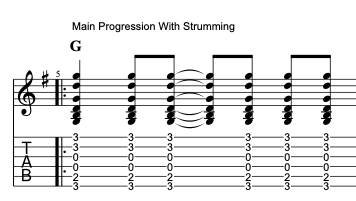
What is the strumming pattern for Already Gone?
The main underlying groove for “Already Gone” is a driving 8th note rock feel. In 4/4 time, 8th notes divide each beat into two equal parts, creating a steady rhythm like this:
1 & 2 & 3 & 4 &
The numbers (1, 2, 3, 4) represent the main beats in the measure, while the "&" represents the offbeats that add energy and momentum.
When counted out loud, it sounds like:
"One-and, Two-and, Three-and, Four-and."
You could strum all 8th notes. However, I would break it up a little bit. Here’s an example of a simple strumming pattern I would use in the style of “Already Gone”:
Conclusion
To wrap it up, “Already Gone” is an iconic tune from the Eagles repertoire. Although, they didn’t write it, the song marks a transition point for their sound and style. Plus, it has a tone of great insights for guitar players.
So, keep practicing, and if you want to learn songs way faster, better understand the fretboard for lead and rhythm, and not waste years spinning your wheels with guitar, grab my free fretboard guide here right now:
Jon MacLennan
Like this blog post? Get Jon’s best guitar lessons straight to your inbox.
Discover the 5 easiest and fastest ways to play the blues scale anywhere on the neck with this FREE PDF GUIDE
