The ULTIMATE Angel from Montgomery Chords & Guitar Lesson
After hearing this legendary John Prine song, a listener online commented:
===
How lucky I am to hear the sounds of the human heart.
So much that passes as life is absurd, inconsequential, tragic. But, from time to time, something sneaks in--something of abject beauty, of (at the same time) abject truth.
Make me an angel that flies from Montgomery... Just give me one thing that I can hold onto....
Perhaps in Heaven I will have the opportunity to buy Mr. Prine a drink.
===
Well said.
Below, I’m going to share some insider tips on the guitar style behind this classic John Prine tune.
So grab your axe, and let’s dive into this “Angel from Montgomery” chords and guitar lesson!
Who Wrote Angel from Montgomery?
“Angel from Montgomery” was written by the great American singer-songwriter John Prine in 1971. The song is sung from the perspective of a middle-aged woman. Despite John being a guy, many have felt he captured a unique angle. He often cited his fascination with storytelling and character study, which came through in his writing.
Prine wrote the song early in his career, and the original recording was from his self-titled debut album in 1971. It was recorded in Memphis, Tennessee with producer Arif Mardin at the helm. The arrangement is very simple. It’s driven primarily by Prine’s fingerpicking guitar and vocals. Plus, some additional accompaniment from a mandolin and what sounds like a lap steel guitar.
While it never became a major chart hit, over the years, “Angel from Montgomery” has received critical acclaim. It’s become one of Prine’s most famous songs. It’s also celebrated as a high point in American songwriting.
There are also many great covers of “Angel from Montgomery”. John Denver has an awesome version. But the most famous cover is Bonnie Raitt’s. She added her soulful/bluesy sound and came up with a killer arrangement. She did it in the key of E, and uses a capo on the second fret like this…
Angel from Montgomery Guitar Lesson (Bonnie Raitt Version)
Now, you may be wondering…
What is the tuning for Angel from Montgomery?
The tuning for this lesson for "Angel from Montgomery" is standard tuning. Standard tuning is spelled: E, A, D, G, B, and E.
Here are the strings:
- E (6th string, lowest pitch)
- A (5th string)
- D (4th string)
- G (3rd string)
- B (2nd string)
- E (1st string, highest pitch)
However, to play along with the most famous John Prine version, he uses a capo on the 2nd fret. This changes the tuning to
- F# (6th string, lowest pitch)
- B (5th string)
- E (4th string)
- A (3rd string)
- C# (2nd string)
- F# (1st string, highest pitch)
All right!
Now that you know the tuning for “Angel from Montgomery”, let’s next talk about…
Angel from Montgomery Chords
To play “Angel from Montgomery”, as recorded by John Prine, you only need to know 4 main chords they are E, A, B7, and D. All of these chords can be played in open position (i.e., no bar chords).
Let’s take a look at a few ways these shapes can be played on the fretboard.
E is a beautiful chord and is played using all 6 strings like this:
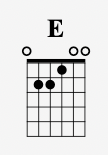
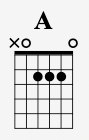
A is played in the standard (campfire) open position like so:
B7 is played from the 5th string down like this:
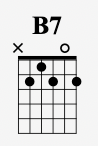
Note: however, Prine rarely plays the full chord. Most of the time, it’s just the 5th and 4th strings, which could be substituted as an easier version. (See video above for more clarification on this.)
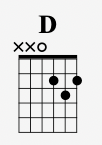
Finally, D is played from the 4th string down like so:
If you want to improve your fingerstyle guitar faster and not waste years spinning your wheels with guitar, grab my free fingerstyle cheat sheet PDF guide right here now:
Is Angel from Montgomery hard to play on guitar?
I would say playing “Love Will Keep Us Alive” on guitar is going to require a solid intermediate skill level. This could go for all versions. The song only uses a couple of chords. But the player must be able to navigate fingerpicking, time signature changes, and smooth chord changes. So, take your time with this one.
What key is Angel from Montgomery in?
“Angel from Montgomery,” as recorded by John Prine, is in the key of F# major. The primary scale used in the song is the F# major scale, which is built with the notes F#, G#, A#, B, C#, D#, and E#.
That is concert pitch. But for guitar purposes, it’s simply in the key of E major (using the capo on fret 2).
So, with that said, let’s keep it simple and take a look at how these chords relate in the key of E major.
E (E major)
Notes: E, G♯, B
Function: This is the I chord (tonic) in E major. It’s the tonal center and sounds like “home”.
A (A major)
Notes: A, C♯, E
Function: This is the IV chord (subdominant) in E major. It creates movement away from the tonic and often sets up a return to E (I) or moves toward the dominant (B7).
B7 (B dominant 7)
Notes: B, D♯, F♯, A
Function: This is the V7 chord (dominant 7) in E major. This one creates tension that naturally wants to resolve back to the tonic E, giving a strong sense of forward motion in the progression. You hear this at the end of sections in “Angel from Montgomery”.
D (D major)
Notes: D, F♯, A
Function: This chord is not diatonic to E major. It functions as a ♭VII chord (subtonic), borrowed from the Mixolydian mode. D adds a bluesy or rock flavor.
All right!
So that’s the theory. Next, let’s look at…
What is the fingerpicking pattern for Angel from Montgomery?
The main underlying feel for “Angel from Montgomery” is a percolating 16th note groove. In 4/4 time, 16th notes divide each beat into four equal parts, creating a flowing rhythm like this:
1 e & a 2 e & a 3 e & a 4 e & a
The numbers (1, 2, 3, 4) represent the main beats in the measure. The syllables “e,” “&,” and “a” divide each beat into evenly spaced subdivisions, giving the rhythm more detail and energy.
When counted out loud, it sounds like:
“One-e-and-a, Two-e-and-a, Three-e-and-a, Four-e-and-a.”
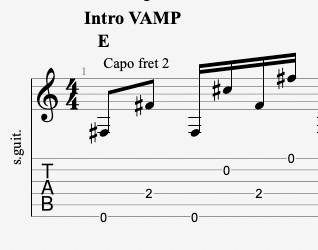
However, I don’t like to fingerpick all 16th notes. Here’s an example of a “Angel from Montgomery” style fingerpicking pattern demonstrating different rhythms:
Angel from Montgomery Guitar Lesson (John Prine Alternate Version)
Here's another version of how to play "Angel from Montgomery". This one Prine did in the key of G, and strummed the chords instead of fingerpicking.
Conclusion
There ya have it!
Those are some insider tips on one of the most iconic Americana/folk songs of all time.
Keep practicing, and if you want to improve your fingerstyle guitar faster and not waste years spinning your wheels with guitar, grab my free fingerstyle cheat sheet PDF guide right here now:
Jon MacLennan
Like this blog post? Get Jon’s best guitar lessons straight to your inbox.
Discover the 5 easiest and fastest ways to play the blues scale anywhere on the neck with this FREE PDF GUIDE
