The Rolling Stones – “Angie” Chords & Guitar Lesson
Here’s one of the most beautiful acoustic rock guitar intros I’ve ever heard…
It’s from the iconic Rolling Stones album Goats Head Soup, released in 1973.
Below, I want to share with you some insider tips on the guitar style behind it.
Now, a lot of people make this song a lot harder than it needs to be. I’m going to make it easier for you.
So grab your axe, and let’s dive into this “Angie” chords and guitar lesson!
Who wrote Angie?
“Angie” was primarily written by Keith Richards, but he brought it to Mick Jagger, and he put the finishing touches on it. It’s credited to the Jagger/Richards songwriting partnership.
“Angie” is one of The Rolling Stones’ most popular songs. It kicks off with a beautiful acoustic guitar opening and showcases a more tender side of Mick Jagger’s vocal chops.
The song is essential about the end of a relationship. The lyrics describe two people who have reached the end of their road together. Neither seems angry. Instead, the song captures the bittersweet feeling of accepting that love alone is sometimes not enough to keep two people together.
Many people have wondered who Angie is…
Over the years, rumors claimed it was about Angela Bowie, the wife of David Bowie, or about Richards’ daughter Angela. Richards himself gave different explanations at different times.
Later, in his memoir, Richards said the name simply came to him while he was in Switzerland recovering from heroin addiction. It wasn’t written about any particular person. He said the name just fit the song, so he kept it.
The recording began in late 1972 at Dynamic Sound Studios in Kingston, Jamaica, during sessions for the Stones' album Goats Head Soup.
Later, the strings were added at Island Studios in London. The recording features Richards’ acoustic guitar, Mick Jagger’s emotional lead vocal, the elegant piano playing of longtime Stones collaborator Nicky Hopkins, and lush string arrangements by Nicky Harrison.
Another interesting note about the song is the faint "ghost vocal" throughout the recording. This was an earlier guide vocal by Jagger that can be heard bleeding through in the final mix.
Rather than taking it out, the band left it in, and it became part of the song's haunting atmosphere.
“Angie” was released in 1973 as the lead single from the album Goats Head Soup.
Some executives reportedly preferred a harder-rocking track, believing a ballad might not connect with radio audiences. The Stones insisted on “Angie,” and their instincts proved right.
The song became a worldwide smash hit. It reached No. 1 on the Billboard Hot 100 in the United States, climbed to No. 5 in the United Kingdom, and topped charts across Europe, Canada, Australia, and numerous other countries. It became the band's seventh U.S. No. 1 single.
Many fans and critics consider “Angie” one of the finest examples of Keith Richards’ gift for writing ballads. While he is often praised for his riffs and rock-and-roll attitude, songs such as “Angie,” “Wild Horses,” and “Ruby Tuesday” reveal his remarkable ability to create melodies that are both beautiful and emotionally moving.
Today, “Angie” stands as one of the defining ballads of the 1970s. Its acoustic guitar intro is instantly recognizable, and its lyrics remain universally relatable.
Now, you may be wondering…
What is the tuning for Angie?
The tuning for "Angie” as recorded by The Rolling Stones is standard tuning. Keef kept things simple. Standard tuning is spelled: E, A, D, G, B, and E.
Here are the strings:
- E (6th string, lowest pitch)
- A (5th string)
- D (4th string)
- G (3rd string)
- B (2nd string)
- E (1st string, highest pitch)
All right!
Now that you know the tuning for “Angie,” let’s next talk about…
Angie Chords
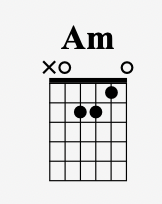
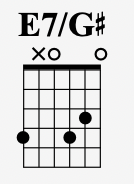
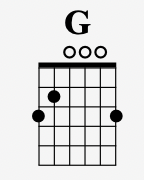
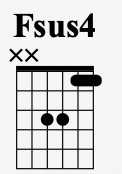
To play “Angie”, as recorded by The Rolling Stones, you only need to know 8 main chords they are Am, E7/G#, G, Fsus4, F, F(add9), C, and C/B. These chords are a mixture of open and bar chord shapes.
If bar chords are giving you all kinds of aches and pains, and you haven’t yet discovered how to play them effortlessly, go here: https://www.jonmaclennan.com/barchords
Let’s take a look at a few ways these shapes might show up on the fretboard.
Am is played from the 5th string down like so:
E7/G# shifts up to the 4th position and looks like this:
G is played in a folk style using all 6 strings like this:
Fsus4 is a chord played on the top 4 strings like so:
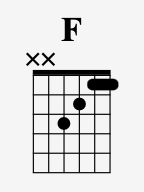
F changes just one note, like this:
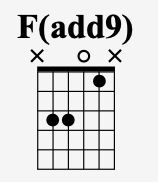
F(add9) makes one more change just like this:
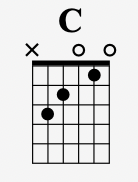
C is played in a typical (campfire) style like this:
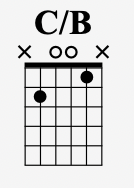
C/B walks the bass down like so:
If you’ve struggled to understand the fretboard for RHYTHM and LEAD guitar. and want to discover the easiest and fastest way. Then get your hands on my free Fretboard Guide PDF right here now:
Is Angie hard to play on guitar?
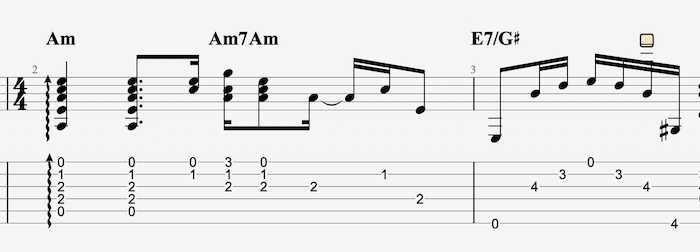
I would say playing “Angie” note-for-note as recorded by The Rolling Stones on guitar is going to require an advanced skill level. The chord progression in itself is not too difficult; to strum through it is more intermediate. But the trickiest parts are all the licks and arpeggio-style picking Richards uses throughout. That’s going to take more accuracy and advanced precision. So, take your time with this one.
What key is Angie in?
“Angie”, as recorded by The Rolling Stones, is in the key of A minor. The primary scale for the song is the A minor scale, which is built using the notes A, B, C, D, E, F, and G.
Let’s take a look at how these chords all function in the key of A minor, starting with…
Am
Notes: A, C, E
Function: This is the i chord, the tonic of A minor. It is the “home” chord on which everything else is built around.
E7/G#
Notes: G#, B, D, E
Function: This is the V7 chord in first inversion, with G# in the bass. The G# is especially important because it is the raised 7th degree of A harmonic minor and acts as a leading tone that strongly pulls toward A. However, it resolves down one half step to G in the song.
G
Notes: G, B, D
Function: This is the VII chord in A natural minor. Unlike a dominant chord, it doesn't strongly pull toward the tonic. Instead, it creates a modal, folk, or rock-oriented sound. It’s sometimes called a subtonic.
Fsus4
Notes: F, Bb, C
Function: This is essentially an F major chord with the third (A) temporarily replaced by the fourth (Bb). The suspended fourth creates tension because it wants to resolve down to A.
F
Notes: F, A, C
Function: This is the VI chord in A minor. It is one of the most stable supporting chords in the key.
F(add9)
Notes: F, A, C, G
Function: This is still functioning as the VI chord, but the added 9th (G) gives it a more open, spacious, and melodic character. This chord comes before C in the main progression.
C
Notes: C, E, G
Function: This is the III chord in A minor and also the relative major tonic. Because C major and A minor share the same key signature, C often feels like a temporary resting point. It brightens the mood and provides contrast to the darker sound of the tonic minor chord.
C/B
Notes: B, C, E, G
Function: This is a C major chord with a B in the bass. Functionally, it still behaves as a III chord, but the B bass creates smooth descending bass movement.
Taken together, these chords create an awesome journey that the song goes on.
All right!
That’s my theory breakdown.
Next, let’s look at…
What is the strumming pattern for Angie?
The main rhythm I would use to strum “Angie” is simply a quarter note. In 4/4 time, quarter notes give you the most direct and grounded version of the beat.
So the basic count looks like this:
1 2 3 4
The numbers (1, 2, 3, 4) are the main beats in the measure, and each one gets a full quarter note.
When spoken or felt, it sounds like:
“ONE… TWO… THREE… FOUR…”
Now, that’s the main groove.
But then you can also subdivide this into 16th notes, and adding all the embellishments Richards uses is how the iconic guitar part builds.
Conclusion
To wrap it up, “Angie” is not only a beautiful song, but it’s also one of the greatest acoustic rock guitar intros of all time.
Keep practicing, and if you want to learn songs way faster, better understand the fretboard for lead and rhythm, and not waste years spinning your wheels with guitar, grab my free fretboard guide here right now:
Jon MacLennan
Like this blog post? Get Jon’s best guitar lessons straight to your inbox.
Discover the 5 easiest and fastest ways to play the blues scale anywhere on the neck with this FREE PDF GUIDE
