Pink Floyd – Another Brick In The Wall (Part 2) Chords & Guitar Lesson
For many people, the 13 years of formal schooling can feel like prison.
Here's one of Pink Floyd’s most signature songs about this.
Below, I’m going to share with you some insider tips on the guitar style behind it.
So grab your axe, and let’s dive into this “Another Brick In The Wall (Part 2)” chords and guitar lesson!
Who Wrote Another Brick In The Wall?
“Another Brick in the Wall” is a 3-part series of songs written for a rock opera album, The Wall, by Roger Waters. Waters is the bassist and primary songwriter for the English rock band Pink Floyd. The most famous of the 3 parts is Part 2, and they all appeared on the 1979 album The Wall.
The lyrics highlight teenage rebellion and a rock and roll spirit, especially lines like:
“We don’t need no education…”
“Another Brick in the Wall” was recorded at several studios in England, including Britannia Row Studios. The gang vocals were sung by a group of 23 London schoolchildren, with producers Bob Ezrin, David Gilmour, and Roger Waters at the helm. Upon its release, it became a worldwide hit, topping charts in numerous countries, including the United Kingdom, where it reached number one.
Between the innovative production, lyrical sentiments, and the blending of rock with a choral arrangement, it was a breath of fresh air in the music scene.
Over the years, “Another Brick In The Wall” has become one of Pink Floyd’s most signature songs and has been covered and referenced widely in pop culture.
Now, you may be wondering…
What is the tuning for Another Brick In The Wall?
The tuning for "Another Brick In The Wall” is standard tuning. Gilmour kept things simple. Standard tuning is spelled: E, A, D, G, B, and E.
Here are the strings:
- E (6th string, lowest pitch)
- A (5th string)
- D (4th string)
- G (3rd string)
- B (2nd string)
- E (1st string, highest pitch)
All right!
Now that you know the tuning for “Another Brick In The Wall,” let’s next talk about…
Another Brick In The Wall Chords
To play “Another Brick In The Wall”, you only need to know 4 main chords they are Dm, G, F, and C. These chords are a blend of open position chords and bar chords.
If bar chords are giving you all kinds of aches and pains, and you haven’t yet discovered how to play them effortlessly, go here: https://www.jonmaclennan.com/7mistakes
Let’s take a look at a few ways these shapes might appear on the fretboard.
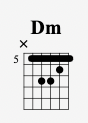
Dm is played in the 5th position as a common bar chord shape like this:
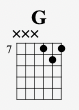
G is played as a small triad higher up the neck like this:
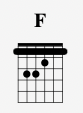
F is a standard bar chord played in 1st position like so:
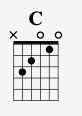
Finally, C can be played in a standard (campfire) position, from the 5th string down, like this:
If you’ve struggled to understand the fretboard for RHYTHM and LEAD guitar, and want to discover the easiest and fastest way. Then get your hands on my free Fretboard Guide PDF right here now:
Is Another Brick In The Wall hard to play on guitar?
I would say playing “Another Brick In The Wall” on guitar is going to require an intermediate to advanced skill level. The trickiest parts are the funky rhythms and the solo. After about 2 minutes and 10 seconds, when the gang vocals finish the line…
“Brick in the wall…”
Gilmour bursts into epic, bluesy licks for the ending solo. While the band keeps jamming, Dm with a funky feel. Many people don’t know this, but tons of Pink Floyd songs are HEAVILY blues-based. This is an example, and these parts demonstrate virtuosic and advanced guitar playing. So, take your time with this one.
What key is Another Brick In The Wall in?
“Another Brick In The Wall (Part 2)”, as recorded by Pink Floyd, is in the key of D minor. The key signature for the song would be one flat F major/D minor. This means the primary scale would be the D natural minor scale, which is built using the notes D, E, F, G, A, Bb, and C.
Let’s take a closer look at how all these chords relate in the key of D minor. Starting with…
Dm (D minor)
Notes: D, F, A
Function: This is the i chord in D natural minor. It’s the tonic and establishes the key center. It’s the “home” chord… perfect for starting or ending the song on.
G (G major)
Notes: G, B, D
Function: This is the IV chord in D natural minor, but since G is major and not minor, it’s a borrowed chord from the D Dorian mode. This is a common move in rock songs in minor keys. Having a major IV chord brightens the progression and is often used to create subtle tension and buildup before returning home to Dm.
F (F major)
Notes: F, A, C
Function: This is the III chord in D natural minor. It shares notes with the tonic (D and F) and provides a major release. This chord comes in during the chorus when the lyrics sing, “All in all, you're just another brick in the wall…”
C (C major)
Notes: C, E, G
Function: This is the VII chord in D natural minor. It’s a subtonic chord that creates a pre-dominant function, leading naturally back to Dm. It also has a bluesy/rock sound to it.
All right!
That’s my theory breakdown.
Next, let’s look at…
What is the strumming pattern for Another Brick In The Wall?
The main underlying feel for “Another Brick In The Wall” is a funky 16th note rock feel. In 4/4 time, 16th notes divide each beat into four equal parts, creating a quicker, more flowing rhythm. The counting for 16th notes in a measure looks like this:
1 e & a 2 e & a 3 e & a 4 e & a
The numbers (1, 2, 3, 4) represent the main beats in the measure. The "e," "&," and "a" divide each beat into four evenly spaced subdivisions.
When counted out loud, it sounds like:
"One-ee-and-a, Two-ee-and-a, Three-ee-and-a, Four-ee-and-a."
Here’s an example of a strumming pattern in the style of “Another Brick In The Wall”:
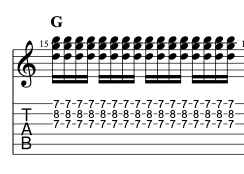
Another Brick In The Wall Guitar Solo Lesson
Conclusion
To wrap it up, “Another Brick In The Wall (Part 2)” is some of Pink Floyd’s best work. From the songwriting to the gang vocals/sound effects to Gilmour’s incredible guitar playing, there is something here to glean for every guitar player.
Keep practicing, and if you want to learn songs way faster, better understand the fretboard for lead and rhythm, and not waste years spinning your wheels with guitar, grab my free fretboard guide here right now:
Jon MacLennan
Like this blog post? Get Jon’s best guitar lessons straight to your inbox.
Discover the 5 easiest and fastest ways to play the blues scale anywhere on the neck with this FREE PDF GUIDE
