Bell Bottom Blues Chords & Guitar Lesson (MOST ACCURATE)
Behold…
A fascinating song, born out of a love triangle in one of Eric Clapton’s darkest periods.
You see, he was in love with George Harrison’s wife (Pattie Boyd), and even confessed it to her. Later, after she divorced George, she married Clapton.
But then divorced him too, just the same.
Below, I’m going to share some insider tips on the guitar style behind it.
So grab your axe, and let’s dive into this “Bell Bottom Blues” chords and guitar lesson!
Who Wrote Bell Bottom Blues?
“Bell Bottom Blues” was co-written by Eric Clapton and Bobby Whitlock and performed with Derek and the Dominos. Clapton famously wrote it about his then-love, Pattie Boyd. She was married to George Harrison at this time. She had asked him to bring back a pair of bell‑bottom jeans from the U.S., and that became the genesis for the song.
Bobby Whitlock also contributed, particularly to the song’s latter verse, and was later added as co‑writer. “Bell Bottom Blues” was recorded on September 2, 1970, at Criteria Studios in Miami and released on the 1970 album Layla.
The song was tracked before Duane Allman joined the band, so Clapton played all the guitar parts himself. It’s a masterclass in overdubbing. Clapton fills the sonic space with emotional guitar parts that weave in and out through the entire song.
It’s also a very Harrison‑influenced solo using choppy artificial harmonics that squawk and squeal.
The track was produced by Tom Dowd alongside the band.
It was released on the album, and then later as a single in 1971. “Bell Bottom Blues” climbed to #78 on the Billboard Hot 100. While Rolling Stone initially dismissed it as “filler,” it was overshadowed by “Layla”. “Bell Bottom Blues” became a fan favorite.
Now, you may be wondering…
What is the tuning for Bell Bottom Blues?
The tuning for "Bell Bottom Blues" as recorded by Derek and the Dominos is standard tuning. Standard tuning is spelled: E, A, D, G, B, and E.
Here are the strings:
- E (6th string, lowest pitch)
- A (5th string)
- D (4th string)
- G (3rd string)
- B (2nd string)
- E (1st string, highest pitch)
All right!
Now that you know the tuning for “Bell Bottom Blues”, let’s next talk about…
Bell Bottom Blues Chords
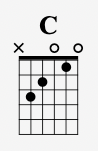
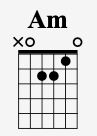
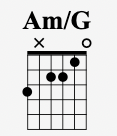
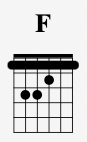
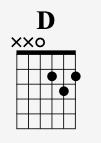
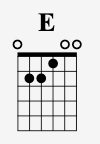
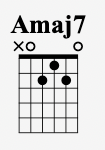
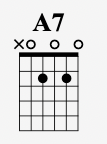
To play “Bell Bottom Blues”, as recorded by Derek and the Dominos, you’ll need to know fourteen main chords they are C, E7/B, Am, Am/G, F, G, G7, A, A/G#, F#m7, D, E, Amaj7, and A7. Let’s take a look at a few ways these chords can be played on the fretboard.
C is played in a standard (campfire) position from the 5th string down like this:
E7/B is a common Eric Clapton-style bluesy chord, but this one is played from the 5th string down like this:

Am keeps the bass walking down from the previous 2 chords and is played like so:
Am/G can be tricky, this one is played like so:
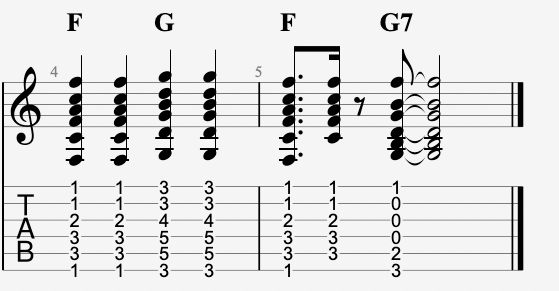
F is played as a bar chord in 1st position like this:
If bar chords are giving you all kinds of aches and pains, and you’ve haven’t yet discovered how to play them effortlessly yet, go here: https://www.jonmaclennan.com/7mistakes
G shifts F up to frets like this:
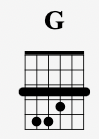
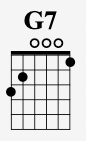
G7 is another great bluesy chord. I play it like this:
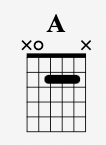
A is played with 1 finger (in the fretting hand) and in open position like so:
A/G# walks the bass down like this:

F#m7 continues walking the bass down:
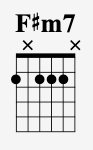
D is played from the 4th string down like this:
E uses all 6 strings like so:
Finally, we have two more variations on A, that is, Amaj7, and A7 like this:
If you’ve struggled to understand the fretboard for RHYTHM and LEAD guitar, and want to discover the easiest and fastest way. Then get your hands on my free Fretboard Guide PDF right here now:
Is Bell Bottom Blues hard to play on guitar?
I would say playing “Bell Bottom Blues” on guitar is going to require an advanced skill level. There are over 14 chords to learn, advanced arpeggio picking techniques, syncopated rhythms, key changes, and incredible, emotional lead guitar solos. So, take your time with this one.
What key is Bell Bottom Blues in?
“Bell Bottom Blues,” as recorded by Derek and the Dominos, is in the key of C major. The primary scale for the song is the C major scale, which is built using the notes C, D, E, F, G, A, and B.
However, when the song goes to the bridge section. It changes keys to the key of A major. (Interesting side note: this is the same key change that George Harrison uses on the song “Something” which came out one year earlier.)
Let’s take a quick look at how the chords relate in the key: (note: I’ve pared down the chords to main chord functions to reduce redundancy.)
C
Notes: C, E, G
Function: This is the I chord (tonic) in the key of C major — the “home base.” It gives a sense of rest and resolution. Most progressions feel settled when they land here.
E7
Notes: E, G♯, B, D
Function: This is a secondary dominant (V7/vi) in the key of C major. It’s not diatonic (contains G♯), but it functions to temporarily tonicize A minor (the vi chord). It creates strong tension that resolves to Am in “Bell Bottom Blues”.
Am
Notes: A, C, E
Function: This is the vi chord (relative minor) in C major. It shares two notes with the tonic (C and E), offering a melancholy flavor while staying within the key.
F
Notes: F, A, C
Function: This is the IV chord (subdominant) in C major. It gives movement away from the tonic and often precedes the dominant (G or G7) to return home. It has an open, lifting quality.
G7
Notes: G, B, D, F
Function: This is the V7 chord (dominant seventh) in C major. It builds strong tension that resolves naturally to the tonic (C). The added 7th (F) enhances the pull back to C, giving a classic sound in countless progressions.
A
Notes: A, C♯, E
Function: This is the parallel major or the relative minor. This chord shows where the song shifts to the key of A major..
F#m7
Notes: F♯, A, C♯, E
Function: This chord is the vi chord in A major (aka the relative minor of the new key.)
D
Notes: D, F♯, A
Function: This is the IV chord in A major.
E
Notes: E, G♯, B
Function: This is the V chord in A major. The G♯ creates the tension that resolves nicely to the A major chord.
So that’s the theory. Next, let’s look at…
What is the strumming pattern for Bell Bottom Blues?
The way I approach the feel for “Bell Bottom Blues” is I subdivide each 1/4 note into a steady 16th-note groove. In 4/4 time, 16th notes are counted as:
"1 e & a, 2 e & a, 3 e & a, 4 e & a"
These are evenly spaced and played straight, like a steady stream of quick, equal beats.
So instead of a lopsided or swung feel, they sound precise and machine-like:
“Da-da-da-da, Da-da-da-da…”
Each beat is evenly divided into four parts. There’s no delay or accent shift like in swing—everything lands right on time.
You still count them as:
1 e & a, 2 e & a, 3 e & a, 4 e & a
This, combined with some steady 1/4 notes, is a great way to approach strumming “Bell Bottom Blues”. Here’s an example of a strumming pattern in the style of“Bell Bottom Blues”:
Conclusion
Bottom line, as a man, never, EVER go for your mate’s wife.
Keep practicing, and if you want to learn songs way faster, better understand the fretboard for lead and rhythm, and not waste years spinning your wheels with guitar, grab my free fretboard guide here right now:
Jon MacLennan
Like this blog post? Get Jon’s best guitar lessons straight to your inbox.
Discover the 5 easiest and fastest ways to play the blues scale anywhere on the neck with this FREE PDF GUIDE
