Pink Floyd – “Brain Damage” Chords & Guitar Lesson
Here's an eerie song from one of the most legendary albums of all time!
It’s chock-full of great rock guitar techniques, and also fingerstyle.
Below, I’m going to share some insider tips on the guitar style behind it.
So grab your axe, and let’s dive into this “Brain Damage” chords and guitar lesson!
Who Wrote Brain Damage?
“Brain Damage” was originally written by English singer-songwriter Roger Waters. Waters is the co-founder of the band Pink Floyd, and the song first appears on their legendary 1973 album The Dark Side Of The Moon.
Lyrically, “Brain Damage” is an interesting song. It almost sounds like it’s about a spectrum of insanity. A huge part of the song’s emotional weight comes from its connection to Syd Barrett, Pink Floyd’s original frontman and primary early songwriter. Barrett had left the band several years earlier due to severe mental health struggles, exacerbated by heavy psychedelic drug use and the pressures of fame.
While “Brain Damage” isn’t necessarily about a literal biography of Syd, it is widely understood as being inspired by him.
“Brain Damage” was recorded at Abbey Road Studios in London between 1972 and 1973, during The Dark Side of the Moon sessions. The sessions had a lot of experimentation. Pink Floyd used tape loops, sound effects, spoken-word recordings, and innovative studio techniques to weave the album into an incredible experience. The maniacal laughter heard toward the end of “Brain Damage” comes from studio staff and road crew members who were asked to laugh in different ways.
Pretty creepy, eh?
One of the most haunting stories associated with the song, and the album as a whole, occurred years after its release, when Syd Barrett unexpectedly visited the band at Abbey Road during sessions for Wish You Were Here in 1975. He was overweight, shaved his head and eyebrows, and was almost unrecognizable. The band members were reportedly shaken and emotional, feeling as though the themes they had explored in songs like “Brain Damage” had manifested in real life. That moment deepened the mythos around the song and Pink Floyd’s musical history.
Now, you may be wondering…
What is the tuning for Brain Damage?
The tuning for "Brain Damage” is standard tuning. Pink Floyd kept things simple. Standard tuning is spelled: E, A, D, G, B, and E.
Here are the strings:
- E (6th string, lowest pitch)
- A (5th string)
- D (4th string)
- G (3rd string)
- B (2nd string)
- E (1st string, highest pitch)
All right!
Now that you know the tuning for “Brain Damage,” let’s next talk about…
Brain Damage Chords
To play “Brain Damage”, as recorded by Pink Floyd, you’ll need to know 13 main chords they are D, G7/D, E/D, A7, Dsus2, D7, D9, G, A, C, Bm, Em, and Asus4. These chords are a combination of open and bar chords.
If bar chords are giving you all kinds of aches and pains, and you haven’t yet discovered how to play them effortlessly, go here: https://www.jonmaclennan.com/barchords
Let’s take a look at a few ways these shapes might show up on the fretboard.
D is played from the 5th string down like this:
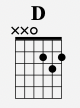
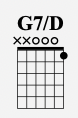
G7/D only uses 1 finger in the fretting hand, like so:
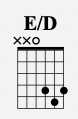
E/D takes the open D chord and shifts it up 2 frets like this:
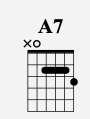
A7 is a great bluesy-sounding chord played from the 5th string down like so:
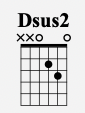
Dsus2 is like the D chord, but this time we’ll make the 1st string open like this:
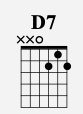
D7 is another bluesy chord. This one is played from the 4th string down like so:
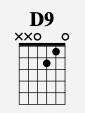
D9 simply makes open the 1st string from the D7 like this:
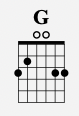
G is played using all 6 strings like this:
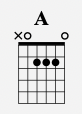
A is played from the 5th string down like so:
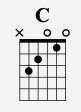
C is played in a typical (campfire) style like this:
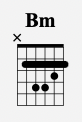
Bm is played as a bar chord in 2nd position, like so:
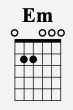
Em is a beautiful open-sounding chord. It uses all 6 strings like this:
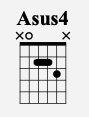
Finally, we have Asus4. This chord has a beautiful, suspended sound to it. I play it from the 5th string down like this:
If you’ve struggled to understand the fretboard for RHYTHM and LEAD guitar, and want to discover the easiest and fastest way. Then get your hands on my free Fretboard Guide PDF right here now:
Is Brain Damage hard to play on guitar?
I would say playing “Brain Damage” on guitar is going to require an intermediate guitar skill level. The trickiest parts are getting the chord changes smooth, fingerpicking, and then being able to transition to the chorus and strum. Putting all that together and getting it clean is going to require many skills. So, take your time with this one.
What key is Brain Damage in?
“Brain Damage”, as recorded by Pink Floyd, is in the key of D major. The primary scale for the song would be the D major scale, which is built using the notes D, E, F#, G, A, B, and C#.
Let’s take a closer look at how these (main) chords relate in the key of D. Starting with…
D
Notes: D, F#, A
Function: This is the tonic chord in the key of D major, the harmonic home base. Everything in the progression ultimately wants to resolve here. As a straight I chord, D establishes the key clearly and provides a point of rest and stability of which all the other chords revolve.
G7/D
Notes: D, F, G, B
Function: This is a G7 chord in second inversion. In the key of D major, G is the IV chord, but the added minor seventh (F natural) makes it non-diatonic. The F natural is a standard blues move. It’s IV7.
E/D
Notes: D, E, G#, B
Function: This is an E major chord over a D bass note. E major is the V of A, making it a secondary dominant (V/V) in the key of D. It’s a nice chord to create tension in the progression without going too far away.
A7
Notes: A, C#, E, G
Function: This is the primary dominant chord (V7) in the key of D major. The G natural is the flat seventh that gives A7 its big pull back to D.
D7
Notes: D, F#, A, C
Function: This is the tonic chord turned into a dominant seventh. Again, another bluesy move. This chord leads to the Chorus section, which starts on...
G
Notes: G, B, D
Function: This is the IV chord in D major. After the pull of D7, G feels like a natural resolution. The IV chord provides contrast from the tonic and opens up the harmony without the tension of a dominant chord. It often acts as a resting point before cycling back toward A or D.
A
Notes: A, C#, E
Function: This is the plain V chord without the seventh. It still has dominant function, but with slightly less tension than A7.
C
Notes: C, E, G
Function: This is a flat VII chord borrowed from the D mixolydian mode. It is fully non-diatonic in D major but extremely common in rock, folk, and Americana.
Bm
Notes: B, D, F#
Function: This is the vi chord in D major and the relative minor of the key. B minor provides a softer, introspective color and is often used to shift the emotional tone without leaving the key.
And finally…
Em
Notes: E, G, B
Function: This is the ii chord in D major. Em has a predominant function, meaning it typically leads to A or A7.
Taken together, these chords mix straight major-key harmony with blues, mixolydian, and secondary dominant colors.
All right!
That’s my theory breakdown.
Next, let’s look at…
What is the fingerpicking pattern for Brain Damage?
The main underlying groove for “Brain Damage” is a slow percolating 16th-note rock feel. In 4/4 time, 16th notes divide each beat into four equal parts, creating a quicker, more flowing rhythm. The counting for 16th notes in a measure looks like this:
1 e & a 2 e & a 3 e & a 4 e & a
The numbers (1, 2, 3, 4) represent the main beats in the measure. The "e," "&," and "a" divide each beat into four evenly spaced subdivisions.
When counted out loud, it sounds like:
"One-ee-and-a, Two-ee-and-a, Three-ee-and-a, Four-ee-and-a."
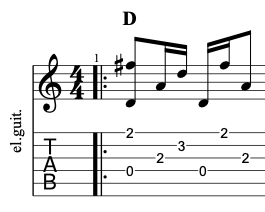
This gives the tune a strong and consistent forward motion. However, I wouldn’t fingerpick all 16th notes. Instead, I would blend both 8th notes and 16th notes like this:
Conclusion
To wrap it up, “Brain Damage” is an eerie song from a legendary album. In fact, The Dark Side Of The Moon went on to become one of the highest-selling and most legendary albums of all time.
Keep practicing, and if you want to learn songs way faster, better understand the fretboard for lead and rhythm, and not waste years spinning your wheels with guitar, grab my free fretboard guide here right now:
Jon MacLennan
Like this blog post? Get Jon’s best guitar lessons straight to your inbox.
Discover the 5 easiest and fastest ways to play the blues scale anywhere on the neck with this FREE PDF GUIDE
