The ULTIMATE Can't Help Falling In Love Chords & Guitar Lesson
Here’s one of the most iconic love songs of all time.
Elvis Presley sang:
===
Wise men say
Only fools rush in
===
Elvis’s version is the most popular. Below, I’m going to share some insider tips for how to play it on guitar.
So grab your axe, and let’s dive into this “Can't Help Falling In Love” chords and guitar lesson!
Who Wrote Can't Help Falling In Love?
“Can’t Help Falling In Love” is often most associated with Elvis Presley, however, it was actually written by Hugo Peretti, Luigi Creatore, and George David Weiss. These three gentlemen were heavy hitters in the golden era of American pop songwriting, especially during the '50s and '60s.
The song has gone on to be one of the most popular love songs of all time. It’s been covered by countless artists and has a fascinating origin.
The opening line, “Wise men say only fools rush in / But I can’t help falling in love with you,” sets the tone. It captures the feeling of surrendering to love despite logic or caution.
Elvis Presley recorded this gem for his 1961 film “Blue Hawaii.”
However, it wasn’t originally written for Elvis. But, it was selected during production because it matched the tone and vibe for the film. It also gave Elvis a standout ballad.
Elvis’s version was recorded at Radio Recorders studio in Hollywood, California, in March 1961, and it was released later that year. The production features an intimate instrumentation like a gentle acoustic guitar, a celesta (giving it that magical chime-like quality), a string section, light electric guitar, and, of course, Elvis’s iconic vocals.
It became the standout track from the Blue Hawaii soundtrack, which went on to be a massive commercial success. The track soared to #1 on the UK Singles Chart (1962) and #2 on the Billboard Hot 100 (U.S.) In 2018, the Elvis version was added to the National Recording Registry by the Library of Congress for its cultural and historical significance.
The song has been covered by tons of artists over the decades. For example, the UB40’s 1993 version turned it into a reggae hit and reached #1 in the U.S. and UK.
This shows the power of a great song and how it can transcend time and genre. I’ve played it at countless weddings, anniversaries, and private events. It’s become one of Elvis’s most popular songs.
Whether you hear it at a wedding, in a movie, or playing quietly on a Sunday afternoon, it still gets you.
Now, you may be wondering…
What is the tuning for Can't Help Falling In Love?
The tuning for "Can't Help Falling In Love", as recorded by Elvis Presley, is standard tuning. Standard tuning is spelled: E, A, D, G, B, and E.
Here are the strings:
- E (6th string, lowest pitch)
- A (5th string)
- D (4th string)
- G (3rd string)
- B (2nd string)
- E (1st string, highest pitch)
All right!
Now that you know the “Can't Help Falling In Love” tuning, let’s next talk about the…
Can't Help Falling In Love Chords
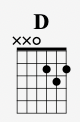
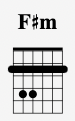
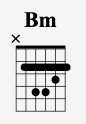
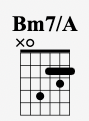
To play “Can't Help Falling In Love”, you need to know 14 main chords they are D, A, F#m, Bm, Bm7/A, G, D/F#, A7/E, A7, G/E, D/A, C#7, B7, and Em7. Let’s take a look at a few ways these shapes can be played on the fretboard.
D is played in open position from the 4th string down like this:
A is played from the 5th string down like this:

F#m is a bar chord played in 2nd position like so:
Bm is another bar chord played in 2nd position, however, for this one, I play from the 5th string down like this:
Bm7/A shifts the index finger down (toward the ground) and includes the open 5th string as a bass note like this:
G is played using all 6 strings like this:
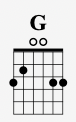
D/F# is like the opening chord; however, for this one, I add the note F# on the 2nd fret of the 6th string like so:

A7/E is another slash chord which can be played like this:

A7 is played from the 5th string down:

G/E is a G chord but with the E (6th string open) in the bass like this:
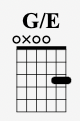
D/A is a great chord played from the 5th string down like this:
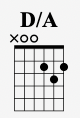
C#7 is played on the middle strings like this:

B7 is played from the 5th string down like so:
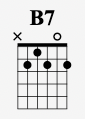
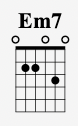
Finally, Em7 is played in open position like this:
If you’ve struggled to understand the fretboard for RHYTHM and LEAD guitar and want to discover the easiest and fastest way. Then get your hands on my free Fretboard Guide PDF right here now:
Is Can't Help Falling In Love hard to play on guitar?
I would say “Can't Help Falling In Love” on guitar requires a solid intermediate to advanced skill level to play. There are many chords and transitions to learn. Plus, you’ll need to be able to play in triple meter and move bar chords around the neck. Songs written 40-50 years ago had much more complex harmony, and the musicians were used to this. So, take your time with this one.
What key is Can't Help Falling In Love in?
“Can't Help Falling In Love” as recorded by Elvis Presley, is in the key of D major. The primary scale used is the D major scale, which is built using the notes:
D – E – F# – G – A – B – C#
Not all chords fit into the diatonic scale. The bridge modulates to the key of F#m, then at the end modulates back. Here’s a quick look at how they all relate:
D major
Notes: D, F#, A
Roman Numeral: I
Tonic chord – this is “home base,” where the key feels resolved and at rest.
A major
Notes: A, C#, E
Roman Numeral: V
Dominant chord – creates tension and wants to resolve back to the I chord (D major). A strong, forward-driving harmonic force.
F# minor
Notes: F#, A, C#
Roman Numeral: iii
Mediant chord – shares two notes with the tonic (A and F#), often used as a smooth connection between other chords. Adds a subtle emotional quality.
B minor
Notes: B, D, F#
Roman Numeral: vi
Relative minor of D major. A common chord that adds a deeper or more introspective color to the progression.
Bm7/A
Notes: B, D, F#, A (with A in the bass)
Roman Numeral: vi7 (in third inversion)
A B minor 7 chord with A in the bass. Functions as a passing or stepwise bass movement, usually going to G major. Adds a smooth, descending bass motion (B → A → G).
G major
Notes: G, B, D
Roman Numeral: IV
Subdominant chord – gives a sense of lift or contrast before resolving to D or moving through a progression. Adds warmth and openness.
D/F#
Notes: D, F#, A (with F# in the bass)
Roman Numeral: I (in first inversion)
D major chord with the third (F#) in the bass. Smooths transitions between chords, especially when moving stepwise (e.g. G → D/F# → Em).
A7/E
Notes: A, C#, E, G (with E in the bass)
Roman Numeral: V7 (in third inversion)
Dominant seventh chord with the fifth (E) in the bass. Adds more bluesy or jazzy color and increased tension before resolving to D. The E bass note connects nicely to the root of the next chord if moving to A or D.
A7
Notes: A, C#, E, G
Roman Numeral: V7
Dominant 7th chord – stronger pull to resolve to the tonic (D major). Adds a classic blues flavor when used in major key progressions.
G/E
Notes: G, B, D (with E in the bass)
Roman Numeral: IV (non-diatonic bass)
A G major chord over an E bass. This is a slash chord that creates a downward motion in the bass (E → D) and works well as a passing chord or to add subtle movement.
D/A
Notes: D, F#, A (with A in the bass)
Roman Numeral: I (in second inversion)
D major chord with the fifth (A) in the bass. This chord has a strong sound and works great to finish off the progression.
C#7 (C# dominant 7)
Notes: C#, E#, G#, B
Roman Numeral: V7/iii (Secondary dominant)
This is the dominant seventh of F# minor, which is the iii chord in D major. It’s not diatonic, but it functions as a secondary dominant, temporarily tonicizing the iii chord. This adds a bluesy, jazzy color and strong forward motion.
B7 (B dominant 7)
Notes: B, D#, F#, A
Roman Numeral: V7/ii (Secondary dominant)
This is the dominant seventh of E major, which could be seen as the V of the ii chord (Em). Again, it’s non-diatonic in D major, but works well. It’s common in bluesy or jazzy turnarounds.
Em7 (E minor 7)
Notes: E, G, B, D
Roman Numeral: ii7
This is the supertonic minor seventh chord in D major. Very commonly used in jazz or folk progressions. It can lead into A7 (V7) in a ii–V–I progression. Adds color and smoothness to chord movement.
So that’s the theory. Next, let’s look at…
What is the strumming pattern for Can't Help Falling In Love?
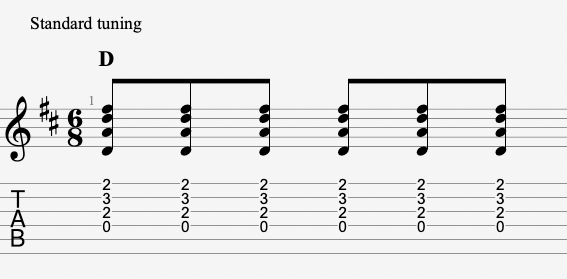
The main underlying feel for “Can't Help Falling In Love” is a waltz vibe. I count it in 6/8.
In 6/8 time, 8th notes are the main pulse of the song. Each measure contains six 8th notes, grouped into two beats—each beat made up of three 8th notes. This creates a lilting, rolling rhythm that feels like a triplet-based groove.
It looks like this:
1 2 3 4 5 6
Or grouped by beat:
1 (2 3), 4 (5 6)
The numbers 1 and 4 represent the primary beats in the measure, while the others fill in the subdivisions, giving the rhythm a waltzy, flowing feel.
When counted out loud, it sounds like:
"One-two-three, Four-five-six"
Here’s an example of a strumming pattern in the style of “Can’t Help Falling In Love”:
Can’t Help Falling In Love Easy Guitar Lesson
If the above lesson is too difficult, try this one using a capo and playing it in the key of C major:
Conclusion
To wrap it up, “Can’t Help Falling In Love” is one of the greatest love songs of all time. Whether you are listening to the iconic Elvis version or the many covers, it’s sure to stand in a league of its own.
Keep practicing, and if you want to learn songs way faster, better understand the fretboard, and not waste years spinning your wheels with guitar, grab my free fretboard guide here right now:
Jon MacLennan
Like this blog post? Get Jon’s best guitar lessons straight to your inbox.
Discover the 5 easiest and fastest ways to play the blues scale anywhere on the neck with this FREE PDF GUIDE
