The Beatles – "Day Tripper" Chords & Guitar Lesson
Here’s one of the most recognizable guitar riffs in rock music history.
It comes straight out of the blues.
The fundamental principles of the blues are the foundation for this hit song.
Below, I’m going to share some insider tips on the guitar style behind it.
So grab your axe, and let’s dive into this “Day Tripper,” chords and guitar lesson!
Who Wrote Day Tripper?
“Day Tripper” was written in 1965 by John Lennon and Paul McCartney. It’s credited to the typically Lennon/McCartney songwriting partnership. The song marks a distinct point in The Beatles’ career where they were transitioning from a touring pop band into a more sharply defined studio-driven rock group.
Lyrically, “Day Tripper” is built around a sly double meaning. On the surface, it describes someone who is a tease, not committing, and never following through. Beneath that, the phrase “day tripper” has slang and drug-related overtones.
“Day Tripper” was recorded in October 1965 at EMI Studios on Abbey Road in London, during sessions for the Rubber Soul era. The song opens up with an instantly recognizable guitar riff, that’s gone on to become one of the most iconic in rock history.
George Harrison played the riff, while Lennon strummed along and sang.
“Day Tripper” was released in December 1965 as a double A-side single alongside “We Can Work It Out.” The single was a massive success, reaching number one on the charts in the United Kingdom and topping charts in several other countries. In the United States, it reached number five on the Billboard Hot 100, despite airplay being split between the two A-side tracks.
One of the coolest aspects of “Day Tripper” from a guitar perspective is the influence of the blues. This can be heard throughout.
Now, you may be wondering…
What is the tuning for Day Tripper?
The tuning for "Day Tripper” is standard tuning. The Beatles kept things simple. Standard tuning is spelled: E, A, D, G, B, and E.
Here are the strings:
- E (6th string, lowest pitch)
- A (5th string)
- D (4th string)
- G (3rd string)
- B (2nd string)
- E (1st string, highest pitch)
All right!
Now that you know the tuning for “Day Tripper,” let’s next talk about…
Day Tripper Chords
To play “Day Tripper”, as recorded by The Beatles, you’ll need to know 7 main chords they are E7, A7, F#5, A5, G#5, C#5, and B5. These chords are a mix of open and closed position chords.
If bar chords are giving you all kinds of aches and pains, and you haven’t yet discovered how to play them effortlessly, go here: https://www.jonmaclennan.com/barchords
Let’s take a look at a few ways these shapes might show up on the fretboard.
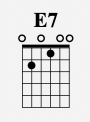
E7 is a bluesy-sounding chord that is implied by the riff. I play it like this:
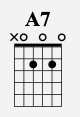
Same goes for the A7 chord, which is implied via the riff. This one I play from the 5th string down like so:
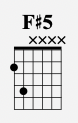
F#5 is a power chord with a root on the 6th string like this:
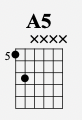
A5 is played by simply sliding the F#5 chord up 3 frets like so:
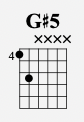
G#5 is played in the 4th position like this:
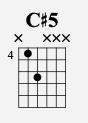
C#5 is played on the 5th and 4th strings like this:
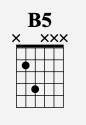
Finally, we have B5. This chord shifts the C#5 down two frets like this:
If you’ve struggled to understand the fretboard for RHYTHM and LEAD guitar, and want to discover the easiest and fastest way. Then get your hands on my free Fretboard Guide PDF right here now:
Is Day Tripper hard to play on guitar?
I would say playing “Day Tripper” on guitar is going to require a late beginner guitar skill. Technically, it’s not too advanced. The trickiest parts are going to be playing the riff up to speed and the bridge section with the solo. But other than that, I would still consider it a great song for newer players. But still, take your time with this one.
What key is Day Tripper in?
“Day Tripper”, as recorded by The Beatles, is in the key of E major. The primary scale for the song would be the E major scale, which is built using the notes E, F#, G#, A, B, C#, and D#.
Let’s take a closer look at how all these chords relate in the key of E. Starting with…
E7
Notes: E, G#, B, D
Function: This is the I chord in the key of E major, but with an added minor seventh (D). This makes it a dominant-sounding chord, and is an immediate indicator of the blues influence. In a strict major-key sense, the I chord would normally be E major, not E7, so this is a non-diatonic tonic dominant.
A7
Notes: A, C#, E, G
Function: This is the IV7 chord in the key of E major. Like E7, it’s non-diatonic in a classical sense because the IV chord in E major would normally be A major without the G. Adding the minor seventh (G) makes it a dominant chord. Again, this is common in blues and rock contexts.
F#5
Notes: F#, C#
Function: This is a power chord built on F#, which functions as the ii degree in E major. Because it omits the third, it avoids being clearly major or minor.
G#5
Notes: G#, D#
Function: This is a power chord built on G#, which is the iii degree of E major. While iii chords are often less emphasized in classical harmony, in rock contexts they’re used freely as color or passing chords.
C#5
Notes: C#, G#
Function: This is the vi power chord in the key of E major. The vi chord is normally a minor flavor, but as a power chord it becomes neutral.
B5
Notes: B, F#
Function: This is the V power chord, the dominant in E major. Even without the leading tone (D#), it strongly functions as a dominant due to root motion and context.
Taken together, these chords outline E major using a blues-rock harmonic language rather than strict diatonic harmony. In essence, all the chords can be played as dominant 7th blues chords.
All right!
That’s my theory breakdown.
Next, let’s look at…
What is the strumming pattern for Day Tripper?
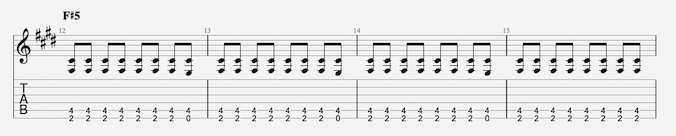
The main underlying groove for “Day Tripper” is a driving 8th-note rock feel. In 4/4 time, 8th notes divide each beat into two equal parts, creating a steady rhythm like this:
1 & 2 & 3 & 4 &
The numbers (1, 2, 3, 4) represent the main beats in the measure, while the "&" represents the offbeats that add energy and momentum.
When counted out loud, it sounds like:
"One-and, Two-and, Three-and, Four-and."
This gives the tune a strong and consistent forward motion. Here’s an example of a “Day Tripper” strumming pattern:
Conclusion
To wrap it up, “Day Tripper” is one of The Beatles’ most famous guitar riffs. It’s sure to turn heads.
So, keep practicing, and if you want to learn songs way faster, better understand the fretboard for lead and rhythm, and not waste years spinning your wheels with guitar, grab my free fretboard guide here right now:
Jon MacLennan
Like this blog post? Get Jon’s best guitar lessons straight to your inbox.
Discover the 5 easiest and fastest ways to play the blues scale anywhere on the neck with this FREE PDF GUIDE
