Eagles – “Desperado” Chords & Guitar Lesson (MOST ACCURATE)
Many Eagles songs revolve around smooth strumming guitars, but here’s one of their biggest hits that’s piano-driven.
In it, Don Henley sang:
===
Desperado, why don't you come to your senses?
Come down from your fences, open the gate
It may be rainin', but there's a rainbow above you
You better let somebody love you (Let somebody love you)
You better let somebody love you before it's too late…
===
Below, I’m going to share some insider tips on the guitar style behind it.
So grab your axe, and let’s dive into this “Desperado” chords and guitar lesson!
Who wrote Desperado?
“Desperado” was originally written by Don Henley and Glenn Frey and recorded by Eagles for their legendary 1973 album Desperado. It was never released as a single, but over time, it’s grown a life of its own through radio play, live performances, and fans.
“Desperado” was recorded in London at Island Studios with the legendary producer Glyn Johns. Now, as I’ve covered on my channel, many Eagles songs feature layered guitars. But this one is different. It’s primarily piano-driven and shows a different side of the band. It’s a simple instrumentation, but the vocal delivery and power in the song’s writing really shine through.
One interesting story about the writing of “Desperado” is how quickly it came together. Glenn Frey reportedly began playing the piano progression while Don Henley started writing lyrics almost immediately. This seems to be a pattern with many famous songs. It’s almost as if they fall out of the ether. The artist's subconscious had already been writing it for days, weeks, maybe even years, until this quick moment where it crystallizes into form.
Another interesting note is how the Eagles brought in strings on this song. It’s not just a power ballad from a rock band but the orchestral element brought a whole new sound to the band.
Today, “Desperado” stands as one of the most monumental songs of the ‘70s.
Now, you may be wondering…
What is the tuning for Desperado?
The tuning for "Desperado” as recorded by the Eagles is standard tuning. Standard tuning is spelled: E, A, D, G, B, and E.
Here are the strings:
- E (6th string, lowest pitch)
- A (5th string)
- D (4th string)
- G (3rd string)
- B (2nd string)
- E (1st string, highest pitch)
All right!
Now that you know the tuning for “Desperado,” let’s next talk about…
Desperado Chords
To play “Desperado”, as recorded by the Eagles, you’ll need to know 17 main chords they are G, G7, C, Cm, Em, A7, D7, G11, G/D, B/D#, Bm, D7sus4, F/A, G/B, Am, D/F#, and B7/F#. These chords are a combination of bar and non-bar chord shapes.
If bar chords are giving you all kinds of aches and pains, and you haven’t yet discovered how to play them effortlessly, go here: https://www.jonmaclennan.com/barchords
Let’s take a look at a few ways these shapes might show up on the fretboard.
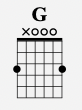
I play G in an open position like this:
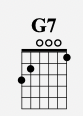
G7 uses a standard folk-style shape like this:
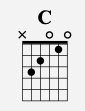
C is played in a typical (campfire) style like this:
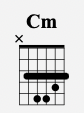
Cm us a bar chord shape played from the 5th string down like so:
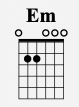
Em is a beautiful open-sounding chord. It uses all 6 strings like this:
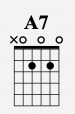
A7 is a great bluesy-sounding chord played from the 5th string down like so:
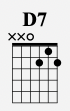
D7 is played from the 4th string down like this:
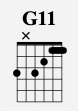
G11 is a beautiful suspended sounding chord played like this:
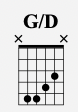
G/D is an inversion all played on the middle strings like so:
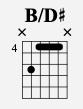
B/D# is on the middle strings as well like this:
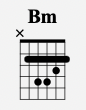
Bm is like the Cm above, just shifted down 1 fret, like so:
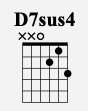
D7sus4 is used right before D7. I play it like this:
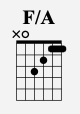
F/A is a very piano-style chord played from the 5th string down like so:
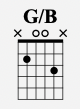
G/B is another variation on the middle strings like this:
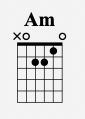
Am is played in a standard (campfire) style from the 5th string down like this:
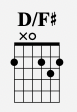
D/F# takes the D chord from above, but brings in a low F# note on the 2nd fret of the 6th string like this:
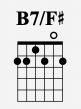
Finally, we have B7/F#. This is a tricky one. I play it like this:
If you’ve struggled to understand the fretboard for RHYTHM and LEAD guitar, and want to discover the easiest and fastest way. Then get your hands on my free Fretboard Guide PDF right here now:
Is Desperado hard to play on guitar?
I would say playing “Desperado” on guitar, as recorded by the Eagles, is going to require an advanced skill level. The trickiest parts are all the piano-style chords and the various sections throughout. It’s not a simple song. It keeps developing and changing almost the whole way through. So, take your time with this one.
What key is Desperado in?
“Desperado”, as recorded by Eagles, is in the key of G major. The primary scale for the song would be the G major scale, which is built using the notes G, A, B, C, D, E, and F#.
Let’s take a look at how the main chords all function in the key of G major.
G
Notes: G, B, D
Function: This is the I chord, the tonic of G major. It the “home” chord on which all the other chords revolve around.
G11
Notes: G, B, D, F, A, C
Function: This is an extended version of the I chord. The core triad (G, B, D) still establishes the key, but the added tones give it a sophisticated sound. It’s a suspended dominant-type sound that can lead toward C or back to G.
C
Notes: C, E, G
Function: C is the IV chord in the key of G major. The IV chord gives you a nice break away from the tonic, and often prepares the ear for moving to the dominant (D or D7) or back to the tonic.
Cm
Notes: C, Eb, G
Function: Cm is a borrowed chord from the parallel minor key (G minor). The Eb note creates a darker color against the otherwise bright sound of G major. This chord is often used to transition back to the I chord (G major).
Em
Notes: E, G, B
Function: Em is the vi chord in G major. It’s sometimes called the relative minor. Em shares two notes with G (G and B), so it blends smoothly with the tonic.
A7
Notes: A, C#, E, G
Function: A7 is a secondary dominant in the key of G major. Specifically, it functions as V/V, meaning it is the dominant of the dominant.
D7
Notes: D, F#, A, C
Function: D7 is the primary dominant chord in G major. The basic dominant triad is D, but adding the minor seventh (C) increases the tension that wants to resolve back to the tonic G. This chord is one of the strongest drivers of motion in the key.
B
Notes: B, D#, F#
Function: B major is not diatonic to G major because of the D#. It usually acts as a secondary dominant (V/vi). This chord often leads to Em.
Bm
Notes: B, D, F#
Function: Bm is the iii chord in the key of G major. Plain and simple.
F/A
Notes: A, C, F
Function: This chord is an F major triad with A in the bass. F major is not diatonic to G major because of the F natural. With A in the bass, it’s a very piano-style chord move.
Am
Notes: A, C, E
Function: Am is the ii chord in G major. This chord often sets up the dominant.
All right!
That’s my theory breakdown.
Next, let’s look at…
What is the strumming pattern for Desperado?
The main underlying feel for “Already Gone” is a power ballad. The chords changed mostly every two beats. A great way to strum it would be using half notes. In 4/4 time, half notes get two beats each.
1 2 3 4
D d
Strumming on 1 and 3 gives you a great start.
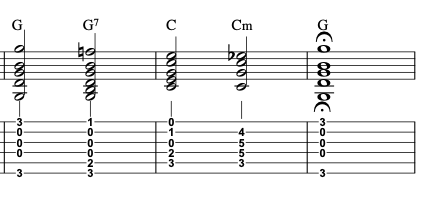
Here’s an example of a simple strumming pattern in the style of “Desperado”:
Conclusion
In the end, “Desperado” is one of the Eagles’ most famous ballads. It shows a completely different side of the band, and is a ton of fun to play.
Keep practicing, and if you want to learn songs way faster, better understand the fretboard for lead and rhythm, and not waste years spinning your wheels with guitar, grab my free fretboard guide here right now:
Jon MacLennan
Like this blog post? Get Jon’s best guitar lessons straight to your inbox.
Discover the 5 easiest and fastest ways to play the blues scale anywhere on the neck with this FREE PDF GUIDE
