The ULTIMATE Father and Son Chords & Guitar Lesson (Cat Stevens)
I still get the chills every time I hear this song.
Cat Stevens is a masterful songwriter, and this is one of his most famous tunes.
Below, I’m going to share with you some insider tips on the guitar style behind it. (Including a way to combine lead and rhythm.)
So grab your axe, and let’s dive into this “Father and Son” chords and guitar lesson!
Who Wrote Father and Son?
“Father and Son” was originally written by Cat Stevens, who later changed his name to Yusuf Islam. It was released in 1970 on his monumental album Tea for the Tillerman.
The narrative is a fascinating conversation from a father to his son. It addresses many issues in life, of struggle, freedom, and happiness. The father sings from experience and caution, telling his son to slow down and think before he makes big decisions.
“Father and Son” was recorded at Morgan Studios in London, with Stevens performing acoustic guitar and vocals. The arrangement is subtle, but Islam’s vocals are powerful and theatrical.
The song has received a lot of praise for its lyrical depth and emotional resonance. It’s considered one of Stevens’ most signature tunes. It’s become a staple in Stevens’ live shows and has been featured in numerous films, television shows, and cover versions by a wide range of artists.
Now, you may be wondering…
What is the tuning for Father and Son?
The tuning for "Father and Son” is standard tuning. Yusef kept things simple. Standard tuning is spelled: E, A, D, G, B, and E.
Here are the strings:
- E (6th string, lowest pitch)
- A (5th string)
- D (4th string)
- G (3rd string)
- B (2nd string)
- E (1st string, highest pitch)
All right!
Now that you know the tuning for “Father and Son,” let’s next talk about…
Father and Son Chords
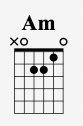
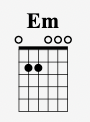
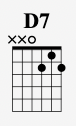
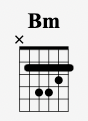
To play “Father and Son”, you’ll need to know 8 main chords they are G, C/G, D, C, Am, Em, D7, and Bm. Now, all of these chords are played in open position except the Bm. That is the one bar chord.
If bar chords are giving you all kinds of aches and pains, and you haven’t yet discovered how to play them effortlessly, go here: https://www.jonmaclennan.com/7mistakes
Let’s take a look at a few ways these shapes might appear on the fretboard.
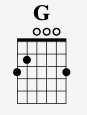
G is played in a standard folk-style like this:
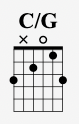
C/G is a great-sounding chord that comes quickly off the G chord change. I play it like this:
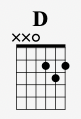
D is played from the 4th string down like so:
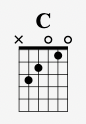
C is played in a typical cowboy style like this:
Am just moves one finger from the C chord like this:
Em is a beautiful open chord using all 6 strings like so:
D7 is a bluesy variation on the D chord. This shape is played from the 4th string down like this:
Finally, Bm is the one bar chord. I play it from the 5th string down like so:
If you’ve struggled to understand the fretboard for RHYTHM and LEAD guitar, and want to discover the easiest and fastest way. Then get your hands on my free Fretboard Guide PDF right here now:
Is Father and Son hard to play on guitar?
I would say playing “Father and Son” on guitar is going to require an intermediate skill level. It’s not an overly technical song, but there are a few tricky parts like the quick chord changes, subtle variations from verse to verse, and the time signature changes. So, take your time with this one.
What key is Father and Son in?
“Father and Son”, as recorded by Cat Stevens, is in the key of G major. The primary scale for the song is the G major scale, which is built using the notes G, A, B, C, D, E, and F#.
Let’s take a closer look at how all these chords relate in the key of G major. Starting with…
G
Notes: G, B, D
Function: This is the I chord, the tonic in the key of G major. It’s the home base. Most progressions in G will begin or end on this chord.
C/G
Notes: C, E, G (with G in the bass)
Function: This is the IV chord (C major) in second inversion. This chord comes in right at the top. It’s the first change after G. This is a very common voicing in rock and folk.
D
Notes: D, F#, A
Function: D is the V chord, the dominant. The dominant creates strong tension that wants to resolve back to the I chord (G).
C
Notes: C, E, G
Function: This is the IV chord, the subdominant in the key. C creates a smooth transition away from the tonic (I), and often moves to the dominant (V) or back to (I).
Am
Notes: A, C, E
Function: This is the ii chord (A minor) in G major. It’s often used to set up the V chord (D), creating a ii–V–I movement. This is exactly what happens in “Father and Son”.
Em
Notes: E, G, B
Function: This is the vi chord (E minor), the relative minor of G major. Em shares two notes with the tonic (G and B), making it blend naturally. It’s a simple mood-shifting chord used throughout the progression – without having to change keys.
D7
Notes: D, F#, A, C
Function: This is the V7 chord, the dominant seventh. The added minor 7th (C) builds more tension and drive back to G. It also sounds bluesy.
And last but not least…
Bm
Notes: B, D, F#
Function: This is the iii chord in G major. It shares two notes with the tonic (G) and the dominant (D). It’s a good connecting chord to use within a progression.
All right!
That’s my theory breakdown.
Next, let’s look at…
What is the strumming pattern for Father and Son?
The main underlying feel for “Father and Son” is a slow 16th note folk ballad. In 4/4 time, 16th notes divide each beat into four equal parts, creating a quicker, more flowing rhythm. The counting for 16th notes in a measure looks like this:
1 e & a 2 e & a 3 e & a 4 e & a
The numbers (1, 2, 3, 4) represent the main beats in the measure. The "e," "&," and "a" divide each beat into four evenly spaced subdivisions.
When counted out loud, it sounds like:
"One-ee-and-a, Two-ee-and-a, Three-ee-and-a, Four-ee-and-a."
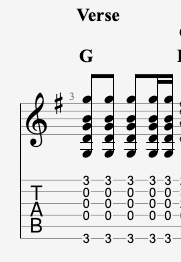
Here’s an example of a simple strumming pattern in the style of “Father and Son”:
Conclusion
To wrap it up, “Father and Son” is an iconic song with a solid message. The message of the importance of a father in a son’s life.
Keep practicing, and if you want to learn songs way faster, better understand the fretboard for lead and rhythm, and not waste years spinning your wheels with guitar, grab my free fretboard guide here right now:
Jon MacLennan
Like this blog post? Get Jon’s best guitar lessons straight to your inbox.
Discover the 5 easiest and fastest ways to play the blues scale anywhere on the neck with this FREE PDF GUIDE
