Sting – "Fields of Gold” Chords & Guitar Lesson
Years ago, I was playing a gig at a lounge by the beach in Los Angeles with a friend who played keyboards with Sting.
I had called this song, and after we hit the last chord, my friend turned to me and told me this crazy story.
He was in England and was about to go play a gig with Sting.
Their mode of transport was an old World War II vehicle refurbished. The band hopped in, and as they rode from Sting’s residence to the gig, they passed by all these beautiful barley fields.
He told me, “Those were the fields of gold.”
Pretty cool, huh?
Below, I’m going to share with you some insider tips on the guitar style behind this iconic tune.
So grab your axe, and let’s dive into this “Fields of Gold” chords and guitar lesson!
Who Wrote Fields of Gold?
“Fields of Gold” was originally written by Sting, whose real name is Gordon Sumner.
It was released on his brilliant 1993 solo album Ten Summoner’s Tales.
The song is almost like a meditation on love, memory, and time. Lyrically, the song is framed almost like a reflection from the future, looking back on a younger love.
“Fields of Gold” was recorded in 1992 and 1993 and produced by Sting alongside Hugh Padgham, who had also worked with him during his time in The Police and on earlier solo projects. The arrangement on the recording is subtle and tasteful. The nylon string guitar solo is a standout. It does what so many famous songs do, and uses the melody as fuel for the solo. Ten Summoner’s Tales was in part recorded at Lake House, his 16th-century manor in Wiltshire, England. This in itself adds to the intimacy and authenticity of the song’s vibe.
Upon its release, “Fields of Gold” became one of Sting’s most successful solo hits. It reached the Top 20 in several countries, including the U.S. and the U.K. It also received heavy radio airplay throughout the ‘90s.
One other huge testament to the impact of this song is how many famous artists have covered it. Two of my favorite versions are Tommy Emmanuel’s cover:
And Eva Cassidy’s:
Now, you may be wondering…
What is the tuning for Fields of Gold?
The tuning for "Fields of Gold” is standard tuning. Sting kept things simple. Standard tuning is spelled: E, A, D, G, B, and E.
Here are the strings:
- E (6th string, lowest pitch)
- A (5th string)
- D (4th string)
- G (3rd string)
- B (2nd string)
- E (1st string, highest pitch)
All right!
Now that you know the tuning for “Fields of Gold,” let’s next talk about…
Fields of Gold Chords
To play “Fields of Gold”, you only need to know 6 main chords they are Bm, G, D, G/B, A, and D/G. These chords are a mix of open and bar chords. If bar chords are giving you all kinds of aches and pains, and you haven’t yet discovered how to play them effortlessly, go here: https://www.jonmaclennan.com/barchords
Let’s take a look at a few ways these shapes might show up on the fretboard.
Bm is played as a standard bar chord in 2nd position, like this:
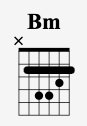
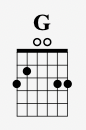
G is played using all 6 strings like so:
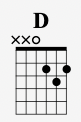
Dis played in a standard (campfire) style from the 4th string down like this:
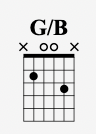
G/B is a variation on the G chord above; it simply uses the middle strings like so:
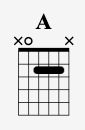
A is played from the 5th string down like this:
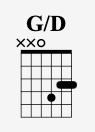
Finally, D/G is a nice keyboard-style chord voicing. I play it like this:
If you’ve struggled to understand the fretboard for RHYTHM and LEAD guitar, and want to discover the easiest and fastest way. Then get your hands on my free Fretboard Guide PDF right here now:
Is Fields of Gold hard to play on guitar?
I would say playing “Fields of Gold” on guitar is going to require an intermediate skill level. The song has a number of twists and turns, with different section endings, and rhythmic syncopations, so it’s definitely not a beginner song. Sting is a masterful musician. So, take your time with this one.
What key is Fields of Gold in?
“Fields of Gold”, as recorded by Sting, is in the key of D major. The primary scale would be the D major scale, which is built using the notes D, E, F#, G, A, B, and C#.
Let’s take a closer look at how all these chords relate in the key of D major. Starting with…
Bm (B minor)
Notes: B, D, F♯
Function: This is the vi chord in the key of D major. It’s important to note that the song leans heavily on this chord, which is the relative minor of D. It shares two notes with the tonic (D and F♯). But since the song ends on D major as the final note, I would call it D major. But you can think D major or B minor.
G (G major)
Notes: G, B, D
Function: This is the IV chord, the subdominant in D major. It moves the harmony away from the tonic and creates a sense of openness and expansion. IV chords often feel stable but slightly moving, setting up a transition back to D or forward to A.
D (D major)
Notes: D, F♯, A
Function: This is the I chord, the tonic. It’s the “home” chord. Everything in the progression ultimately wants to resolve back here.
G/B (G major with B in the bass)
Notes: G, B, D, with B as the lowest note
Function: This is still the IV chord, but in first inversion. Because the bass note (B) is also the third of the G chord and part of the D major scale, it creates a slightly unstable sound.
A (A major)
Notes: A, C♯, E
Function: This is the V chord, the dominant in D major. A creates tension and forward motion that naturally wants to resolve back to the tonic D.
D/G (D major with G in the bass)
Notes: D, F♯, A, with G as the lowest note
Function: This is the I chord over the IV bass note, often called a tonic-over-subdominant sound. It’s a very common keyboard player move.
Together, these chords make up some of the most common sets of chords in popular music.
Millions of songs use them…
All right!
That’s my theory breakdown.
Next, let’s look at…
What is the strumming pattern for Fields of Gold?
The main underlying groove for “Fields of Gold” is an 8th note pop groove. The primary rhythm strummed throughout is an 8th note rhythm. In 4/4 time, 8th notes divide each beat into two equal parts, creating a driving, steady flow like this:
1 & 2 & 3 & 4 &
The numbers (1, 2, 3, 4) represent the main beats in the measure, while the "&" represents the offbeats that add energy and momentum.
When counted out loud, it sounds like:
"One-and, Two-and, Three-and, Four-and."
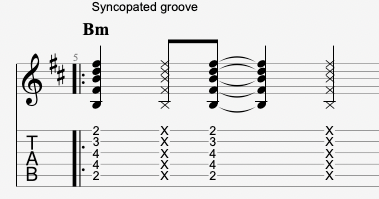
Here’s an example of a strumming pattern in the style of “Fields of Gold”:
Conclusion
Bottom line, “Fields of Gold” is one of the most beautiful songs I’ve ever heard.
Keep practicing, and if you want to learn songs way faster, better understand the fretboard for lead and rhythm, and not waste years spinning your wheels with guitar, grab my free fretboard guide here right now:
Jon MacLennan
Like this blog post? Get Jon’s best guitar lessons straight to your inbox.
Discover the 5 easiest and fastest ways to play the blues scale anywhere on the neck with this FREE PDF GUIDE
