The Beatles – "Fool On The Hill" Chords & Guitar Lesson
Here’s an underrated Beatles song that’s great to play fingerstyle.
Using your fingers, like I’ll show you in this post, is one of the most powerful ways to sound like a piano.
It’s a great way to accompany yourself or someone else.
So grab your axe, and let’s dive into this “Fool On The Hill” chords and guitar lesson!
Who Wrote Fool On The Hill?
“Fool on the Hill” was originally written by Paul McCartney, but it’s credited to the usual Lennon/McCartney songwriting partnership. The song sings the tale of a fool on the hill. Since the beginning of time, there have been outcasts and men who have left society. They’ve lived alone in cabins in the woods. Some call them hermits, curmudgeons, or even fools, but they often have clarity and wisdom others lack.
The “Fool On The Hill” is about the idea of the misunderstood outsider.
McCartney has said the song was inspired in part by the concept of the “holy fool,” a figure found in literature, religion, and philosophy, someone who is dismissed as simple or mad but who may actually see the truth more clearly than everyone else.
“Fool On The Hill” was recorded at EMI Studios (a.k.a Abbey Road) in London during sessions for Magical Mystery Tour in September 1967. The arrangement is relatively simple. It’s built around piano and some woodwinds. Paul played the piano and sang the lead vocal, while producer George Martin contributed a recorder part, which gives the song its airy, almost pastoral quality.
The arrangement itself almost mirrors the feeling of the “fool” in isolation.
“Fool on the Hill” was first released in late 1967 on the Magical Mystery Tour soundtrack in the United States and later on the same album in the UK when it was formalized as a full LP. While it was never released as a single, it became one of the standout tracks of the album.
It regularly appears on lists of the Beatles’ most underrated songs.
Now, you may be wondering…
What is the tuning for Fool On The Hill?
The tuning for "Fool On The Hill” is standard tuning. Standard tuning is spelled: E, A, D, G, B, and E.
Here are the strings:
- E (6th string, lowest pitch)
- A (5th string)
- D (4th string)
- G (3rd string)
- B (2nd string)
- E (1st string, highest pitch)
All right!
Now that you know the tuning for “Fool On The Hill,” let’s next talk about…
Fool On The Hill Chords
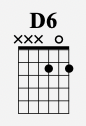
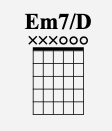
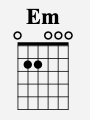
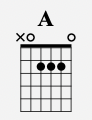
To play “Fool On The Hill”, as recorded by The Beatles, you’ll need to know 8 main chords they are D6, Em7/D, Em, A, Bm7, Dm, C, and Bb/D. These chords can all be played as open position chords, which works great for fingerstyle.
Let’s take a look at a few ways these shapes might show up on the fretboard.
D6 is the first chord, and this one is one of the most iconic Beatles chords of all time. I play it like this:
Em7/D might sound complicated, but it’s all open strings. Simply play from the 4th string down like this:
Em is a beautiful sounding chord using all 6 strings like this:
I play A from the 5th string down like so:
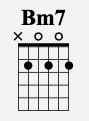
Bm7 can be played starting on the 5th string and fretting ever other string at the 2nd fret like this:
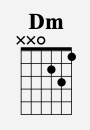
Dm is an interesting switch that happens partway through the progression, I play it from the 4th string down like this:
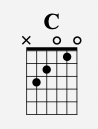
C is played in a typical (campfire) style like this:
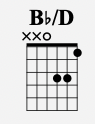
Finally, we have Bb/D. This chord gets a very James Bond type of sound. It’s also played from the 4th string down as well, like so:
If you want to improve your fingerstyle guitar faster and not waste years spinning your wheels with guitar, grab my free fingerstyle cheat sheet PDF guide right here now:
Is Fool On The Hill hard to play on guitar?
I would say playing “Fool On The Hill” on guitar is going to require an intermediate skill level. The trickiest parts are the fingerpicking patterns and getting the chord changes smooth – especially the James Bond style chord shapes. So, take your time with this one.
What key is Fool On The Hill in?
“Fool On The Hill”, as recorded by The Beatles, is in the key of D major. The primary scale used in the song is the D major scale, which is built with the notes D, E, F#, G, A, B, and C#. Now, the song starts on D and ends on D. So I would call it D major. However, it does take a little detour in the middle of the progression, changing to the parallel minor.
Let’s take a closer look at how all these chords relate in the key of D major. Starting with…
D6
Notes: D, F#, A, B
Function: This is the I chord, the tonic of D major, with an added sixth. This is a classic Beatles move. The added B comes directly from the D major scale, so this chord is completely diatonic. The 6th softens the tonic and gives it a warmer, more open sound than a plain D major triad.
Em7/D
Notes: E, G, B, with D in the bass
Function: This chord functions as a ii chord, but with the I in the bass. The D in the bass keeps the tonal center anchored on the tonic. The effect is floating and suspended.
Em
Notes: E, G, B
Function: This is the standard ii chord in the key of D major. It’s sometimes called the supertonic and often leads to the dominant (A) or sometimes to Bm.
A
Notes: A, C#, E
Function: This is the V chord, the dominant of D major. The role of A is to create tension that resolves back to the tonic. The C# acts as the leading tone, pulling strongly toward D. This chord provides forward momentum and is a crucial part of establishing the key.
Bm7
Notes: B, D, F#, A
Function: This is the vi7 chord, built on the sixth degree of the D major scale. It’s the relative minor of D major and shares two notes with the tonic chord (D and F#). This makes transitions between them feel smooth and natural.
Dm
Notes: D, F, A
Function: This chord is a twist. It’s not naturally in D major because of the F natural. It’s borrowed from the parallel minor key (D minor) and is often referred to as a modal interchange chord.
Bb/D
Notes: Bb, D, F
Function: This is a Bb major chord in first inversion, with D in the bass. Bb is a flat VI chord in the key of D major and is borrowed from the parallel minor or from modal harmony. It gives a James Bond-style sound.
All right!
That’s my theory breakdown.
Next, let’s look at…
What is the fingerpicking pattern for Fool On The Hill?
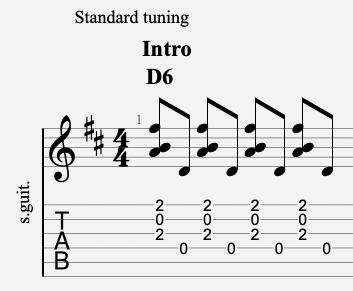
The main feel for “Fool On The Hill” is an 8th note pop feel. To get a sound similar to a piano accompaniment. I like to alternate between the chord and a bass note in an 8th note rhythm.
1 + 2 + 3 + 4 +
Here’s an example of a fingerpicking pattern in the style of “Fool On The Hill”:
Conclusion
To wrap it up, “Fool On The Hill” is an underrated gem of the Beatles' catalog. The melody and chord progression are beautiful and haunting all at once. There’s a lot here for guitarists to dig their claws into.
Keep practicing, and if you want to improve your fingerstyle guitar faster and not waste years spinning your wheels with guitar, grab my free fingerstyle cheat sheet PDF guide right here now:
Jon MacLennan
Like this blog post? Get Jon’s best guitar lessons straight to your inbox.
Discover the 5 easiest and fastest ways to play the blues scale anywhere on the neck with this FREE PDF GUIDE
