The ULTIMATE – “Forever Young” Chords & Guitar Lesson
Here’s a song title that’s been used by many famous artists, from Bob Dylan to Rod Stewart, to Alphaville.
They’ve written and recorded completely different songs, but they all share the same theme and sentiment.
In this post, I’m going to share some insider tips on the guitar style of each version.
So grab your axe, and let’s dive into this “Forever Young” chords and guitar lesson!
Who wrote Forever Young?
Rod Stewart’s “Forever Young” was written by Rod Stewart, Jim Cregan, and Kevin Savigar. It was released in 1988 on Stewart’s album titled Out of Order. It’s a power ballad rock anthem with a timeless, aspirational message. Stewart recorded it in Los Angeles during sessions for Out of Order. In fact, a friend of mine owns a studio not too far from me and has worked with Stewart for years. He’s also known for bringing in top LA studio musicians.
The production for “Forever Young” is a polished, late-80s pop-rock sound. It’s driving with big guitars and keyboards. The style blends adult contemporary and pop rock.
“Forever Young” was released as a single and became one of Stewart’s most signature songs, especially in the United States, where it became a staple of Adult Contemporary radio. While it didn’t top the Billboard Hot 100, it was a big hit live, and I’ve played it at many weddings and private parties.
It draws inspiration from Bob Dylan’s 1973 song, which has the same name. However, you can’t copyright a song title.
Now, you may be wondering…
What is the tuning for Forever Young?
The tuning for "Forever Young” as recorded by Rod Stewart is standard tuning. Standard tuning is spelled: E, A, D, G, B, and E.
Here are the strings:
- E (6th string, lowest pitch)
- A (5th string)
- D (4th string)
- G (3rd string)
- B (2nd string)
- E (1st string, highest pitch)
All right!
Now that you know the tuning for “Forever Young,” let’s next talk about…
Forever Young Chords Rod Stewart
To play “Forever Young”, as recorded by Rod Stewart, you only need to know 5 main chords they are E5, Asus2, F#m11, C#m7, and B. These chords can all be played in open position. They sound like they might be complicated or difficult. But the way I play them makes it not too hard.
Let’s take a look at a few ways these shapes might show up on the fretboard.
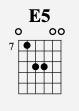
E5 uses all 6 strings and has a great open sound:
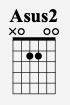
Asus2 keeps part of the shape the same from the previous chord, but moves it lower on the neck. I play it like this:
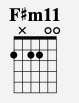
F#m11 adds a base note to the previous shape, like so:
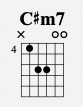
Finally, we have C#m7, which is played from the 5th string down like this:
If you’ve struggled to understand the fretboard for RHYTHM and LEAD guitar, and want to discover the easiest and fastest way. Then get your hands on my free Fretboard Guide PDF right here now:
Is Forever Young hard to play on guitar?
I would say playing “Forever Young” on guitar, as recorded by Rod Stewar,t is going to require an advanced skill level. The trickiest parts are the funky 16th note rhythms and the lead parts. Getting everything right and then putting it together in an ‘80s power ballad anthem is no easy feat. So, take your time with this one.
What key is Forever Young in?
“Forever Young”, as recorded by Rod Stewart. is in the key of E major. The primary scale for the song would be the E major scale, which is built using the notes E, F#, G#, A, B, C#, and D#.
All the chords fit into the diatonic scale of E major.
Let’s take a closer look at how these chords relate in the key. Starting with…
E5
Notes: E, B
Function: This is the I chord of E major. It’s “home”. All the other chords revolve around this one tonal center.
Asus2
Notes: A, B, E
Function: This is a suspended chord built on the IV degree of E major. By replacing the third (C#) with the second (B), it creates an open, airy sound.
F#m11
Notes: F#, A, B, E
Function: This is the ii chord in E major with added color tones, specifically the 11th (B). This gives you another really open sound for a minor chord.
C#m7
Notes: C#, E, G#, B
Function: C#m is the vi chord in E major. It’s also sometimes called the relative minor.
Together, these chords create a beautiful open sound on guitar that fits the song.
All right!
That’s my theory breakdown.
Next, let’s look at…
What is the strumming pattern for Forever Young
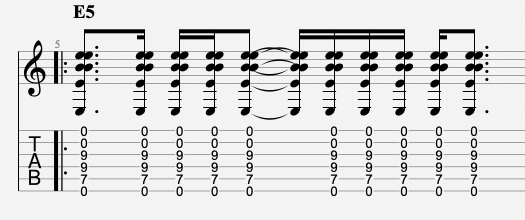
The main underlying feel for “Forever Young” is a rock power ballad. It’s an anthem. However, it does have a slightly busy 16th note groove under the surface. In 4/4 time, 16th notes divide each beat into four equal parts, creating a quicker, more flowing rhythm. The counting for 16th notes in a measure looks like this:
1 e & a 2 e & a 3 e & a 4 e & a
The numbers (1, 2, 3, 4) represent the main beats in the measure. The "e," "&," and "a" divide each beat into four evenly spaced subdivisions.
When counted out loud, it sounds like:
"One-ee-and-a, Two-ee-and-a, Three-ee-and-a, Four-ee-and-a."
Here’s an example of a strumming pattern in the style of “Forever Young” :
Conclusion
To wrap it up, Rod Stewart's version is a classic ‘80s power ballad, with big guitars, big keyboards, and an iconic vocal performance from Stewart.
Keep practicing, and if you want to learn songs way faster, better understand the fretboard for lead and rhythm, and not waste years spinning your wheels with guitar, grab my free fretboard guide here right now:
Next, let’s look at…
(COMING SOON)
Like this blog post? Get Jon’s best guitar lessons straight to your inbox.
Discover the 5 easiest and fastest ways to play the blues scale anywhere on the neck with this FREE PDF GUIDE
