Green Day – “Good Riddance” Chords & Guitar Lesson
Here’s Green Day’s…
Here’s Green Day’s…
(expletive...)
Here’s Green Day’s biggest hit.
While you only need a few chords to play it, the guitar part is quite tricky.
Below, I want to share with you some insider tips on Billie Joe Armstrong’s magic picking.
So grab your axe, and let’s dive into this “Good Riddance” chords and guitar lesson!
Who wrote Good Riddance?
“Good Riddance (Time of Your Life)” was originally written by Billie Joe Armstrong. It was recorded with Green Day for their monumental 1997 album Nimrod. The song has become one of the most famous acoustic guitar songs of the ‘90s, and is Green Day’s biggest-selling single.
While the song is often played at graduations, weddings, and nostalgic life moments, it’s actually a breakup song. Billy Joe Armstrong’s girlfriend moved to Ecuador and dumped him. While painful, he let it go and wished her the best with this song. The lyrics “I hope you have the time of your life” reflected that message.
The song is about life's turning points.
Interestingly, Armstrong wrote the song years before it was released. During the sessions for Green Day's breakthrough album Dookie, the band and producer felt “Good Riddance” was too different from the rest of the album.
Their MO was punk rock.
So the song got shelved.
Until Nimrod.
At that point, the band was looking for something different, and it fit perfectly.
“Good Riddance” was recorded at Conway Recording Studios in Hollywood, California, with producer Rob Cavallo at the helm.
He suggested adding strings.
Cavallo later said that once the strings were added, it was obvious they had something special.
Another funny note is that at the beginning of the recording, Armstrong flubs the intro. He starts the guitar part, stops, and then you hear him mutter an f-bomb, and then he restarts. Rather than editing this out, they left it in. The imperfect intro is endearing and reinforces the song's authenticity.
Upon its release as a single in late 1997, the song became a major international hit. It reached the Top 20 in several countries and eventually became Green Day's most commercially successful single. In the United States, it has been certified five times Platinum, and its achieved multi-platinum certifications around the world.
Now, you may be wondering…
What is the tuning for Good Riddance?
The tuning for "Good Riddance” as recorded by Green Day is standard tuning. Billy Joe Armstrong kept things simple. Standard tuning is spelled: E, A, D, G, B, and E.
Here are the strings:
- E (6th string, lowest pitch)
- A (5th string)
- D (4th string)
- G (3rd string)
- B (2nd string)
- E (1st string, highest pitch)
All right!
Now that you know the tuning for “Good Riddance,” let’s next talk about…
Good Riddance Chords
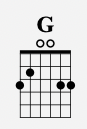
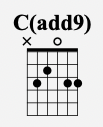
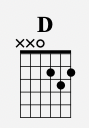
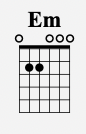
To play “Good Riddance”, as recorded by Green Day, you only need to know 4 main chords they are G, C(add9), D, and Em.
Let’s take a look at a few ways these shapes might show up on the fretboard.
G is played in a standard open position using all 6 strings like this:
C(add9) is very similar to G. However, it shifts the index and middle fingers of your fretting hand down 1 string set like this:
D is played from the 4th string down like this:
Finally, we have Em. Em is a beautiful open-sounding chord. It uses all 6 strings like this:
If you’ve struggled to understand the fretboard for RHYTHM and LEAD guitar. and want to discover the easiest and fastest way. Then get your hands on my free Fretboard Guide PDF right here now:
Is Good Riddance hard to play on guitar?
I would say playing “Good Riddance” as recorded by Green Day on guitar is going to require an advanced skill level. Now you can simplify it and just strum the song. But to play the arpeggio picking style used by Billie Joe Armstrong, and also vary the strumming patterns as he does throughout at tempo, is quite difficult. So, take your time with this one.
What key is Good Riddance in?
“Good Riddance”, as recorded by Green Day, is in the key of G major. The primary scale for the song is the G major scale, which is built using the notes G, A, B, C, D, E, and F#.
Let’s take a look at how these chords all function in the key of G major, starting with…
G
Notes: G, B, D
Function: This is the I chord, the tonic of G major. It’s the “home” chord around which everything else hangs.
C(add9)
Notes: C, E, G, D
Function: This is the IV chord or the subdominant in G major. However, it has an added ninth (D). Functionally, it still acts as the subdominant, moving the harmony away from the tonic without creating strong tension. It’s just the added ninth gives the chord a more open color to it. Because the added D is also a note found in the tonic chord, C(add9) creates a particularly smooth and flowing connection back to G.
Em
Notes: E, G, B
Function: Em is the vi chord in G major, the relative minor. It shares two notes with G major (G and B), which makes the transition between these chords very smooth.
Together, these chords form one of the most common and effective progressions in popular music.
All the chords are diatonic.
All right!
That’s my theory breakdown.
Next, let’s look at…
What is the strumming pattern for Good Riddance?
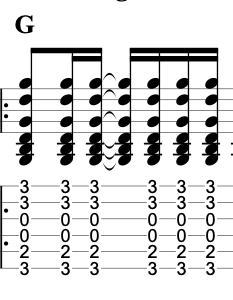
Here’s where things get a bit tricky. First up is “Good Riddance,” has a 16th note subdivision. In 4/4 time, 16th notes divide each beat into four equal parts, creating a faster, more detailed rhythmic subdivision like this:
1 e & a 2 e & a 3 e & a 4 e & a
The numbers (1, 2, 3, 4) represent the main beats in the measure, while the "e," "&," and "a" are the subdivisions that fall between the beats. These extra subdivisions add motion, precision, and rhythmic complexity to the groove.
When counted out loud, it sounds like:
"One-ee-and-uh, Two-ee-and-uh, Three-ee-and-uh, Four-ee-and-uh."
Here’s an example of a “Good Riddance” style strumming pattern:
Conclusion
To wrap it up, “Good Riddance” is Green Day’s biggest hit. While tricky, the guitar part has a lot to offer the advancing guitarist.
Keep practicing, and if you want to learn songs way faster, better understand the fretboard for lead and rhythm, and not waste years spinning your wheels with guitar, grab my free fretboard guide here right now:
Jon MacLennan
Like this blog post? Get Jon’s best guitar lessons straight to your inbox.
Discover the 5 easiest and fastest ways to play the blues scale anywhere on the neck with this FREE PDF GUIDE
