The ULTIMATE Simon & Garfunkel "Homeward Bound" Chords & Guitar Lesson
If you’re a fan of fingerstyle guitar and great songs… then I think you’re going to enjoy this post.
In it, I’m going to share some insider tips on Paul Simon’s legendary guitar style and one of his most famous tunes with Simon & Garfunkel.
So grab your axe, and let’s dive into this “Homeward Bound” chords and guitar lesson!
Who Wrote Homeward Bound
“Homeward Bound” was originally written by Paul Simon and is a part of the legendary Simon & Garfunkel catalog. Simon wrote it in late 1965 while he was touring solo in England.
The inspiration for the tune came while he was waiting for a train at Widnes railway station in Cheshire, England. The opening line, “I’m sittin’ in the railway station,” was real. He was beat down, tired from touring, and wanted to go home.
But the “Homeward Bound” chorus section isn’t just about a physical destination; it’s also him struggling to feel connected to life. With lyrics like, “Every day’s an endless stream of cigarettes and magazines,” and “Tonight I’ll sing my songs again, I’ll play the game and pretend,” paint a stark picture of the numbness he was experiencing.
“Homeward Bound” was recorded in December 1965 at Columbia Studios in Hollywood. My old mentor, Carol Kaye, played the bass line.
Upon its release, “Homeward Bound” became a major success. It reached No. 5 on the Billboard Hot 100 in the United States and became one of Simon & Garfunkel’s defining early hits. It also charted strongly internationally, which helped solidify their place in music history during the mid-1960s folk-rock boom.
“Homeward Bound” has received many accolades. For example, it's regularly included in “greatest songs” lists of 1960s songwriting, and has been inducted into the Grammy Hall of Fame as part of Simon & Garfunkel’s body of work.
Now, you may be wondering…
What is the tuning for Homeward Bound
The tuning for "Homeward Bound” is standard tuning. Standard tuning is spelled: E, A, D, G, B, and E.
Here are the strings:
- E (6th string, lowest pitch)
- A (5th string)
- D (4th string)
- G (3rd string)
- B (2nd string)
- E (1st string, highest pitch)
However, Paul Simon uses a capo on the 3rd fret, which ends up changing the open notes to:
- G (6th string, lowest pitch)
- C (5th string)
- F (4th string)
- Bb (3rd string)
- Eb (2nd string)
- G (1st string, highest pitch)
All right!
Now that you know the tuning for “Homeward Bound,” let’s next talk about…
Homeward Bound Chords
To play “Homeward Bound”, as recorded by Simon & Garfunkel, you’ll need to know 9 main chords they are G, G/F#, G/F, E, Am, F, Dadd11, C/G, and D. These chords are a mix of open chords and bar chords. If bar chords are giving you all kinds of aches and pains, and you haven’t yet discovered how to play them effortlessly, go here: https://www.jonmaclennan.com/barchords
Let’s take a look at a few ways these shapes might show up on the fretboard.
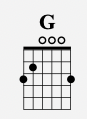
G is played in a folk style using all 6 strings like this:
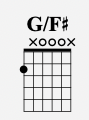
G/F# simple walks the bass down with one finger like this:
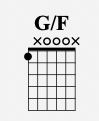
G/F does the same thing again (now moving to the 1st fret) like so:
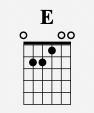
E is a beautiful sounding chord using all 6 strings like this:
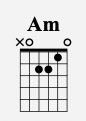
Am is also played from the 5th string down like so:
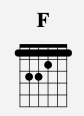
F is a bar chord played in 1st position and uses all 6 strings like this:
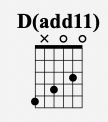
Dadd11 is similar to a C/G chord, just shifted up two frets like so:
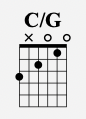
C/G shifts the previous chord (Dadd11) back 2 frets like this:
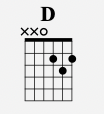
Finally, we have D. This one is played in a standard (campfire) position from the 4th string down, like so:
For those who want to improve their fingerstyle guitar faster and not waste years spinning their wheels with guitar, grab my free fingerstyle cheat sheet PDF guide right here now:
Is Homeward Bound hard to play on guitar?
I would say playing “Homeward Bound” on guitar is going to require an intermediate skill level. The trickiest parts are the fingerpicking patterns, the bar chords, and the transitions from fingerpicking to strumming. This happens from the verse to the chorus. So, take your time with this one.
What key is Homeward Bound in?
“Homeward Bound”, as recorded by Simon & Garfunkel, is in the key of Bb major concert pitch. However, Simon plays it on guitar in the key of G major with a capo on the 3rd fret. The primary scale (from a capo perspective) used in the song is the G major scale, which is built with the notes G, A, B, C, D, E, and F#.
Let’s take a closer look at how all these chords relate in the key of G major. Starting with…
G
Notes: G, B, D
Function: This is the I chord, the tonic of G major. It’s the home base where everything feels resolved and stable.
G/F#
Notes: G, B, D, F#
Function: This is a G major chord with F# in the bass. It’s a part of a descending bass line toward E that happens right at the beginning of the verse,
G/F
Notes: G, B, D, F
Function: This is a G major chord with F natural in the bass. This continues the descending bass line: G → F# → F → E.
E
Notes: E, G#, B
Function: This chord is not naturally in the key of G major because it contains a G# instead of G natural. It’s used as a secondary dominant (V/vi), leading toward A minor.
Am
Notes: A, C, E
Function: This is the ii chord, a minor chord built on the second degree of G major. The Am functions as a predominant chord, often leading to the dominant (D) or back to the tonic (G).
F
Notes: F, A, C
Function: F major is another non-diatonic chord in G major. The key of G major contains an F#, not an F. This is a flat VII chord, borrowed from the parallel minor or G mixolydian mode. F adds a bluesy or rock flavor.
Dadd11
Notes: D, A, E, G
Function: This is a D major chord with an added 11 (G). In G major, D is the V chord, the dominant, and adding the G (the tonic note) gives the chord extra color and openness. It’s a beautiful sound.
C/G
Notes: C, E, G
Function: This is a C major chord with G in the bass, essentially the IV chord with the tonic in the bass.
D
Notes: D, F#, A
Function: This is the V chord, the dominant in G major. Its main function is to create tension that resolves to the tonic (G).
All right!
That’s my theory breakdown.
Next, let’s look at…
What is the fingerpicking pattern for Homeward Bound?
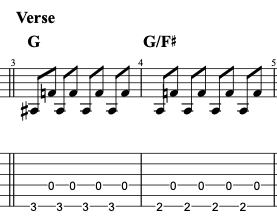
The main feel for “Homeward Bound” is a light, acoustic, folk-rock feel. Simon blends between 8th note picking patterns, 16th note picking patterns, and strumming.
Here’s an example of a fingerpicking pattern in the style of “Homeward Bound”:
Conclusion
Bottom line, “Homeward Bound” is one of Simon & Garfunkel’s most beloved songs. It’s some of Paul Simon’s best work.
Keep practicing, and if you want to improve your fingerstyle guitar faster and not waste years spinning your wheels with guitar, grab my free fingerstyle cheat sheet PDF guide right here now:
Jon MacLennan
Like this blog post? Get Jon’s best guitar lessons straight to your inbox.
Discover the 5 easiest and fastest ways to play the blues scale anywhere on the neck with this FREE PDF GUIDE
