How To Mute Strings On Guitar Like A Pro
Let's talk about one of the most important techniques to master as a guitarist.
In fact, this one thing can make a huge difference in whether your playing sounds like an amateur or a pro. And, this applies to everything you play. Whether that’s strumming along to a song, or ripping a solo.
What’s the technique?
Well, it’s something every player should know and that’s how to mute strings on guitar.
So, let’s get into the first point and that’s understanding:
1) Strum hand muting
(Demonstrate a G major scale)
When a player plays without proper strum hand muting, they will get all kinds of unwanted noise. In my years of teaching, I’ve noticed many students aren’t even aware this is happening.
So first start by taking stock and listening to your sound.
On acoustic this can be tougher to hear. Sometimes players won’t realize it’s happening. Their playing sounds unclean. If they switch to electric guitar, and crank up the volume, that’s often when things sticks out. The unwanted strings and noise become easier to hear.
For example, I had a student years ago who spent a lot of time on acoustic. One day he brought in an electric guitar and wanted to work on this solo from his favorite band. The amp he plugged into had the volume knob set pretty high. He wasn’t hitting the strings that hard, just lightly. But as he played he just looked at me in shock like something was wrong. He could suddenly hear all those little unwanted sounds. They became amplified 10x. These were sounds he’d never noticed before but plugging in brought them front and center. The same thing happens on acoustic guitar as well. When you master the technique you’re covered for both. But it just becomes more evident to beginners when they crank up the volume. So learn strum hand muting.
The next very important point for how to mute strings on guitar is understanding…
2) Fret hand muting
Fret hand muting is vital. This is muting down with the hand opposite of your strum hand. Now, when players first start they are often told to keep their fingers on the tips, which is good advice. However, depending upon what you are playing, you want to learn to adjust your fretting hand for ultimate clarity and cleanliness.
This is where developing your fret hand muting comes in.
Let me give you an example. Let’s say I was playing a C chord like this:

Here I might lean my third finger up towards the 6th string and just lightly touch it. This is going to mute off the 6th string. It doesn’t take much to do this. You just want to lightly come in to contact with the string. When done properly, you can strum the 6th string and you won’t hear it sound the note. The pros use fret hand muting constantly.
The same thing can be applied in the context of blues rhythm too.
(Demonstrate SRV rhythm)
It’s also essential for single note playing, and soloing as well.
Finally, we have…
3) Thumb Muting (on the Low Strings)
This technically does fall under point #2, but I want to make a point of it because many players don’t think of it as an option. Or, they think it’s wrong. This muting technique is a must for playing many chords. Take for instance an A major chord with one finger like this:
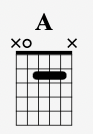
Or if I play the previous C major chord. I’ll use muting coming from the fingers on the fretboard plus I’ll bring the fretting hand thumb over the top of the neck and mute as well. This brings us to another key point here and that’s understanding how all these muting techniques come together in context. Thumb muting on this C chord, plus frethand muting is like a double whammy. It makes sure your chords are on lock and as clean as they can be.
Now, before we wrap up I want to give you one more bonus technique…
This one ties back into point #1 and that’s using the pick and fingers in the strum hand to mute. When I finish a lick, I’ll often drop my pick and fingers down on the strings. This mutes off any unwanted strings and keeps things tight. I’ll also simultaneously drop the fretting hand fingers too.
This again shows you how very often muting is a cumulative effect.
So those are a few quick tips for how to mute strings on guitar. There’s definitely a lot more ways. But if you’ve struggled to understand and navigate the fretboard for rhythm and lead. Then get your hands on my free fretboard guide PDF right here and start learning more today:
Jon MacLennan
Like this blog post? Get Jon’s best guitar lessons straight to your inbox.
Discover the 5 easiest and fastest ways to play the blues scale anywhere on the neck with this FREE PDF GUIDE
