I Can See Clearly Now Chords & Guitar Lesson (MOST ACCURATE)
I don’t think there’s anything quite like that first day of clear skies after the rain.
Whether you’ve been holed up during the winter or it’s just a stormy season, then, things change.
Here’s a song about just that.
Below, I’m going to share some insider tips on the guitar style behind it.
So grab your axe, and let’s dive into this “I Can See Clearly Now” chords and guitar lesson!
Who Wrote I Can See Clearly Now?
“I Can See Clearly Now” was written by American singer-songwriter Johnny Nash.
It’s a timeless pop-reggae anthem released in 1972 as the lead single from his album of the same name.
The song has a great vibe of hope to it.
Nash recorded “I Can See Clearly Now” in London with the renowned Jamaican band the Fab 5. They began as a high-energy show band, but quickly rose to become Jamaica’s leading live group by the early ’70s. Over their five-decade-long career, Fab 5 released 28 albums, achieved numerous number-one hits in Jamaica, and became staples on the Caribbean and North American music scenes.
The recording session was tracked at AIR Studios in London, and the Fab 5 infused the vibe with epic reggae rhythms and a spicy Moog synthesizer.
Upon its release in June 1972, the single skyrocketed to #1 on the US Billboard Hot 100 and Cash Box charts. “I Can See Clearly Now” spent four weeks at the top, and also hit #1 in Canada, South Africa, and reached the UK Top 5. It was certified Gold by the RIAA for over a million copies sold.
Over the years, many famous artists like Ray Charles (1977) and Jimmy Cliff have adapted covers in their own way.
Cliff’s version was featured in the 1993 film “Cool Runnings”.
Now, you may be wondering…
What is the tuning for I Can See Clearly Now?
The tuning for "I Can See Clearly Now" as recorded by Johnny Nash is standard tuning. Standard tuning is spelled: E, A, D, G, B, and E.
Here are the strings:
- E (6th string, lowest pitch)
- A (5th string)
- D (4th string)
- G (3rd string)
- B (2nd string)
- E (1st string, highest pitch)
However, when I play this song solo guitar, I like to tune down to drop D like this:
- D (6th string, lowest pitch)
- A (5th string)
- D (4th string)
- G (3rd string)
- B (2nd string)
- E (1st string, highest pitch)
Here’s an example of that:
All right!
Now that you know the tuning for “I Can See Clearly Now”, let’s next talk about…
I Can See Clearly Now Chords
To play “I Can See Clearly Now”, as recorded by Johnny Nash, you’ll need to know 7 main chords they are D, G, A, C, F, C#m, and Bm. These will be a mixture of open and bar chords. If bar chords are giving you all kinds of aches and pains, and you’ve haven’t yet discovered how to play them effortlessly yet… go here: https://www.jonmaclennan.com/7mistakes
Let’s take a look at a few ways these chords can be played on the fretboard.
D is played from the 4th string down like so:

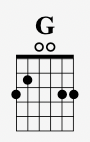
G uses all 6 strings like this:
A is played from the 5th string down like so:

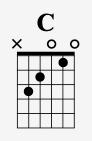
C is played in a standard (campfire) position from the 5th string down like this:
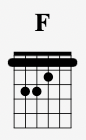
F is the first bar chord you’ll need to know. I play this in 1st position like this:
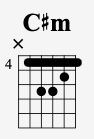
C#m is another bar chord which is similar to F; however, this shape has a root on the 5th string like this:
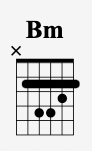
Finally, we have Bm, which is also played from the 5th string down like this:
If you’ve struggled to understand the fretboard for RHYTHM and LEAD guitar, and want to discover the easiest and fastest way. Then get your hands on my free Fretboard Guide PDF right here now:
Is I Can See Clearly Now hard to play on guitar?
I would say playing “I Can See Clearly Now” on guitar is going to require a solid intermediate skill level. It only uses 7 chords; however, some of the shapes require the bar technique. Add to this the key change and reggae feel, and that’s going to push this tune out of a beginner’s skill set. So, take your time with this one.
What key is I Can See Clearly Now in?
“I Can See Clearly Now,” as recorded by Johnny Nash, is in the key of D major. However, there is a slight key change in the bridge section, but then it returns home. The primary scale being used for the song is the D major scale, which is built from the notes: D, E, F#, G, A, B, and C#.
Here’s a quick look at how all these chords relate in the key of D major:
D
Notes: D, F♯, A
Function: This is the I chord (tonic) in the key of D major — the “home” chord. It’s the center of the key and provides a strong sense of resolution and stability.
G
Notes: G, B, D
Function: This is the IV chord (subdominant) in the key of D major. This chord creates forward motion and often leads to the dominant (V chord), or resolves back to the tonic (I).
A
Notes: A, C♯, E
Function: This is the V chord (dominant) in D major. It creates strong harmonic tension and leads naturally back to the tonic (D), giving that classic "tension and release" in the harmony.
C
Notes: C, E, G
Function: This chord does not belong to the key of D major. It functions as a ♭VII chord — a borrowed chord from the D Mixolydian mode. This gives the progression a bluesy or rock influence.
F
Notes: F, A, C
Function: This is another chord outside of the diatonic scale of D major. It’s the ♭III chord — also a borrowed chord, often from D minor. This shift comes in the bridge and has a bluesy effect.
C♯m
Notes: C♯, E, G♯
Function: This chord does not diatonically belong to D major either. In the key of D, the vii chord would be a diminished. But C♯m can be interpreted as a borrowed chord.
Bm
Notes: B, D, F♯
Function: This is the vi chord (relative minor) in D major. It shares two notes with the tonic (D and F♯) and provides a smooth change.
So that’s the theory. Next, let’s look at…
What is the strumming pattern for I Can See Clearly Now?
The main underlying groove for “I Can See Clearly Now” is a funky 8th-note reggae feel. In 4/4 time, 8th notes divide each beat into two equal parts, creating a driving, steady rhythm like this:
1 & 2 & 3 & 4 &
The numbers (1, 2, 3, 4) represent the main beats in the measure, while the "&" represents the offbeats that add energy and momentum.
When counted out loud, it sounds like:
"One-and, Two-and, Three-and, Four-and."
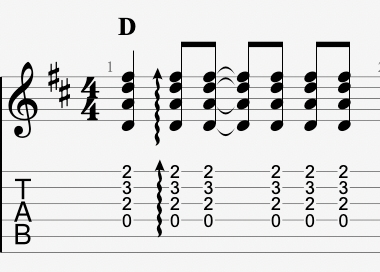
You can then add a backbeat emphasis (2 and 4) to the rhythm to help create the groove. Here’s an example of a “I Can See Clearly Now” strumming pattern:
Conclusion
Those are some insider tips on the guitar style behind this timeless song. Bottom line, it feels great to play and listen to this tune, so keep it up!
And if you want to learn songs way faster, better understand the fretboard for lead and rhythm, and not waste years spinning your wheels with guitar, grab my free fretboard guide here right now:
Jon MacLennan
Like this blog post? Get Jon’s best guitar lessons straight to your inbox.
Discover the 5 easiest and fastest ways to play the blues scale anywhere on the neck with this FREE PDF GUIDE
