Johnny Cash – “I Walk The Line” Chords & Guitar Lesson
Here’s one of Johnny Cash’s most signature songs.
The guitar riff – played by Luther Perkins – also became a distinct part of Cash's sound.
Below, I’m going to share some insider tips on the guitar style behind it.
So grab your axe, and let’s dive into this “I Walk The Line” chords and guitar lesson!
Who wrote I Walk The Line?
“I Walk the Line” was originally written by Johnny Cash and released in 1956 as a single on Sun Records. The tune became Cash’s first number one hit on the Billboard country chart and established him as a heavy hitter in American music.
At the time, Cash was under the guidance of producer Sam Phillips and was recording at Sun’s small studio in Memphis. The track was recorded in the same legendary room where artists like Elvis Presley and Jerry Lee Lewis also made history.
It’s a song about commitment to his first wife, Vivian Liberto, while being on the road and constantly presented with temptation for affairs. At the time, Cash was newly married and was vowing to “walk the line…”
The song has an interesting form. It plays a basic progression, but then keeps shifting the key each time through. At times, Cash’s voice is lower, and at other points it’s higher. This creates an almost hypnotic effect. The opening bass-line guitar riff played by Luther Perkins is iconic and became a defining part of Cash’s early sound.
Upon its release, “I Walk the Line” was a big hit. It reached number one on the Billboard country chart and crossed over to the pop charts, peaking in the top twenty. That crossover appeal helped establish Cash as more than just a regional country artist. He became one of the first country performers to achieve substantial mainstream recognition in the rock and pop era.
This one song’s success laid the groundwork for his long and influential career.
Over the decades, “I Walk the Line” has received numerous honors. It has been inducted into the Grammy Hall of Fame and consistently appears on lists of the greatest country songs ever recorded. It was included in Rolling Stone’s list of the greatest songs of all time, recognized not only for its commercial success but also for its lasting cultural and musical impact. The song is often cited as one of the foundational tracks of modern country music and rockabilly.
Now, you may be wondering…
What is the tuning for I Walk The Line?
The tuning for "I Walk The Line” is standard tuning. Luther Perkins kept things simple. Standard tuning is spelled: E, A, D, G, B, and E.
Here are the strings:
- E (6th string, lowest pitch)
- A (5th string)
- D (4th string)
- G (3rd string)
- B (2nd string)
- E (1st string, highest pitch)
However, to play along with the original recording, you’re going to have to place a capo on the 1st fret. This makes the notes:
- F (6th string, lowest pitch)
- Bb (5th string)
- Eb (4th string)
- Ab (3rd string)
- C (2nd string)
- F (1st string, highest pitch)
All right!
Now that you know the tuning for “I Walk The Line,” let’s next talk about…
I Walk The Line Chords
To play “I Walk The Line”, as recorded by Johnny Cash, you’ll need to know 5 main chords they are A, D, E, B7, and G. All of these chords can be played as open position chords in a (campfire) style.
Let’s take a look at a few ways these shapes might show up on the fretboard.
For A, I use just my index finger like this:
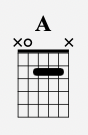
D is played from the 4th string down like this:

E is a beautiful-sounding open chord that uses all 6 strings like so:
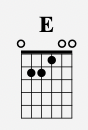
B7 is a bluesy style chord. I play it like this:

Finally, we have G. I play this one using all 6 strings like this:

If you’ve struggled to understand the fretboard for RHYTHM and LEAD guitar, and want to discover the easiest and fastest way. Then get your hands on my free Fretboard Guide PDF right here now:
Is I Walk The Line hard to play on guitar?
I would say playing “I Walk The Line” on guitar is going to require an intermediate skill level. The chords themselves are not too difficult. However, the modulations, the time signature changes, and all the little alternating bass riffs can be confusing. So, take your time with it.
What key is I Walk The Line in?
“I Walk The Line”, as recorded by Johnny Cash, is in multiple keys. To answer this quickly, it’s in the key of F. However, from a guitar perspective, you could say E major (because the capo is on the 1st fret). The primary scale for the song would be the E major scale, which is built using the notes E, F#, G#, A, B, C#, and D#.
The song starts off in E, but then modulates like this:
E –> A –> D
And then it reverses those keys and goes backward like this.
D –> A –> E
Pretty crazy, huh?
Let’s take a closer look at how the total chords relate in each key. Starting with E major...
E
Notes: E, G#, B
Function: This is the I chord in E major. It’s “home”. All harmonic motion in this key ultimately wants to resolve back to E.
A
Notes: A, C#, E
Function: A is the IV chord in E major. It moves the harmony away from the tonic without creating strong tension. It adds lift and openness before either returning to E or moving toward the dominant.
B7
Notes: B, D#, F#, A
Function: B7 is the V7 chord in E major. It is the dominant and creates strong tension that wants to resolve back to E.
Next, here are the chords in the key of A major:
A
Notes: A, C#, E
Function: This is the I chord in A major. It’s “home”.
D
Notes: D, F#, A
Function: D is the IV chord in A major.
E
Notes: E, G#, B
Function: E is the V chord in A major.
And here are the chords in the key of D major:
D
Notes: D, F#, A
Function: This is the I chord in D major. It is “home” in this key.
G
Notes: G, B, D
Function: G is the IV chord in D major. It moves away from the tonic in a stable and balanced way.
A
Notes: A, C#, E
Function: A is the V chord in D major.
You see the pattern?
Taken together, these chords make up some of the most common progressions in music.
All right!
That’s my theory breakdown.
Next, let’s look at…
What is the picking pattern for I Walk The Line?
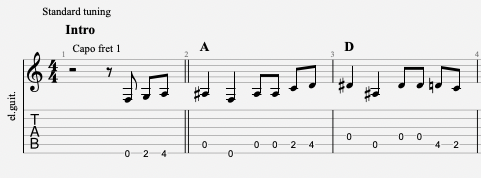
The main underlying feel and picking pattern for “I Walk The Line” is an alternating bass line pattern.
Luther Perkins was known for this style. The basic idea is you alternate between the root and 5th, or the root and 3rd of each chord.
You can use a quarter note rhythm like this:
1 2 3 4
You can also blend in some 8th notes, which Perkins does occasionally throughout. 8th notes divide each beat into two equal parts like this:
1 & 2 & 3 & 4 &
The numbers (1, 2, 3, 4) represent the main beats in the measure. The "&" divides each beat into two evenly spaced subdivisions.
When counted out loud, it sounds like:
"One-and, Two-and, Three-and, Four-and."
Here’s an example of this picking style in action:
Conclusion
To wrap it up, “I Walk The Line” is one of Johnny Cash’s most important tunes. It helped him break through and set the stage for a longstanding career. The guitar style behind it played a big part.
Keep practicing, and if you want to learn songs way faster, better understand the fretboard for lead and rhythm, and not waste years spinning your wheels with guitar, grab my free fretboard guide here right now:
Jon MacLennan
Like this blog post? Get Jon’s best guitar lessons straight to your inbox.
Discover the 5 easiest and fastest ways to play the blues scale anywhere on the neck with this FREE PDF GUIDE
