In The Ghetto Chords & Guitar Lesson (MOST ACCURATE)
Elvis Presley could swivel his hips and make the girls go crazy singing, “Hound Dog”, or “Blue Suede Shoes”.
But, he could also bring the energy down, and sing a beautiful heartfelt ballad like no one else.
Below, I want to share with you an example of this.
Plus, the guitar part (played by legendary session musician Reggie Young) is fantastic.
So grab your axe, and let’s dive into this “In The Ghetto” chords and guitar lesson!
Who Wrote In The Ghetto?
“In the Ghetto” was written by Mac Davis, a country-pop singer-songwriter who wrote several hits in the late '60s and '70s. Davis originally titled the song “The Vicious Circle,” which reflected the tragic cycle of poverty and violence described in the lyrics.
He later explained the idea came from a friend who grew up in a Chicago ghetto, and the song was inspired by the hopelessness that urban poverty breeds from one generation to the next. “In the Ghetto” tells the heartbreaking story of a boy born into poverty in a neglected urban neighborhood. As he grows up surrounded by violence and crime, his circumstances ultimately lead him to a tragic end – shot dead while trying to survive.
The song ends by highlighting the cyclical nature of poverty: as the boy dies, another baby is born in the same environment – “and his mama cries.”
This kind of material was a bold switch for Elvis, who until that point had mainly kept things light with songs like “Blue Suede Shoes” etc. He didn’t sing of thes heavier issues.
Elvis recorded “In the Ghetto” on January 20, 1969, during his legendary American Sound Studio sessions in Memphis. These sessions produced many of his late - ’60s comeback hits, including “Suspicious Minds”, which also had Reggie Young on guitar.
Producer Chips Moman convinced Elvis to take a chance on this song. Initially, Elvis's manager Colonel Tom Parker was against it. He thought it was too political and might alienate fans. But Elvis insisted on recording it.
Mac Davis later said Elvis broke down in tears after the first playback.
“In The Ghetto” was released in April 1969, and shot up to #3 on the Billboard Hot 100, #2 in the UK, and #1 in West Germany, Ireland, Norway, and Australia
It was Elvis’s first Top 10 hit in five years, and it helped usher in his late-’60s comeback.
“In the Ghetto” stands out to this day as one of Elvis Presley’s most meaningful and mature recordings.
Now, you may be wondering…
What is the tuning for In The Ghetto?
The tuning for "In The Ghetto" as recorded by Elvis Presley, is standard tuning. Standard tuning is spelled: E, A, D, G, B, and E.
Here are the strings:
- E (6th string, lowest pitch)
- A (5th string)
- D (4th string)
- G (3rd string)
- B (2nd string)
- E (1st string, highest pitch)
However, Reggie uses a capo on the 1st fret, so it becomes:
- F (6th string, lowest pitch)
- Bb (5th string)
- Eb (4th string)
- Ab (3rd string)
- C (2nd string)
- F (1st string, highest pitch)
All right!
Now that you know the tuning for “In The Ghetto”, let’s next talk about…
In The Ghetto Chords
To play “In The Ghetto”, as recorded by Elvis Presley, you’ll need to know seven main chords they are A, D/A, C#m, D, E7sus4, E, and Bm. It’s important to keep in mind that these are the capo chords. Let’s take a look at a few ways these shapes can be played on the fretboard.
A is played with 1 finger (in the fretting hand) and in open position like so:

D/A is played from the 5th string down like this:

C#m is a bar chord played in 4th position like so:

Note: if bar chords are giving you all kinds of aches and pains, and you’ve haven’t yet discovered how to play them effortlessly yet, go here: https://www.jonmaclennan.com/7mistakes
D is played from the 4th string down like this:

E7sus4 is a beautiful open chord using all 6 strings like so:
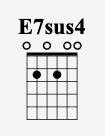
E is played using all 6 strings like this:

Finally, Bm is played in 2nd position and from the 5th string down like this:

If you’ve struggled to understand the fretboard for RHYTHM and LEAD guitar, and want to discover the easiest and fastest way. Then get your hands on my free Fretboard Guide PDF right here now:
Is In The Ghetto hard to play on guitar?
I would say playing “In The Ghetto” on guitar is going to require an advanced skill level. There are a number of picking patterns and riffs to negotiate, bar chords, and it’s performed fingerstyle. Reggie Young masterfully combined this ideas together, and played with exquisite attention to detail accompanying Elvis. So, take your time with this one.
What key is In The Ghetto in?
In The Ghetto,” as recorded by Elvis Presley, is in the key of Bb major concert pitch. However, the guitar part is played in A major using a capo on the 1st fret. So, let’s take a look at it from a guitar perspective. The primary scale is the A major scale, which is built using the notes A, B, C#, D, E, F#, and G#.
All the chords used in the song fit the diatonic scale of A major. Here’s a quick look at how the chords relate in the key:
A
Notes: A, C♯, E
Function: This is the I chord (tonic) in A major — the “home base.” It gives a strong sense of stability and resolution. Most progressions in A will feel settled when they land here.
D/A
Notes: D, F♯, A (with A in the bass)
Function: This is the IV chord (subdominant) in A major, played in second inversion (with the fifth, A, in the bass). It gives a smoother transition to or from the tonic and adds movement while still sounding stable. Reggie Young uses this chord masterfully in the riff.
C♯m
Notes: C♯, E, G♯
Function: This is the iii chord in A major. It shares two notes with the tonic chord (C♯ and E), providing an subtle emotional contrast to the brighter major chords.
D
Notes: D, F♯, A
Function: This is the IV chord (subdominant) in A major. It adds lift and forward motion in a progression. Often used to connect to the V chord (E) or return back to the I chord (A).
E7sus4
Notes: E, A, B, D
Function: This is a V7sus4 chord (suspended dominant) in A major. The 4th (A) replaces the 3rd (G♯), creating suspended tension that resolves strongly when the 3rd returns (as in E7). It delays resolution to build anticipation before landing back on A.
E
Notes: E, G♯, B
Function: This is the V chord (dominant) in A major. It creates strong tension that wants to resolve back to A. The presence of the leading tone (G♯) is what gives this chord its strong pull toward the tonic.
Bm
Notes: B, D, F♯
Function: This is the ii chord (supertonic minor) in A major. It functions as part of a ii–V–I progression (Bm–E–A). This is one of the most common chord progressions of all time. It sets up the dominant chord nicely, creating a smooth and jazzy harmonic motion.
Conclusion
This song is a standout tune for Elvis Presley and really demonstrates the masterful guitar work of session musician Reggie Young.
Keep practicing, and if you want to improve your fingerstyle guitar faster and not waste years spinning your wheels with guitar, grab my free fingerstyle cheat sheet PDF guide right here now:
Jon MacLennan
Like this blog post? Get Jon’s best guitar lessons straight to your inbox.
Discover the 5 easiest and fastest ways to play the blues scale anywhere on the neck with this FREE PDF GUIDE
