Van Morrison – Into The Mystic Chords & Guitar Lesson
Here’s a nostalgic tune that sounds like you're floating out to sea into the haze.
You only need a handful of chords to play it, and it also has an incredible groove.
Below, I’m going to share with you some insider tips on the guitar style behind it.
So grab your axe, and let’s dive into this “Into the Mystic” chords and guitar lesson!
Who Wrote Into the Mystic?
"Into the Mystic" was originally written by Irish singer-songwriter Van Morrison. It’s a vibey song that blends elements of folk, jazz, and pop into a very unique sound. Morrison wrote it during a time of great creative freedom in the late 1960s.
The original title was “Into the Misty”. But it was changed last minute. Though the lyrics are poetic and slightly ambiguous, the title change gave the song a deeper meaning. It made it transcend from a song of scenic imagery to having now a deeper philosophical meaning. The sea becomes a metaphor for the vastness of life’s seasons and cycles.
"Into the Mystic" was recorded in 1969 for Morrison’s record Moondance, released in 1970. The majority of the sessions were done at Century Sound Studios and Mastertone Studios in New York City. Even though it was never released as a single, it’s universally recognized as one of Morrison's greatest tunes. It’s considered a definitive track from his career-boosting album Moondance.
The album itself has been inducted into the Grammy Hall of Fame, and because of its nostalgic feeling, it’s also been featured in many films.
Now, you may be wondering…
What is the tuning for Into the Mystic?
The tuning for "Into the Mystic” is standard tuning. Standard tuning is spelled: E, A, D, G, B, and E.
Here are the strings:
- E (6th string, lowest pitch)
- A (5th string)
- D (4th string)
- G (3rd string)
- B (2nd string)
- E (1st string, highest pitch)
However, the main acoustic guitar uses a capo on the 3rd fret, which changes the strings to read:
- G (6th string, lowest pitch)
- C (5th string)
- F (4th string)
- Bb (3rd string)
- D (2nd string)
- G (1st string, highest pitch)
It can also be played without a capo and tuned down ½ step like this:
- Eb (6th string, lowest pitch)
- Ab (5th string)
- Db (4th string)
- Gb (3rd string)
- Bb (2nd string)
- Eb (1st string, highest pitch)
All right!
Now that you know the tuning for “Into The Mystic,” let’s next talk about…
Into the Mystic Chords
To play “Into The Mystic”, you only need to know 4 main chords they are C, G, Em, and F. All of these chords are played as open position chords, except for F, which is the one bar chord.
If bar chords are giving you all kinds of aches and pains, and you haven’t yet discovered how to play them effortlessly, go here: https://www.jonmaclennan.com/7mistakes
Let’s take a look at a few ways these shapes might appear on the fretboard.
C is played in a standard (campfire) position like this:
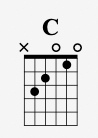
However, keep in mind there are a few cool embellishments you can make to this shape using hammer-ons, and such. (See video above for demonstration.)
G is played in a more folk-style, using all 6 strings like this:
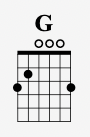
Em is a beautiful chord using all 6 strings like so:
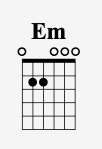
F is the one bar chord played here in 1st position like this:
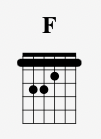
If you’ve struggled to understand the fretboard for RHYTHM and LEAD guitar, and want to discover the easiest and fastest way. Then get your hands on my free Fretboard Guide PDF right here now:
Is Into the Mystic hard to play on guitar?
I would say playing “Into the Mystic” on guitar is going to require at least an intermediate skill level. While there aren’t many chords or sections, the trickiest part is getting the groove right. It has to sound like you are floating on the sea. The 16th-note folk rhythm part and the embellishments are really what make it happen. But, it’s not easy. So, take your time with this one.
What key is Into the Mystic in?
“Into the Mystic”, as recorded by Van Morrison, is in the key of Eb major. The primary scale for the song is the Eb major scale, which is built using the notes Eb, F, G, Ab, Bb, C, and D.
However, because I use a capo on the 3rd fret, I play it in the key of C major on guitar.
Let’s take a closer look at how all these chords relate in the key of C major. Starting with…
C
Notes: C, E, G
Function: This is the I chord (tonic) in C major. It’s the tonal center and sounds like “home”.
G
Notes: G, B, D
Function: This is the V chord (dominant) in C major. It creates tension that naturally wants to resolve back to the tonic C. This is what it does over and over throughout “Into the Mystic. The G gives you a sense of forward motion in the progression. It’s like you are moving along the seawater.
Em
Notes: E, G, B
Function: This is the iii chord (mediant) in C major. It shares notes with both the tonic (C) and the dominant (G), making it a smooth connector chord that adds subtle color in the Chorus section.
F
Notes: F, A, C
Function: This is the IV chord (subdominant) in C major. F gives you movement away from the tonic and often leads toward the dominant G or back to the tonic C.
All right!
That’s my theory breakdown.
Next, let’s look at…
What is the strumming pattern for Into the Mystic?
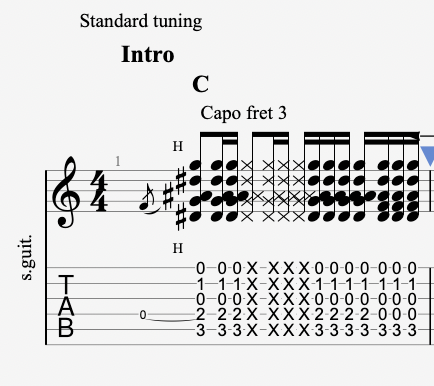
The main underlying feel for “Into the Mystic” is a funky 16th-note folk groove. In 4/4 time, 16th notes divide each beat into four equal parts, creating a quicker, more flowing rhythm. The counting for 16th notes in a measure looks like this:
1 e & a 2 e & a 3 e & a 4 e & a
The numbers (1, 2, 3, 4) represent the main beats in the measure. The "e," "&," and "a" divide each beat into four evenly spaced subdivisions.
When counted out loud, it sounds like:
"One-ee-and-a, Two-ee-and-a, Three-ee-and-a, Four-ee-and-a."
Here’s an example of a strumming pattern in the style of “Into the Mystic”:
Conclusion
Bottom line, “Into the Mystic” is a magical song. While never a huge hit all at once, over time it’s grown to become one of Van Morrison’s most popular tunes.
So, keep practicing, and if you want to learn songs way faster, better understand the fretboard for lead and rhythm, and not waste years spinning your wheels with guitar, grab my free fretboard guide here right now:
Jon MacLennan
Like this blog post? Get Jon’s best guitar lessons straight to your inbox.
Discover the 5 easiest and fastest ways to play the blues scale anywhere on the neck with this FREE PDF GUIDE
