The ULTIMATE Isn't She Lovely Chords & Guitar Lesson
Here’s a Stevie Wonder tune that features one of the baddest harmonica solos I ever done heard.
The chords come straight out of jazz harmony. And, it’s often covered by many jazz musicians.
Below, I’m going to share some insider tips on the guitar style behind it.
So grab your axe, and let’s dive into this “Isn't She Lovely” chords and guitar lesson!
Who Wrote Isn't She Lovely?
“Isn’t She Lovely” was written by the one and only Stevie Wonder in 1976. Its inspiration came from the birth of his daughter, Aisha Morris, from his then-woman Yolanda Simmons.
Although the tune was never released as a single, it still became a worldwide anthem and permanent part of pop culture. “Isn’t She Lovely” was included on Stevie’s double album Songs in the Key of Life, released September 28, 1976.
The lyrics are a pure expression of a father's love. In fact, the song even includes real-life audio of baby Aisha. She was crying and giggling while getting a bath.
“Isn’t She Lovely” was recorded at Crystal Sound Studios in Los Angeles, California, along with other tracks from Songs in the Key of Life. At the time, Stevie was working with a tight circle of trusted engineers and session players. However, he often played all the instruments on the tracks himself.
One of the main reasons “Isn’t She Lovely” was not released as a commercial single in the U.S. was because of its length. The album version runs over six minutes, which was considered too long for radio at the time. Stevie didn’t let Motown cut it short – Label executives wanted to trim the song to make it more radio-friendly, but Stevie refused. He insisted on the full version, including the harmonica solo and baby sounds.
Later, Paul McCartney said “Isn’t She Lovely” is one of the best songs of the modern era.
Now, you may be wondering…
What is the tuning for Isn't She Lovely?
The tuning for "Isn't She Lovely," as recorded by Stevie Wonder, is standard tuning. Standard tuning is spelled: E, A, D, G, B, and E.
Here are the strings:
- E (6th string, lowest pitch)
- A (5th string)
- D (4th string)
- G (3rd string)
- B (2nd string)
- E (1st string, highest pitch)
All right!
Now that you know the tuning for “Isn't She Lovely”, let’s next talk about…
Isn't She Lovely Chords
To play “Isn't She Lovely”, as recorded by Stevie Wonder, you only need to know 6 main chords they are C#m7, F#9, A/B, E, Amaj7, and G#7#5. Keep in mind that these chords come from more of a jazz background. For a style-appropriate sound, I’m going to be playing them as closed-position chords. (Meaning bar chords, not easy open chords.) Let’s take a look at a few ways these shapes can be played on the fretboard.
C#m7 is a very common 4-note jazz voicing all played on the 9th fret like this:

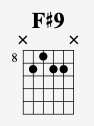
F#9 shifts to the middle strings like so:
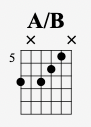
A/B is an A major triad with a B note in the bass. I play it like this:
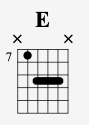
E is a standard bar chord shape played like so:
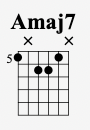
Amaj7 is another very common 4-note jazz voicing. I play it like this:
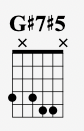
Finally, we have one of the most interesting chords in the entire song, G#7#5. I play it like this:
If you’ve struggled to understand the fretboard for RHYTHM and LEAD guitar, and want to discover the easiest and fastest way. Then get your hands on my free Fretboard Guide PDF right here now:
Is Isn't She Lovely hard to play on guitar?
I would say playing “Isn't She Lovely” on guitar is going to require an advanced skill level. The chords are not beginner chords. They are heavily based in jazz harmony. Plus, the triplet rhythmic feel and riff are also challenging to get right. So, take your time with this one.
What key is Isn't She Lovely in?
“Isn't She Lovely,” as recorded by Stevie Wonder, is in the key of E major. The primary scale for the song is the E major scale, which is built using the notes E, F#, G#, A, B, C#, and D#.
Here’s a quick look at how the chords relate in the key.
E
Notes: E, G♯, B
Function: This is the I chord (tonic) in the key of E major. It serves as the tonal center or “home base” of the key. Most progressions in E major will feel resolved and complete when they land on this chord. It’s the anchor of the key and provides stability and rest.
C#m7
Notes: C♯, E, G♯, B
Function: This is the vi7 chord (relative minor) in the key of E major. It shares three notes with the tonic chord (E, G♯, and B), giving it a smooth and melancholic quality. As a minor 7th chord, this adds a soulful or jazzy flavor, which is often used in R&B and soul styles.
F#9
Notes: F♯, A♯, C♯, E, G♯
Function: This is a secondary dominant chord, functioning as V9/V or V9 of B (the dominant of the dominant in E major). In the key of E, F#9 introduces chromaticism and forward motion, usually pointing to a B major or B7 chord. The added 9th (G♯) gives it a more colorful and sophisticated sound vs. a standard dominant 7th.
A/B
Notes: A, B, E
Function: This is a slash chord functioning as a B11 or a Bsus chord. In E major, it’s a V chord. The suspended quality is a nice way to create anticipation which resolves to E major.
Amaj7
Notes: A, C♯, E, G♯
Function: This is the IV chord in the key of E major, with a major 7th added. The G♯ (major 7th) gives it a jazzy yet peaceful character. As the IV chord, Amaj7 gently moves the harmony away from the tonic and often prepares for a return to E which happens at the end of the B section.
G#7#5
Notes: G♯, B♯ (C), D double-sharp (E), F♯
Function: This is a secondary dominant altered chord, functioning as V7/vi – dominant of the vi chord, C♯ minor. It’s not diatonic to E major due to its major quality.
So that’s the theory. Next, let’s look at…
What is the strumming pattern for Isn't She Lovely?
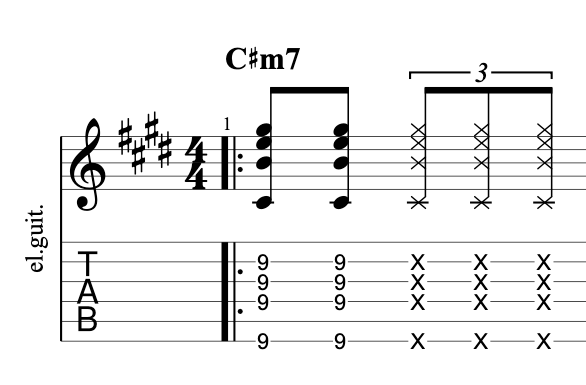
The main underlying groove for “Isn't She Lovely” is an 8th triplet feel. In 4/4 time, 8th note triplets divide each beat into three equal parts, creating a rolling, swing feel like this:
1-trip-let 2-trip-let 3-trip-let 4-trip-let
The numbers (1, 2, 3, 4) still represent the main beats in the measure, while "trip-let" breaks each beat into three evenly spaced notes.
When counted out loud, it sounds like:
"One-trip-let, Two-trip-let, Three-trip-let, Four-trip-let."
This rhythm is common in blues, jazz, and shuffle feels, giving the music a flow. Here’s an example of a 2-beat strumming pattern in the style of “Isn’t She Lovely” that combines these ideas:
Conclusion
To wrap it up, “Isn't She Lovely” is a wonderful song that blends pop, jazz, and R&B.
Keep practicing, and if you want to learn songs way faster, better understand the fretboard for lead and rhythm, and not waste years spinning your wheels with guitar, grab my free fretboard guide here right now:
Jon MacLennan
P.S. Here’s an old video of me improvising over this tune:
Like this blog post? Get Jon’s best guitar lessons straight to your inbox.
Discover the 5 easiest and fastest ways to play the blues scale anywhere on the neck with this FREE PDF GUIDE
