The Kinks – LOLA Chords & Guitar Lesson
After “You Really Got Me,” The Kinks followed up with another huge hit.
This one has an awesome combination of rock guitar techniques and will sound great solo or with a band.
Below, I’m going to share some insider tips on the guitar style behind it.
So grab your axe, and let’s dive into this “Lola” chords and guitar lesson!
Who Wrote Lola?
“Lola” was written by Ray Davies, the lead singer and songwriter for the English rock band The Kinks.
It’s a storytelling song that sings about a guy meeting someone named Lola in Soho, London. “Lola” was recorded at Morgan Studios in London in early 1970. The song kicks off with this “climbing” chord progression that moves up in whole steps in the key of E. This chord progression, combined with some cool arpeggio picking really helped create the vibe and basis for the song.
For its time, it was controversial and groundbreaking in many ways. Interestingly, the recorded version featured a lyric about “Coca-Cola”, which had to be changed to “cherry cola” for radio play because of advertising rules at the time.
The single was released in June 1970 and became one of The Kinks’ biggest hits. It reached #2 in the UK and #9 on the US Billboard Hot 100. This moment marked an international breakthrough for The Kinks. The catchy melody, relatable storytelling, and provocative lyrics all surged together and made it resonate widely with audiences.
In 2000, Rolling Stone placed “Lola” in its 500 Greatest Songs of All Time list. It's become one of The Kinks' most popular tunes, and remains a staple of classic rock radio.
Now, you may be wondering…
What is the tuning for Lola?
The tuning for "Lola," as recorded by The Kinks, is standard tuning. The band kept things simple. Standard tuning is spelled: E, A, D, G, B, and E.
Here are the strings:
- E (6th string, lowest pitch)
- A (5th string)
- D (4th string)
- G (3rd string)
- B (2nd string)
- E (1st string, highest pitch)
All right!
Now that you know the tuning for “Lola”, let’s next talk about…
Lola Chords
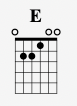
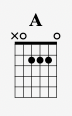
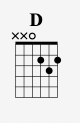
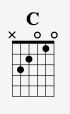
To play “Lola”, as recorded by The Kinks, you’ll need to know 8 main chords they are E, A, D, C, B, F#, G#7, and C#m. Some of these chords are played open, and others use a bar technique.
Let’s take a look at a few ways these shapes can be played on the fretboard.
E is a beautiful chord and uses all 6 strings like this:
A is played from the 5th string down like so:
D is played from the 4th string down like this:
C is played as a standard (campfire) chord in open position like this:
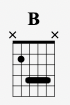
B is a bar chord played in 2nd position and on the middle strings like so:
If bar chords are giving you all kinds of aches and pains, and you haven’t yet discovered how to play them effortlessly, go here: https://www.jonmaclennan.com/7mistakes
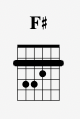
F# is played using all 6 strings and in 2nd position like this:
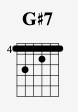
G#7 uses all 6 strings and is a blues-sounding chord that comes later in the tune. I play it in 4th position like so:
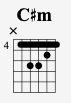
Finally, we have C#m, which is a bar chord played in 4th position as well, like this:
If you’ve struggled to understand the fretboard for RHYTHM and LEAD guitar, and want to discover the easiest and fastest way. Then get your hands on my free Fretboard Guide PDF right here now:
Is Lola hard to play on guitar?
I would say playing “Lola” on guitar is going to require an intermediate skill level. The song has a number of bar chords, quick arpeggio picking, and a number of sections. Between these three things, I would definitely rank it in the intermediate level. So, take your time with this one.
What key is Lola in?
“Lola,” as recorded by The Kinks, is in the key of E major. The primary scale used in the song is the E major scale, which is built with the notes E, F#, G#, A, B, C#, and D#.
Let’s take a look at how all these chords relate in the key of E major:
E (E major)
Notes: E, G♯, B
Function: This is the tonic (I chord) in the key of E major. It’s the tonal center and sounds like “home.” E gives a sense of resolution and stability.
A (A major)
Notes: A, C♯, E
Function: This is the IV chord (subdominant) in E major. It creates movement away from the tonic and often sets up a return to E or a move toward the dominant B.
D (D major)
Notes: D, F♯, A
Function: D is not diatonic to E major. It functions as a ♭VII chord, often borrowed from the E Mixolydian mode. It adds a rock or bluesy flavor and typically moves back to the tonic or to the V chord.
C (C major)
Notes: C, E, G
Function: C is also not diatonic to E major. It functions as a ♭VI chord, borrowed from the parallel minor (E minor). It gives a darker, contrasting color when used in progressions. This is a part of the “climbing” progression C → D → E used throughout the tune.
B (B major)
Notes: B, D♯, F♯
Function: This is the V chord (dominant) in E major. It creates tension that wants to resolve back to the tonic E, giving a sense of forward motion in progressions.
F# (F♯ major)
Notes: F♯, A♯, C♯
Function: This is the II chord (supertonic) in E major when considered as a major chord, though diatonically it would normally be F♯ minor. As F♯ major, it’s often used as a secondary dominant, but F# resolves to A in “Lola”.
G#7 (G♯ dominant 7th)
Notes: G♯, C, D♯, F♯
Function: This is the V7/vi (another secondary dominant). This one moves to C♯ minor. It adds strong tension and then resolution.
C#m (C♯ minor)
Notes: C♯, E, G♯
Function: This is the vi chord (relative minor) in E major. It shares two notes with the tonic (E and G♯), giving a melancholic contrast and blending smoothly in progressions with I, IV, and V chords.
So that’s the theory. Next, let’s look at…
What is the strumming pattern for Lola?
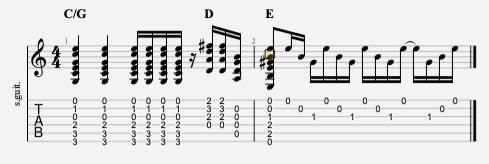
The main underlying feel for “Lola” is a 16th note groove. In 4/4 time, 16th notes divide each beat into four equal parts, creating a fast, intricate rhythm like this:
1 e & a 2 e & a 3 e & a 4 e & a
The numbers (1, 2, 3, 4) represent the main beats in the measure, while the syllables “e,” “&,” and “a” subdivide each beat evenly, giving the rhythm a more detailed and energetic feel.
When counted out loud, it sounds like:
“One-e-and-a, Two-e-and-a, Three-e-and-a, Four-e-and-a.”
However, instead of strumming all 16th notes, on guitar, I’ll often use a combination of rhythms like this:
Conclusion
There ya have it!
“Lola” is a fun tune that’s been a staple of classic rock radio since the '70s. There are so many great guitar techniques to learn as you explore this song.
Keep practicing, and if you want to learn songs way faster, better understand the fretboard for lead and rhythm, and not waste years spinning your wheels with guitar, grab my free fretboard guide here right now:
Jon MacLennan
Like this blog post? Get Jon’s best guitar lessons straight to your inbox.
Discover the 5 easiest and fastest ways to play the blues scale anywhere on the neck with this FREE PDF GUIDE
