Love Me Tender Chords & Guitar Lesson - Like The King of Rock and Roll
Here’s a song that can be traced all the way back to 1861.
It started as a gentle folk tune and has evolved into a cultural phenomenon.
It’s been covered by countless artists from Frank Sinatra to Norah Jones. Below I’m going to share some insider tips for the Elvis Presley version.
So grab your axe, and let’s dive into this “Love Me Tender” chords and guitar lesson!
Who Wrote Love Me Tender?
“Love Me Tender” is adapted from “Aura Lee,” an old ballad written by George R. Poulton in 1861 with lyrics by W.W. Fosdick. This song was popular during the American Civil War and later among college glee clubs and barbershop quartets.
From there, it became one of Elvis Presley’s most iconic ballads that helped define his early career.
For the 1956 film “Love Me Tender”, lyricist Ken Darby crafted new words to this old melody. Due to contractual arrangements, the song was credited to Elvis Presley and Darby’s wife, Vera Matson, although Darby was the actual lyricist. This practice was common at the time, as Presley's publishing deal often required co-credit for songs he recorded .
“Love Me Tender” was recorded on August 24, 1956, at 20th Century Fox Studios in Los Angeles. Unlike his usual recordings with his regular band, the film's producer opted for studio musicians, including members of the Ken Darby Trio, to back Presley.
The song was first performed by Elvis on The Ed Sullivan Show on September 9, 1956, prior to its official release. This performance generated over a million advance orders, making it a gold record before it even hit the shelves.
Upon its release, “Love Me Tender” achieved remarkable success. It reached No. 1 on the Billboard and Cashbox charts in 1956 and also topped charts in Canada, Australia, and the UK.
“Love Me Tender” has gone on to become a standard. It’s been featured in numerous films and television shows.
The song's gentle melody and romantic lyrics have etched its place in American music history.
Now, you may be wondering…
What is the tuning for Love Me Tender?
The tuning for "Love Me Tender", as recorded by Elvis Presley, is standard tuning. Standard tuning is spelled: E, A, D, G, B, and E.
Here are the strings:
- E (6th string, lowest pitch)
- A (5th string)
- D (4th string)
- G (3rd string)
- B (2nd string)
- E (1st string, highest pitch)
All right!
Now that you know the “Love Me Tender” tuning, let’s next talk about…
Love Me Tender Chords
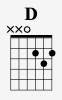
To play “Love Me Tender”, you’ll need to know 10 main chords they are D, E7, A7sus4, A7, F#7/C#, Bm, D7/A, G, Gm, and B7.
D is played from the 4th string down like this:
E7 uses all 6 strings and has a great bluesy sound to it:

A7sus4 is played in open position from the 5th string down like so:

Then just change one note to move to A7 like this:

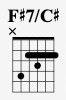
F#7/C# is one of the harder chords, however, it creates a beautiful descending bass line and is played from the 5th string down like so:
Bm is a bar chord played in the second position like so:

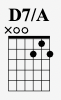
D7/A continues the descending bass and is played like this:
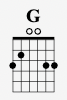
G is played using all 6 strings like so:
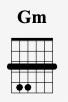
Gm is played as a bar chord in the 3rd position like this:
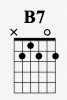
Finally, we have B7, another great bluesy chord that can be played in open position like this:
If you’ve struggled to understand the fretboard for RHYTHM and LEAD guitar and want to discover the easiest and fastest way. Then get your hands on my free Fretboard Guide PDF right here now:
Is Love Me Tender hard to play on guitar?
I would say “Love Me Tender” requires a solid intermediate skill level to play. There are a number of chord changes and bar chords to navigate. And if you want to add a country alternating bass note rhythm throughout that is going to require a more advanced skill level. So, take your time with this one.
What key is Love Me Tender in?
“Love Me Tender,” as recorded by Elvis Presley, is in the key of D major. The primary scale for the tune is the D major scale, which uses the notes: D, E, F#, G, A, B, and C#.
Not all of the chords fit the diatonic scale. There are a few subtle shifts around the key center of D major. Here’s a quick look at how they all relate:
D
Notes: D, F#, A
Function: I chord (the tonic, home base in D major)
E7
Notes: E, G#, B, D
Function: Secondary dominant — it's the V7 of V (because E7 naturally resolves to A major or A7 next.)
A7sus4
Notes: A, D, E, G
Function: V7sus4 chord — the dominant (V) chord (A7) with a suspension. The 4th (D) replaces the 3rd (C#) temporarily, creating tension that usually resolves to A7.
In D major, A is the V chord.
A7
Notes: A, C#, E, G
Function: V7 chord — the main dominant (V7) of D major. Resolves strongly to the I chord (D).
F#7/C#
Notes: F#, A#, C#, E
Function: V7 of B minor — F#7 is the dominant (V7) chord for the vi chord (Bm).
C# in the bass gives it a smooth "voice leading" toward Bm.
Bm
Notes: B, D, F#
Function: vi chord — minor 6th degree chord of D major. Very common in pop and ballads.
D7/A
Notes: D, F#, A, C
Function: If you treat it inside D major, it's a tonic with a b7 added (mixolydian flavor).
In the context of “Love Me Tender” though it acts as a V7 of IV — D7 often resolves to G (IV chord in D major). A in the bass just emphasizes the 5th of the chord (stronger "push" leading down the scale to G).
G
Notes: G, B, D
Function: IV chord — the subdominant. Very stable, leads well to V or back to I.
Gm
Notes: G, Bb, D
Function: Borrowed chord — this is a iv minor from the parallel minor key (D minor).
In D major, Gm creates a beautiful sad/poignant sound, often used to create contrast or emotional depth. It’s a classic move.
B7
Notes: B, D#, F#, A
Function: Secondary dominant — V7 of II (B7 often leads to E next).
In D major, B7 is out-of-key (D# is not in D major) — but it can briefly point to E or just create some spicy tension leading to other chords.
So that’s the theory. Next, let’s look at…
What is the strumming pattern for Love Me Tender?
The main underlying groove for “Love Me Tender” is a slow and steady quarter note feel.
In 4/4 time, quarter notes get one beat each, creating a steady, even rhythm like this:
1 2 3 4
Each number (1, 2, 3, 4) represents a full beat in the measure.
When counted out loud, it sounds like:
"One, Two, Three, Four."
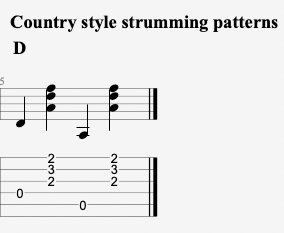
This gives the song a sentimental feel. The guitar can be played either using straight down strums on each beat. Or alternatively, you can use a country style bass-note strum approach like this:
Conclusion
To wrap it up, “Love Me Tender” is a legendary song. It started way back and is still living on today, almost 200 years later.
Keep practicing, and if you want to learn songs way faster, better understand the fretboard, and not waste years spinning your wheels with guitar, grab my free fretboard guide here right now:
Jon MacLennan
Like this blog post? Get Jon’s best guitar lessons straight to your inbox.
Discover the 5 easiest and fastest ways to play the blues scale anywhere on the neck with this FREE PDF GUIDE
