(You Can’t Hide Your) Lyin' Eyes Chords & Guitar Lesson
Glenn Frey sang:
===
So she tells him she must go out for the evening
To comfort an old friend who's feelin' down
But he knows where she's goin' as she's leavin'
She is headed for the cheatin' side of town
You can't hide your lyin' eyes
And your smile is a thin disguise
I thought by now you'd realize
There ain't no way to hide your lyin' eyes
===
Many of the Eagles’ lyrics have deep and true insights in them. Here’s a tune that’s become one of their most beloved songs. Below, I’m going to take a look at some interesting facts about how to jam in this style on guitar.
So grab your axe, and let’s dive into this “Lyin' Eyes” chords and guitar lesson!
Who Wrote Lyin' Eyes?
“Lyin' Eyes” was written by Don Henley and Glenn Frey, two founding members of the American rock band the Eagles.
The song was inspired by a night out on the town when Glenn Frey saw a younger woman with a much older, uglier, but wealthier man. She had it all with a big old house and security, but it wasn’t enough to keep her. She headed for the cheating side of town.
She drove across town in the night for trysts with a boy who makes her feel the way she used to feel.
But still keeps the smile and hides it all from her main man.
Frey said it was one of the easiest songs he ever wrote. He said: "...the story had always been there. I don’t want to say it wrote itself, but once we started working on it, there were no sticking points. Lyrics just kept coming out, and that’s not always the way songs get written."
“Lyin’ Eyes” was recorded at Criteria Studios in Miami, Florida, in early 1975. It was originally over six minutes long, which was quite lengthy for a single. But the song still became a massive hit. It was first released on the Eagles' 1975 album One of These Nights. Then shortly after it was released as the second single from the album in September 1975.
“Lyin’ Eyes” reached #2 on the Billboard Hot 100 and #8 on the Billboard Country chart. It was one of the rare songs by a rock band to cross over into the country charts. This demonstrated the Eagles’ appeal to both rock and country audiences.
Now, you may be wondering…
What is the tuning for Lyin' Eyes?
The tuning for "Lyin' Eyes", as recorded by the Eagles, is standard tuning. Standard tuning is spelled: E, A, D, G, B, and E.
Here are the strings:
- E (6th string, lowest pitch)
- A (5th string)
- D (4th string)
- G (3rd string)
- B (2nd string)
- E (1st string, highest pitch)
All right!
Now that you know the “Lyin' Eyes” tuning, let’s next talk about…
Lyin' Eyes Chords
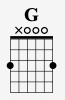
To play “Lyin' Eyes”, you’ll need to know 10 main chords they are G, Gmaj7, C, Am, D7, C/G, Em, Bm, F/G, and A7.
G I play in a fold style like this:
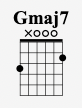
Gmaj7 just moves one note and gets a slightly jazzier sound by bringing in the note F# on the 2nd fret 1st string like so:
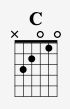
C is played in the standard cowboy position like this:
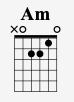
To get Am, simply move one finger from the previous C chord. This one is played from the 5th string down like this:
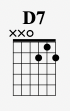
D7 is played from the 4th string down like this:
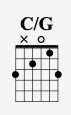
C/G is a common folk chord that can be played by making a slight shift of the G chord shape we learned above, like this:
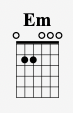
Em is played using all 6 strings like this:
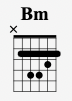
Bm is the first bar chord here. This one is played in 2nd position and from the 5th string down like this:
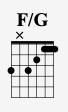
F/G is a thumb chord. The G note on the 3rd fret of the 6th string is played with the fretting hand thumb like this:
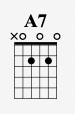
Finally, we have A7, a great bluesy chord that can be played in open position like this:
If you’ve struggled to understand the fretboard for RHYTHM and LEAD guitar and want to discover the easiest and fastest way. Then get your hands on my free Fretboard Guide PDF right here now:
Is Lyin' Eyes hard to play on guitar?
I would say that playing “Lyin' Eyes” on guitar will require a solid intermediate skill level. The trickiest parts are the blend of folk-style and jazzier chord changes, with many little variations throughout. Plus, you’ll have to keep the steady rhythm flowing the whole time and it’s a longer song. So, take your time with this one.
What key is Lyin' Eyes in?
“Lyin' Eyes,” as recorded by the Eagles, is in the key of G major. The primary scale for the tune is the D major scale, which uses the notes: G, A, B, C, D, E, and F#.
There is one sharp in the key of G major (F#). And the majority of the chords fit the diatonic scale. Here’s a quick look at how they all relate:
G
Notes: G, B, D
Function: I chord — the tonic, home base in G major.
Gmaj7
Notes: G, B, D, F#
Function: Imaj7 chord — a jazzier tonic sound that adds the major 7th (F#). This note brings in a little color to the I chord.
C
Notes: C, E, G
Function: IV chord — the subdominant. Moves away from the tonic, often sets up a return to G or pushes toward the dominant (D or D7).
Am
Notes: A, C, E
Function: ii chord — minor supertonic. Often leads into D7 (ii–V–I progression). You’ll see this throughout “Lyin’ Eyes”.
D7
Notes: D, F#, A, C
Function: V7 chord — the dominant. Strongly pulls back to G (I). The C natural (♭7) gives it that tension-filled dominant 7th flavor.
C/G
Notes: C, E, G (with G in the bass)
Function: IV chord in second inversion. Keeps G in the bass for smoother bass motion.
Em
Notes: E, G, B
Function: vi chord — the relative minor of G. Can be used as a tonic substitute or in melancholic progressions. Also appears in vi–ii–V–I movement.
Bm
Notes: B, D, F#
Function: iii chord — mediant. Less stable than I or V, but works well as a bridge to vi (Em) or V (D).
F/G
Notes: F, A, C (with G in the bass)
Function: V7sus4 or G11 chord — creates suspended dominant tension over the G bass. Often leads to C or resolves back to G. Adds a gospel, soul, or pop flavor.
A7
Notes: A, C#, E, G
Function: Secondary dominant — V7 of V (E7 is V7/A, A7 is V7/D). Prepares the D or D7 chord, which in turn resolves to G.
The only 2 chords that are not diatonic to the G major scale are the F/G and the A7 chords.
So that’s the theory...
Next, let’s look at…
What is the strumming pattern for Lyin' Eyes?
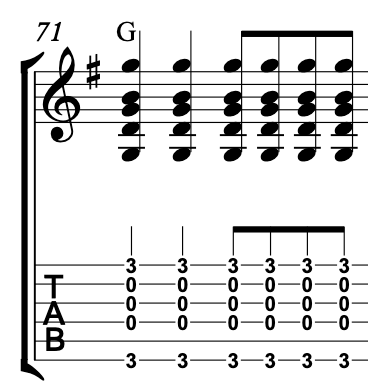
The main underlying groove for “Lyin' Eyes” is a steady cruising 8th note feel. In 4/4 time, eighth notes get half a beat each, so there are 8 eighth notes per measure, creating a quicker, more subdivided rhythm like this:
1 & 2 & 3 & 4 &
Each number (1, 2, 3, 4) still marks the main beats, and the “&” (spoken as "and") comes in between each beat.
When counted out loud, it sounds like:
"One and Two and Three and Four and."
This way of counting helps you stay precise and evenly spaced when playing faster or more rhythmically detailed parts.
You can easily strum 8th notes through the entire song, and it will sound great. However, I personally might opt for a blend of 8ths and quarters like this:
Conclusion
To wrap it up, “Lyin' Eyes” is a legendary song. It’s got emotional pull and brings to light some of the dark struggles we all face in society since the beginning of time.
Keep practicing, and if you want to learn songs way faster, better understand the fretboard, and not waste years spinning your wheels with guitar, grab my free fretboard guide here right now:
Jon MacLennan
Like this blog post? Get Jon’s best guitar lessons straight to your inbox.
Discover the 5 easiest and fastest ways to play the blues scale anywhere on the neck with this FREE PDF GUIDE
