The ULTIMATE Melissa Chords & Guitar Lesson
Countless hit songs are just a woman’s name, like:
* Alison
* Peg
* Dirty Diana
Below, I’m going to share some insider tips on a sweet example of this from The Allman Brothers Band.
So grab your axe, and let’s dive into this “Melissa” chords and guitar lesson!
Who Wrote Melissa?
“Melissa” was written by the legend Gregg Allman before The Allman Brothers Band was even formed. He wrote it while living in Florida about a girl he used to know from his youth.
What’s interesting is that “Melissa” was written around the same time as some of his earliest songs, but it wasn’t recorded and released until years later. Sometimes songs sit on the back burner. But “Melissa” is a mellower ballad that shows a different side of The Allman Brothers Band. It contrasts their usual blues-rock jams with a softer, melodic singer-songwriter side.
“Melissa” was eventually recorded for the 1972 album Eat a Peach, which was a landmark release for the band.
Although it didn’t chart as highly as some of their more energetic tunes like “Ramblin’ Man”, “Melissa” has become a fan favorite. It was originally meant to be a part of a Gregg Allman solo project, but was later adapted to perform with the band.
Now, you may be wondering…
What is the tuning for Melissa?
The tuning for this lesson for "Melissa," as recorded by The Allman Brothers, is standard tuning. Standard tuning is spelled: E, A, D, G, B, and E.
Here are the strings:
- E (6th string, lowest pitch)
- A (5th string)
- D (4th string)
- G (3rd string)
- B (2nd string)
- E (1st string, highest pitch)
All right!
Now that you know the tuning for “Melissa”, let’s next talk about…
Melissa Chords
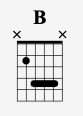
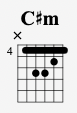
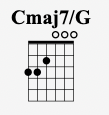
To play “Melissa”, as recorded by The Allman Brothers, you only need to know 8 main chords they are E, F#m11, G#m, A, B, C#m, D, and Cmaj7/G. These chords are a blend of bar shapes and also open-position chords. If bar chords are giving you all kinds of aches and pains, and you haven’t yet discovered how to play them effortlessly, go here: https://www.jonmaclennan.com/7mistakes
Let’s take a look at a few ways these shapes can be played on the fretboard.
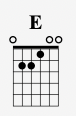
E is a beautiful chord and is played using all 6 strings like this:
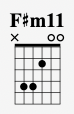
F#m11 is played in 2nd position and has a great open sound to it. (This chord is commonly played as a substitute for F#m in a singer-songwriter style.)
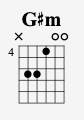
G#m is played in 4th position from the 5th string down like this:
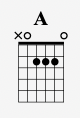
A is played in the standard (campfire) open position like so:
B is a bar chord in 2nd position and only using the middle strings like this:
C#m is played from the 5th string down like this:
D is played in open position from the 4th string down like so: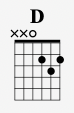
Finally, Cmaj7/G is a beautiful and strong-sounding open chord using all 6 strings like this:
If you’ve struggled to understand the fretboard for RHYTHM and LEAD guitar, and want to discover the easiest and fastest way. Then get your hands on my free Fretboard Guide PDF right here now:
Is Melissa hard to play on guitar?
I would say playing “Melissa” on guitar is going to require a solid intermediate skill level. The trickiest parts are the bar chords, and then being able to strum a solid 16th note groove through all the sections. Sometimes the chords move faster, sometimes slower, and sometimes even go jazzy with chords like Cmaj7/G. So, take your time with this one.
What key is Melissa in?
“Melissa,” as recorded by The Allman Brothers, is in the key of E major. The primary scale used in the song is the E major scale, which is built with the notes E, F#, G#, A, B, C#, and D#.
Let’s take a look at how these chords relate in the key of E major.
E (E major)
Notes: E, G♯, B
Function: This is the I chord (tonic) in E major. It’s the tonal center and sounds like “home.”
F#m11 (F♯ minor 11)
Notes: F♯, A, C♯, E, G♯, B
Function: This is the ii11 chord in E major. The ii chord normally leads to the V (B), and with the added 7th (E), 9th (G♯), and 11th (B), it becomes more open sounding.
G#m (G♯ minor)
Notes: G♯, B, D♯
Function: This is the iii chord in E major. This chord is used as part of a walk-up progression in “Melissa”.
A (A major)
Notes: A, C♯, E
Function: This is the IV chord (subdominant) in E major. It creates movement away from the tonic and often sets up a return to E (I) or moves toward the dominant (B).
B (B major)
Notes: B, D♯, F♯
Function: This is the V chord (dominant) in E major. It creates tension that wants to resolve back to the tonic (E). Adding the 7th (B7) strengthens the pull even more.
C#m (C♯ minor)
Notes: C♯, E, G♯
Function: This is the vi chord in E major. It’s the relative minor of E major and is often used to add a more emotional quality while still staying in the key.
D (D major)
Notes: D, F♯, A
Function: This is the ♭VII chord in E major. It doesn’t belong diatonically to the key, but it’s borrowed from the Mixolydian mode. It adds a bluesy/rock color.
Cmaj7/G (C major 7 with G in the bass)
Notes: C, E, G, B
Function: This chord is borrowed from outside the key of E major (it doesn’t belong diatonically). The C natural creates a striking color against E’s key signature. It’s borrowed from the E natural minor scale (i.e., the parallel minor to E major).
All right!
So that’s the theory. Next, let’s look at…
What is the strumming pattern for Melissa?
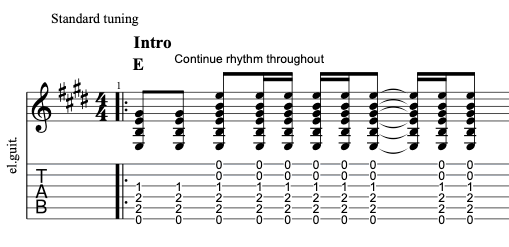
The main underlying feel for “Melissa” is a driving singer-songwriter 16th note groove. In 4/4 time, 16th notes divide each beat into four equal parts, creating a flowing rhythm like this:
1 e & a 2 e & a 3 e & a 4 e & a
The numbers (1, 2, 3, 4) represent the main beats in the measure. The syllables “e,” “&,” and “a” divide each beat into evenly spaced subdivisions, giving the rhythm more detail and energy.
When counted out loud, it sounds like:
“One-e-and-a, Two-e-and-a, Three-e-and-a, Four-e-and-a.”
However, I don’t strum all 16th notes. Here’s an example of a “Melissa” style strumming pattern demonstrating different rhythms:
Melissa Guitar Lesson (SOLO)
Conclusion
To wrap it up, even though “Melissa” was never a chart-topping hit for The Allman Brothers. It holds a special place of sweet nostalgia in the hearts of many of their fans.
Keep practicing, and if you want to learn songs way faster, better understand the fretboard for lead and rhythm, and not waste years spinning your wheels with guitar, grab my free fretboard guide here right now:
Jon MacLennan
Like this blog post? Get Jon’s best guitar lessons straight to your inbox.
Discover the 5 easiest and fastest ways to play the blues scale anywhere on the neck with this FREE PDF GUIDE
