The ULTIMATE New Kid in Town Chords & Guitar Lesson
There’s an old tongue-in-cheek way of describing the career of an artist in the music business that goes like this:
“Who’s Jon MacLennan?”
“Get me Jon MacLennan!”
“Get me a young Jon MacLennan!”
“Who’s Jon MacLennan?”
Simply use the formula:
“Who’s [Name]?”
“Get me [Name]!”
“Get me a young [Name]!”
“Who’s [Name]?”
And you’ve got it!
Below, is a famous song from the Eagles about just that. And, I’m going to share some insider tips on the guitar style behind it.
So grab your axe, and let’s dive into this “New Kid in Town” chords and guitar lesson!
Who Wrote New Kid in Town?
“New Kid in Town” was originally written by Don Henley, Glenn Frey, and J.D. Souther.
It was recorded and released as the lead single from the Eagles’ album Hotel California.
The guys wrote it at the peak of their success. Yet they were already feeling anxiety around their own demise. The struggle to stay relevant as an artist. And, the constant threat of the “New Kid in Town”.
It was released on December 7, 1976, and the smooth arrangement and vocals countered the edgier rock tunes on the rest of the album.
“New Kid in Town” was produced by Bill Szymczyk and recorded during the Hotel California sessions. Glenn Frey sang lead, and upon release, it was a major success. It reached number one on the Billboard Hot 100 in the U.S. and number 20 in the UK.
It also won the Grammy Award for Best Vocal Arrangement for Two or More Voices in 1978 and was later certified Gold by the RIAA.
To this day, the harmonies and melodic flow on this one have been singled out by fans and critics as some of the Eagles’ most beautiful work.
Now, you may be wondering…
What is the tuning for New Kid in Town?
The tuning for "New Kid In Town” is standard tuning. Don Felder kept things simple. Standard tuning is spelled: E, A, D, G, B, and E.
Here are the strings:
- E (6th string, lowest pitch)
- A (5th string)
- D (4th string)
- G (3rd string)
- B (2nd string)
- E (1st string, highest pitch)
All right!
Now that you know the tuning for “New Kid in Town”, let’s next talk about…
New Kid in Town Chords
To play “New Kid in Town”, you only need to know 16 main chords they are E, B7, Asus2, F#m11, G#sus4, G#, C#m, F#, F#m, Am, D7, G, C, Em, A7, and G#m.
Some of these chords are played as open chords, and others as bar chords. If bar chords are giving you all kinds of aches and pains, and you haven’t yet discovered how to play them effortlessly, go here: https://www.jonmaclennan.com/7mistakes
Let’s take a look at a few ways these shapes can be played on the fretboard.
E is a beautiful chord played using all 6 strings like this:

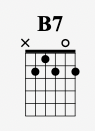
B7 is a great bluesy-sounding chord played from the 5th string down like so:
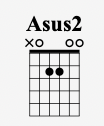
Asus2 is very open-sounding and is also played from the 5th string down like this:
F#m11 is played as part of a walk-up progression like this:

G#sus4 and G# are both played from the 4th string down like so:


C#m is a bar chord played from the 5th string down like so:

F# is a bar chord played in 2nd position and uses all 6 strings like this:

F#m just changes one note from the previous chord, like this:

Am is played in standard (campfire-style) open position like so:

D7 is a chord that transitions the song to the key change (more on this below)

G is played in a folk-style like this:

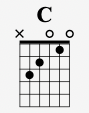
C is played from the 5th string down like so:
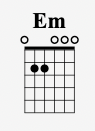
Em uses all 6 strings in open position like this:
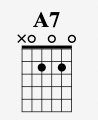
A7 is played from the 5th string down like this:
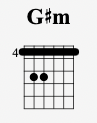
Finally, G#m is a bar chord in 4th position using all 6 strings like this:
If you’ve struggled to understand the fretboard for RHYTHM and LEAD guitar, and want to discover the easiest and fastest way. Then get your hands on my free Fretboard Guide PDF right here now:
Is New Kid in Town hard to play on guitar?
I would say playing “New Kid in Town” on guitar is going to require an intermediate skill level. The trickiest parts are the arpeggio picking, bar chords, key changes, and many sections. These elements are NOT suited for beginners. It will just lead to more frustration. So, take your time with this one.
What key is New Kid in Town in?
“New Kid in Town”, as recorded by the Eagles, is in the key of E major. However, it modulates to the key of G major partway through the tune. And then, ends back in the key of E major.
Let’s break it down with these two key centers in mind, starting with the chords in the key of E major:
E major (E)
Notes: E, G♯, B
Function: This is the I chord, the tonic. It's the "home base" of the key of E major and provides a sense of stability and resolution.
B7 (B dominant 7th)
Notes: B, D♯, F♯, A
Function: This is the V7 chord, the dominant 7th. It has a strong pull towards the tonic (E major) due to the tritone between D♯ (the major 3rd) and A (the minor 7th), which resolves to E and G♯ , respectively. This chord is crucial for creating a sense of forward motion and resolution in a progression.
Asus2 (A suspended 2nd)
Notes: A, B, E
Function: This chord is a IV chord in the key of E, but the sus2 creates a beautiful open sound used in countless Eagles tunes.
F♯m (F♯ minor)
Notes: F♯, A, C♯
Function: This is the ii chord, the supertonic. It is a very common chord that acts as a pre-dominant chord, typically leading to the V (B7) chord before resolving to the I (E) chord.
G♯sus4 (G♯ suspended 4th)
Notes: G♯, C♯, D♯
Function: G♯ is the root of the iii chord (G♯m) in the key of E major. The G♯sus4 chord replaces the B (minor 3rd) with a C♯ (perfect 4th). This chord functions as a mediant (iii) with a sense of temporary suspension. It resolves to G♯ in “New Kid in Town”.
G♯ major (G♯)
Notes: G♯, B♯, D♯ (enharmonically G♯, C, D♯)
Function: The G♯ chord is a secondary dominant, specifically the V of the vi chord (C♯m). It's a G♯ major chord where the B is raised to a B♯ (which is enharmonically C). This chord momentarily tonicizes C#m (relative minor).
C♯m (C♯ minor)
Notes: C♯, E, G♯
Function: This is the vi chord, the relative minor of E major. It provides a more melancholic sound compared to the major chords. It's a very common chord in pop and rock progressions.
F♯ major (F♯)
Notes: F♯, A♯, C♯ (enharmonically F♯, B♭, C♯)
Function: The F♯ chord is a secondary dominant, specifically the V of the V chord (B major). It's an F♯ major chord, where the A is raised to A♯. It functions as a V/V, creating a strong pull towards B major, which in turn leads to the E major tonic. It's a classic progression.
G♯m (G♯ minor)
Notes: G♯, B, D♯
Function: This is the iii chord, the mediant. It is a diatonic chord in E major that is used to create tension and movement in a chord progression. It often leads to the vi (C♯m) or IV (A) chord.
Then we have the chords moving to the key of G major:
Am7 (A minor 7th)
Notes: A, C, E, G
Function: This is the ii7 chord in G major. This chord begins a very common ii-V7-I chord progression in the key of G.
D7 (D dominant 7th)
Notes: D, F♯, A, C
Function: This is the V7 chord, the dominant 7th. It has a powerful pull toward the tonic (G major). The F♯ (the major 3rd) and the C (the minor 7th) create a tritone that strongly wants to resolve to G and B, respectively, which are the root and 3rd of the G major chord. This is a fundamental chord for establishing the new key.
G (G major)
Notes: G, B, D
Function: This is the I chord, the tonic. It's the "home" chord of the key of G major.
C (C major)
Notes: C, E, G
Function: This is the IV chord, the subdominant. It is a diatonic chord that is very common in progressions. It often acts as a bridge between the tonic (G) and the dominant (D) chords, moving the harmony forward but without the same level of tension as the V chord.
Em (E minor)
Notes: E, G, B
Function: This is the vi chord, the relative minor of G major. It shares two notes with the G major chord (G and B) and gives you a contrasting sound.
A7 (A dominant 7th)
Notes: A, C♯, E, G
Function: This chord is a secondary dominant, specifically the V7 of the V chord (D major). The C♯ is not in the key of G major, but it is the leading tone to D. This chord is used to "tonicize" or temporarily make the D major chord feel like the new key. It creates a strong pull to D, which then leads back to the G major tonic. This is a classic example of a V7/V chord.
All right!
So that’s the theory. Next, let’s look at…
What is the strumming pattern for New Kid In Town?
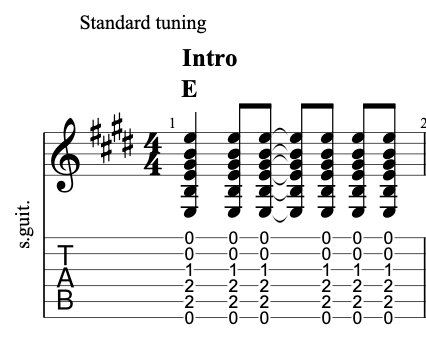
The main underlying feel for “New Kid in Town” is a light 8th note rock feel. In 4/4 time, 8th notes divide each beat into two equal parts, creating a steady, walking rhythm like this:
1 & 2 & 3 & 4 &
The numbers (1, 2, 3, 4) represent the main beats in the measure. The "&" (pronounced "and") divides each beat into two evenly spaced subdivisions.
When counted out loud, it sounds like:
"One-and, Two-and, Three-and, Four-and."
Here’s an example of a strumming pattern in the style of “New Kid in Town”:
Conclusion
To wrap it up, “New Kid In Town” is a brilliant song. However, it’s not for beginners.
So keep practicing, and if you want to learn songs way faster, better understand the fretboard for lead and rhythm, and not waste years spinning your wheels with guitar, grab my free fretboard guide here right now:
Jon MacLennan
Like this blog post? Get Jon’s best guitar lessons straight to your inbox.
Discover the 5 easiest and fastest ways to play the blues scale anywhere on the neck with this FREE PDF GUIDE
