Cat Stevens – “Peace Train” Chords & Guitar Lesson
Here's a song that's awesome to play for parties and sing-alongs.
And, in many ways, it's to Cat Stevens what "Imagine" is to John Lennon...
You only need a couple of chords to play it.
Below, I want to share with you some insider tips on the guitar style behind it.
So grab your axe, and let’s dive into this “Peace Train” chords and guitar lesson!
Who wrote Peace Train?
“Peace Train” was originally written by Cat Stevens (also known as Yusuf/Cat Stevens). It was released in 1971 on his legendary album Teaser and the Firecat.
Now, in contrast to a few other Stevens songs like “Father and Son” and “The First Cut Is The Deepest", “Peace Train” is an anthem.
It’s a song of hope and optimism.
In many ways, it is to Cat Stevens what "Imagine" is to John Lennon — a timeless musical statement about the possibility of a better world.
Stevens wrote it during a very turbulent time. The Vietnam War was happening, and there was a lot of social division and political unrest. But “Peace Train” is a metaphor for humanity coming together. It’s a message that transcends all of that chaos and strikes the heart of human beings.
Yes, the world and the past can be dark. But that doesn’t mean the future can’t be bright.
“Peace Train” took this simple idea and grew it into one of the most defining anthems of the era. It was recorded in March 1971 at Morgan Studios in Willesden, London, during the sessions for Teaser and the Firecat. The album itself was recorded between Los Angeles and London under the production of Paul Samwell-Smith, former bassist of The Yardbirds.
It’s all built around a simple arrangement. It’s one main progression throughout that’s driven by strumming acoustic guitars.
Upon its release, "Peace Train" became Cat Stevens' first Top 10 hit in the United States, reaching No. 7 on the Billboard Hot 100. It also spent three weeks at No. 1 on Billboard's Adult Contemporary chart and reached the Top 3 in countries including Australia and Canada.
Also, the success of this tune helped propel Teaser and the Firecat into one of the biggest albums of Stevens' career. Although the song itself did not win major competitive music awards, its legacy has proven far greater than any single trophy.
Now, you may be wondering…
What is the tuning for Peace Train?
The tuning for "Peace Train” as recorded by Cat Stevens is standard tuning. Yusuf kept things simple on the tuning. Standard tuning is spelled: E, A, D, G, B, and E.
Here are the strings:
- E (6th string, lowest pitch)
- A (5th string)
- D (4th string)
- G (3rd string)
- B (2nd string)
- E (1st string, highest pitch)
All right!
Now that you know the tuning for “Peace Train” let’s next talk about…
Peace Train Chords
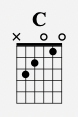
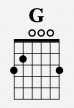
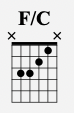
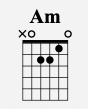
To play “Peace Train”, as recorded by Cat Stevens, you only need to know 4 main chords they are C, G, F/C, and Am. These chords are played as open chords with one that can be bar’d or not.
If bar chords are giving you all kinds of aches and pains, and you haven’t yet discovered how to play them effortlessly, go here: https://www.jonmaclennan.com/barchords
Let’s take a look at a few ways these shapes might show up on the fretboard.
C is played in a typical (campfire) style like this:
G is played in a folk style as well using all 6 strings like this:
F/C is the middle part of an F bar chord. Here you can use strings 5-2 like this:
Finally, Am is played from the 5th string down like so:
If you’ve struggled to understand the fretboard for RHYTHM and LEAD guitar. and want to discover the easiest and fastest way. Then get your hands on my free Fretboard Guide PDF right here now:
Is Peace Train hard to play on guitar?
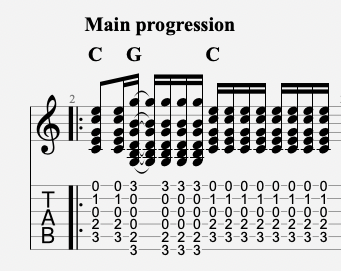
I would say playing “Peace Train” as recorded by Cat Stevens on guitar is going to require an intermediate skill level. The trickiest parts are the chord changes and the rhythms. The groove uses a sixteenth note rhythm, and many of the chords change on the “off” beats. This syncopation can be tough to get down. So, take your time with this one.
What key is Peace Train in?
“Peace Train”, as recorded by Cat Stevens, is in the key of C major. The primary scale for the song is the C major scale, which is built using the notes C, D, E, F, G, A, and B.
Let’s take a look at how these chords all function in the key of C major, starting with…
C
Notes: C, E, G
Function: This is I, the tonic of C major. It’s the “home” chord. Every other chord in the progression either moves away from this center or creates tension that eventually resolves back to it.
G
Notes: G, B, D
Function: This is the V chord in C major, the dominant. The dominant creates strong forward motion and harmonic tension that wants to resolve back to C.
F/C
Notes: C, F, A
Function: This is the IV chord in second inversion, with C in the bass. Functionally, it is still the IV chord (the subdominant), creating movement away from the tonic without generating strong tension. This is just the guitar voicing though, the bass actually plays the root note. However, using this shape on guitar makes transitioning through the progression easier.
Am
Notes: A, C, E
Function: This is the vi chord in C major, the relative minor. It shares two notes with the tonic chord (C and E), making it closely related to C major.
Together, these chords form some of the most common chords in the key of C major.
All of them are diatonic chords.
All right!
That’s my theory breakdown.
Next, let’s look at…
What is the strumming pattern for Peace Train?
Here’s where things get a bit tricky. “Peace Train,” has a sixteenth-note subdivision. In 4/4 time, 16th notes divide each beat into four equal parts, creating a faster, more detailed rhythmic subdivision like this:
1 e & a 2 e & a 3 e & a 4 e & a
The numbers (1, 2, 3, 4) represent the main beats in the measure, while the "e," "&," and "a" are the subdivisions that fall between the beats. These extra subdivisions add motion, precision, and rhythmic complexity to the groove.
When counted out loud, it sounds like:
"One-ee-and-uh, Two-ee-and-uh, Three-ee-and-uh, Four-ee-and-uh."
Here’s an example of a “Peace Train” style strumming pattern:
Conclusion
To wrap it up, “Peace Train” is one of the most defining songs of the '70s folk era. While the strumming may be challenging, once you get it down, it's a fantastic song to play as a sing-along.
Keep practicing, and if you want to learn songs way faster, better understand the fretboard for lead and rhythm, and not waste years spinning your wheels with guitar, grab my free fretboard guide here right now:
Jon MacLennan
Like this blog post? Get Jon’s best guitar lessons straight to your inbox.
Discover the 5 easiest and fastest ways to play the blues scale anywhere on the neck with this FREE PDF GUIDE
