Roy Orbison – “Pretty Woman” Chords & Guitar Lesson
Here's a song with one of the most recognizable and legendary guitar riffs of all time.
In it, Roy Orbison sang:
===
Pretty woman walkin' down the street
Pretty woman, the kind I'd like to meet
===
It’s chock-full of great rock guitar techniques, and you only need a handful of chords to play it.
Below, I’m going to share some insider tips on the guitar style behind it.
So grab your axe, and let’s dive into this “Pretty Woman” chords and guitar lesson!
Who Wrote Pretty Woman?
“Pretty Woman” was originally written by Roy Orbison and his longtime collaborator Bill Dees. It’s a simple song of attraction between a man and a beautiful woman walking down the street.
It went on to become one of the most iconic rock songs of the ‘60s.
“Pretty Woman” was recorded at Monument Records Studio in Nashville, with Fred Foster at the helm, producing. The track kicks off with one of the most recognizable guitar riffs in rock history, played by Billy Sanford. He came up with the lick in the studio, as do many top session musicians on famous records.
There is a lot of space in the arrangement, which lets Orbison’s voice and the drama of the song breathe. The stop-time section near the end, with just drums and vocals, is epic.
“Pretty Woman” went to number one on the Billboard Hot 100 in the United States and also topped the charts in the UK, making Orbison one of the few American artists at the time to dominate both markets simultaneously. It has since been inducted into the Grammy Hall of Fame and is regularly ranked on lists of the greatest songs of all time, including Rolling Stone’s 500 Greatest Songs. It’s also one of the most covered and referenced songs in rock history.
Even the Beatles were fans; John Lennon and Paul McCartney admired Orbison’s songwriting and vocal control, and George Harrison famously said Orbison’s voice was “from another planet.” The song also influenced countless later artists, from Bruce Springsteen to Van Halen, whose hard-rock cover brought “Pretty Woman” back into the charts in the early ‘80s.
Now, you may be wondering…
What is the tuning for Pretty Woman?
The tuning for "Pretty Woman” is standard tuning. The session musicians kept things simple. Standard tuning is spelled: E, A, D, G, B, and E.
Here are the strings:
- E (6th string, lowest pitch)
- A (5th string)
- D (4th string)
- G (3rd string)
- B (2nd string)
- E (1st string, highest pitch)
All right!
Now that you know the tuning for “Pretty Woman,” let’s next talk about…
Pretty Woman Chords
To play “Pretty Woman”, as recorded by Roy Orbison, you’ll need to know 8 main chords they are A, F#m, D, E, Dm, G, C, and Am. These chords are a combination of open and bar chords.
If bar chords are giving you all kinds of aches and pains, and you haven’t yet discovered how to play them effortlessly, go here: https://www.jonmaclennan.com/barchords
Let’s take a look at a few ways these shapes might show up on the fretboard.
A is played with one finger in the fretting hand and from the 5th string down, like this:
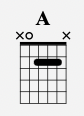
F#m is a bar chord in 2nd position and uses all 6 strings like so:
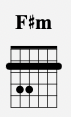
D is played from the 4th string down like this:
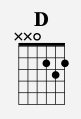
E is a beautiful open-sounding chord. It uses all 6 strings like this:
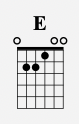
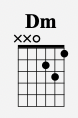
Dm is played from the 4th string down as well, like this:
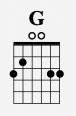
G is played using all 6 strings like this:
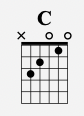
C is played in a typical (campfire) style like this:
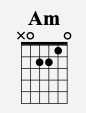
Finally, we have Am. This chord has a beautiful sound to it. I play it from the 5th string down like this:
If you’ve struggled to understand the fretboard for RHYTHM and LEAD guitar, and want to discover the easiest and fastest way. Then get your hands on my free Fretboard Guide PDF right here now:
Is Pretty Woman hard to play on guitar?
I would say playing “Pretty Woman” on guitar is going to require an intermediate guitar skill level. The trickiest parts are getting the riff up to speed, bar chords, and then counting in all the long sections before they move on. Putting these parts together and getting it clean is going to require many skills. So, take your time with this one.
What key is Pretty Woman in?
“Pretty Woman”, as recorded by Roy Orbison, is in the key of A major. The primary scale for the song would be the A major scale, which is built using the notes A, B, C#, D, E, F#, and G#.
Let’s take a closer look at how these (main) chords relate in the key of A. Starting with…
A
Notes: A, C#, E
Function: This is the I chord, the tonic of A major. It’s the harmonic “home base” where everything feels resolved and stable.
F#m
Notes: F#, A, C#
Function: This is the vi chord in the key of A major (sometimes called the relative minor). It shares two notes with the tonic (A and C#), which makes it feel very closely related and emotionally connected to A.
D
Notes: D, F#, A
Function: This is the IV chord in A major. It’s a diatonic chord that creates a sense of movement away from the tonic but still in the key.
E
Notes: E, G#, B
Function: This is the V chord, the dominant of A major. Its job is to create tension that wants to resolve back to the tonic. The G# is the leading tone of the key and pulls strongly toward A, giving the progression forward momentum.
Here, the chords take a bit of a shift to the key of C major/A minor. We’ll analyze this in this “temporary” key.
Dm
Notes: D, F, A
Function: This is the ii chord in the key of C major. It’s a diatonic minor chord built on the second scale degree. Functionally, Dm acts as a pre-dominant chord, meaning it naturally wants to move toward the dominant.
G
Notes: G, B, D
Function: This is the V chord, the dominant of C major. Its job is to create strong tension that resolves back to the tonic. The B note is the leading tone in the key of C and pulls strongly toward C, which is why progressions that go from G to C feel so satisfying and complete.
C
Notes: C, E, G
Function: This is the I chord, the tonic of C major. It’s the harmonic home base which is a minor third away from the original key of the song – A major.
Am
Notes: A, C, E
Function: This is the vi chord in the key of C major and also the relative minor of the key of C. But it’s also the parallel minor to A major.
So the song takes a bit of a detour. It starts in A major → Cmajor/Aminor → A major
All right!
That’s my theory breakdown.
Next, let’s look at…
What is the strumming pattern for Pretty Woman?
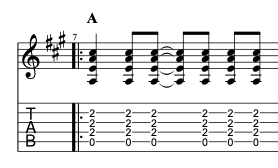
The main underlying groove for “Pretty Woman” is an 8th note rock feel. In 4/4 time, 8th notes divide each beat into two equal parts, creating a steady, driving rhythm. The counting for 8th notes in a measure looks like this:
1 & 2 & 3 & 4 &
The numbers (1, 2, 3, 4) represent the main beats in the measure. The "&" divides each beat into two evenly spaced subdivisions.
When counted out loud, it sounds like:
"One-and, Two-and, Three-and, Four-and."
This gives the tune a strong and consistent forward motion. However, I wouldn’t strum all 8th notes. Instead, I would blend both 8th notes and 1/4 notes like this:
Conclusion
There ya have it! “Pretty Woman” is a simple song about men being naturally biologically attracted to women’s beauty.
Keep practicing, and if you want to learn songs way faster, better understand the fretboard for lead and rhythm, and not waste years spinning your wheels with guitar, grab my free fretboard guide here right now:
Jon MacLennan
Like this blog post? Get Jon’s best guitar lessons straight to your inbox.
Discover the 5 easiest and fastest ways to play the blues scale anywhere on the neck with this FREE PDF GUIDE
