The ULTIMATE “Proud Mary” Chords & Guitar Lesson
Here’s a tune that's been a staple of classic rock radio ever since its release in 1969.
It’s a perfect example of Americana rock, with a swampy, Mississippi style.
Below, I’m going to share with you some insider tips on the guitar style behind it.
So grab your axe, and let’s dive into this “Proud Mary” chords and guitar lesson!
Who Wrote Proud Mary?
“Proud Mary” was originally written by John Fogerty, the primary songwriter and singer/guitarist for the American rock band Creedence Clearwater Revival. It first appeared on their 1969 album Bayou Country. Like many Fogerty tunes, it celebrates the hard-working lifestyle of commoners along the Mississippi River. He was inspired both by the idea of the riverboats on the Mississippi and the notion of a fresh start, with lyrics like:
Left a good job in the city
Workin' for the man every night and day...
“Proud Mary” was recorded at Wally Heider Studios in San Francisco in early 1969. Creedence used this studio a lot. John Fogerty produced the track, and the arrangement is pretty straightforward. It’s a very similar style to many of their biggest hits, featuring an unmistakable groove, catchy guitars, and powerful vocals all the way through.
Upon its release, “Proud Mary” became one of their most commercially successful songs. It was released as a single in January 1969 and reached number two on the Billboard Hot 100, marking a major milestone in CCR’s career. The song has remained a staple of classic rock radio ever since and has been certified gold.
But it doesn’t stop there…
Later in 1971, Ike & Tina Turner did a version that starts off slow and ramps up to a high-energy soul and rock performance.
Here’s a lesson on their version:
Proud Mary Guitar Lesson (Ike & Tina Turner)
But CCR’s original version is often included on lists of the greatest rock songs of all time, while Tina Turner’s cover has been recognized as one of the definitive soul-rock performances in music history.
Now, you may be wondering…
What is the tuning for Proud Mary?
The tuning for "Proud Mary” is both E standard tuning and D standard tuning (down 1 whole step). John would often play in D standard, while Tom would play in E standard. E standard tuning is spelled: E, A, D, G, B, and E.
Here are the strings:
- E (6th string, lowest pitch)
- A (5th string)
- D (4th string)
- G (3rd string)
- B (2nd string)
- E (1st string, highest pitch)
D standard tuning is spelled: D, G, C, F, A, and D.
Here are the strings:
- D (6th string, lowest pitch)
- G (5th string)
- C (4th string)
- F (3rd string)
- A (2nd string)
- D (1st string, highest pitch)
All right!
Now that you know the tuning for “Proud Mary,” let’s next talk about…
Proud Mary Chords
To play “Proud Mary”, as recorded by Creedence Clearwater Revival, you only need to know 6 main chords they are D, A, Bm, G, C, and F. These chords are a blend of open chords and bar chords. If bar chords are giving you all kinds of aches and pains, and you haven’t yet discovered how to play them effortlessly, go here: https://www.jonmaclennan.com/barchords
Let’s take a look at a few ways these shapes might show up on the fretboard.
D is played in a standard (campfire) position from the 4th string down, like so:
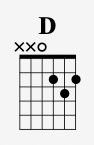
A can be played from the 5th string down like this:
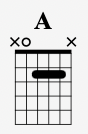
Bm is a bar chord played in 2nd position like this:
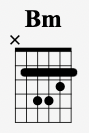
G can be played using all 6 strings like so:
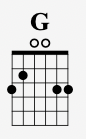
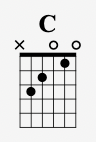
C is played in open position from the 5th string down like this:
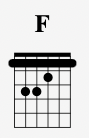
Finally, we have F, which can be played using all 6 strings as well, like this:
If you’ve struggled to understand the fretboard for RHYTHM and LEAD guitar, and want to discover the easiest and fastest way. Then get your hands on my free Fretboard Guide PDF right here now:
Is Proud Mary hard to play on guitar?
I would say playing “Proud Mary” on guitar is going to require an intermediate skill level. The song only has 5 chords. However, there are a few bar chords, and the syncopated chords and blues riffs can be quite challenging. So, take your time with this one.
What key is Proud Mary in?
“Proud Mary”, as recorded by CCR, is in the key of D major. The primary scale would be the D major scale, which is built using the notes D, E, F#, G, A, B, and C#.
Let’s take a closer look at how all these chords relate in the key of D major. Starting with…
D
Notes: D, F#, A
Function: This is the I chord, the tonic of D major. It’s “home”. Progressions often begin or end here, and it establishes the key clearly.
A
Notes: A, C#, E
Function: This is the V chord, the dominant of D major. Its biggest role is to create tension that pulls back to the tonic (D). The C# note acts as the leading tone, giving the chord a forward-driving energy.
Bm
Notes: B, D, F#
Function: This is the vi chord, sometimes called the relative minor. Bm creates a softer, more introspective sound compared to the major chords. It also shares two notes (D and F#) with the tonic, making transitions smooth.
G
Notes: G, B, D
Function: This is the IV chord, built on the fourth degree of D major. It acts as a pre-dominant chord, leading naturally toward the dominant (A) or back to the tonic (D).
C
Notes: C, E, G
Function: This chord is non-diatonic in the key of D major, meaning it doesn’t naturally occur in the D major scale. Using C major creates a “bluesy” feel, often adding tension or a surprising color to a progression. In rock, folk, or blues contexts, C major can function as a passing chord or a flat VII chord leading into the tonic or dominant.
F
Notes: F, A, C
Function: This is also non-diatonic in D major. Like C major, F major introduces notes outside the key (F natural) and is often used for color, tension, or a bluesy/rock flavor.
Together, these chords make up some of the most common sets of chords in popular music.
Millions of songs use them…
All right!
That’s my theory breakdown.
Next, let’s look at…
What is the strumming pattern for Proud Mary?
The main underlying groove for “Proud Mary” is a swampy 8th note rock feel. In 4/4 time, 8th notes divide each beat into two equal parts, creating a steady, walking rhythm. The counting for 8th notes in a measure looks like this:
1 & 2 & 3 & 4 &
The numbers (1, 2, 3, 4) represent the main beats in the measure. The "&" divides each beat into two evenly spaced subdivisions.
When counted out loud, it sounds like:
"One-and, Two-and, Three-and, Four-and."
Here’s an example of a strumming pattern in the style of “Proud Mary” using 8th notes and also a backbeat feel:

Conclusion
To wrap it up, whether you’re playing the Ike & Tine Turner version or the original Creedence Clearwater Revival version, “Proud Mary” is sure to get your audience out on the dance floor.
Keep practicing, and if you want to learn songs way faster, better understand the fretboard for lead and rhythm, and not waste years spinning your wheels with guitar, grab my free fretboard guide here right now:
Jon MacLennan
Like this blog post? Get Jon’s best guitar lessons straight to your inbox.
Discover the 5 easiest and fastest ways to play the blues scale anywhere on the neck with this FREE PDF GUIDE
