Grateful Dead – “Ripple” Chords & Guitar Lesson
Have you ever thrown a pebble into the water and seen what happens?
Well, here’s a song about exactly that.
It’s got great acoustic guitars, and many Deadheads consider this tune to be the band’s unofficial anthem.
Below, I want to share with you some insider tips on the guitar style behind it. (Including both the LEAD and RHYTHM.)
So grab your axe, and let’s dive into this “Ripple” chords and guitar lesson!
Who wrote Ripple?
“Ripple” was originally written by Jerry Garcia with lyrics by Robert Hunter. It was recorded by Grateful Dead and placed on their iconic 1970 album American Beauty.
At its core, “Ripple” is almost like a folk hymn. It’s deep, reflective, and flowing. The song is a part of a change in sound the band went through, transitioning from an earlier psychedelic electric sound to more of an acoustic, country-influenced approach.
It’s a great example of the Garcia/Hunter melodic and poetic songwriting partnership.
The song was recorded in 1970 at Wally Heider Studios in San Francisco. The arrangement is quite simple, just easy-going acoustic guitars, bass, light drums, and vocals.
Although “Ripple” was never released as a single and did not chart, it has become one of the most beloved songs in the Grateful Dead catalog.
Over time, it has taken on a life far beyond its original release. Similar to the metaphor of a ripple itself.
Now, you may be wondering…
What is the tuning for Ripple?
The tuning for "Ripple” as recorded by Grateful Dead is standard tuning. They kept things simple. Standard tuning is spelled: E, A, D, G, B, and E.
Here are the strings:
- E (6th string, lowest pitch)
- A (5th string)
- D (4th string)
- G (3rd string)
- B (2nd string)
- E (1st string, highest pitch)
All right!
Now that you know the tuning for “Ripple,” let’s next talk about…
Ripple Chords
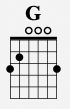
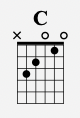
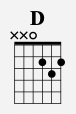
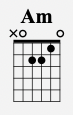
To play “Ripple”, as recorded by Grateful Dead, you only need to know 5 main chords they are G, C, D, Am, and A. These chords can be played as open and/or bar chord shapes.
If bar chords are giving you all kinds of aches and pains, and you haven’t yet discovered how to play them effortlessly, go here: https://www.jonmaclennan.com/barchords
Let’s take a look at a few ways these shapes might show up on the fretboard.
G is played in a simple folk-style using all 6 strings like this:
C is played in a common (campfire) style as well, like so:
D is played from the 4th string down like this:
Am is played from the 5th string down like so:
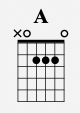
Finally, A is played in open position, with all your fretting hand fingers on the same fret, like this:
If you’ve struggled to understand the fretboard for RHYTHM and LEAD guitar. and want to discover the easiest and fastest way. Then get your hands on my free Fretboard Guide PDF right here now:
Is Ripple hard to play on guitar?
I would say strumming the basic chords to “Ripple” as recorded by Grateful Dead on guitar is going to require a beginner skill level. However, if you want to start adding in the lead and embellishments, that’s going to move more into intermediate guitar playing. So, take your time with this one.
What key is Ripple in?
“Ripple”, as recorded by Grateful Dead, is in the key of G major. The primary scale for the song is the G major scale, which is built using the notes G, A, B, C, D, E, and F#.
Let’s take a look at how these chords all function in the key of G major, starting with…
G major
Notes: G, B, D
Function: This is the I chord, the tonic of G major. It’s the “home” chord of which everything else is based around.
C major
Notes: C, E, G
Function: This is the IV chord in G major, the subdominant. It moves away from the tonic without creating strong tension. It is one of the most stable “supporting” chords in the key and often naturally leads toward D or back to G.
D major
Notes: D, F#, A
Function: This is the V chord in G major, the dominant. The F# (leading tone) creates a strong forward tension that pulls toward G. This chord has a solid “wanting to resolve” quality and is the primary driver of resolution back to the tonic.
Am
Notes: A, C, E
Function: This is the ii chord in G major, sometimes called the super-tonic. It feels softer and more emotional. It comes in during the chorus.
A
Notes: A, C#, E
Function: This is the only chord in the song that is non-diatonic to G major. It is a secondary dominant, specifically V/V, meaning it acts as the dominant of D (the V chord).
Taken together, these chords create an awesome journey that the song goes on.
All right!
That’s my theory breakdown.
Next, let’s look at…
What is the strumming pattern for Ripple?
The main underlying groove for “Ripple” is an acoustic rock feel with a lilting swing. The primary rhythmic driver is an 8th note. In 4/4 time, swing 8th notes divide each beat into a long-short rhythmic feel rather than two perfectly equal parts. This creates the relaxed, rolling groove that is heard in many blues, jazz, and roots-based songs.
Instead of feeling perfectly even, like:
1 & 2 & 3 & 4 &
Swing 8ths are often counted more like:
1 a 2 a 3 a 4 a
where the first part of each beat is held slightly longer and the second part comes later, creating a bouncing, laid-back feel.
When counted out loud, it sounds more like:
"One-a, Two-a, Three-a, Four-a."
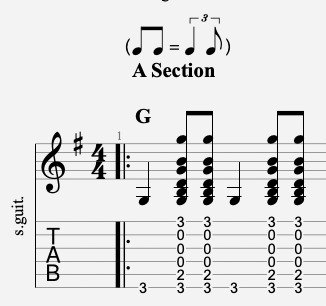
However, instead of strumming all the 8th notes, what I would do is a mixture of quarter notes and 8th notes like this:
Conclusion
To wrap it up, while never a chart-topping hit, “Ripple” has done exactly that. It’s a stone in the pool of Grateful Dead’s catalog, and it just keeps rippling and rippling…
Keep practicing, and if you want to learn songs way faster, better understand the fretboard for lead and rhythm, and not waste years spinning your wheels with guitar, grab my free fretboard guide here right now:
Jon MacLennan
Like this blog post? Get Jon’s best guitar lessons straight to your inbox.
Discover the 5 easiest and fastest ways to play the blues scale anywhere on the neck with this FREE PDF GUIDE
