Runaway Chords & Guitar Lesson (Most Accurate)
Since the beginning of time, women have "runaway" from men, leaving them heartbroken, spinning, and wondering, "Why-why-why-why-why?"
Here's a legendary song about just that.
Below, I’m going to share some insider tips on the guitar style behind it.
So grab your axe, and let’s dive into this “Runaway” chords and guitar lesson!
Who Wrote Runaway?
“Runaway” was written by Del Shannon (a.k.a. Charles Westover) and keyboardist Max Crook, who shared credit for the iconic keyboard break. It sings about an emotional story of heartbreak. The lyrics describe a guy walking in the rain, mourning the loss of his girl.
“Runaway” was recorded at Bell Sound Studios, New York City, on January 21, 1961, with producer Harry Balk at the helm.
The track features Del Shannon (vocals/guitar), Max Crook on the Musitron (an early synth he built), plus session players like Al Caiola, Moe Wechsler, Joe Marshall, Milt Hinton, and Bucky Pizzarelli.
One of the most distinct features of the song is the Musitron break. This was one of the first synthesizer‑style riffs on a hit record. The Musitron is a monophonic keyboard with a really distinctive reedy tone to it. Crook wired this keyboard together with homemade circuitry. Here’s a quick video about it:
Another interesting note about the recording is it was originally done in A minor (with Del’s vocals slower). But after they recorded the song, they sped up the tape machine for a sharper pitch in the released version. “Runaway” was first released as a standalone single on February 18, 1961. It shot up to #1 on the US Billboard Hot 100 and stayed there for four weeks. After its huge success as a single, “Runaway” ended up being included on Del Shannon’s debut album titled Runaway with Del Shannon, released in 1961.
Now, you may be wondering…
What is the tuning for Runaway?
The tuning for "Runaway" as recorded by Del Shannon is standard tuning. Standard tuning is spelled: E, A, D, G, B, and E. However, if you want to play along with the sped-up recording, you’ll need to place a capo on the 1st fret. This would then change the notes slightly.
Here are the strings:
- F (6th string, lowest pitch)
- Bb (5th string)
- Eb (4th string)
- Ab (3rd string)
- C (2nd string)
- F (1st string, highest pitch)
All right!
Now that you know the tuning for “Runaway”, let’s next talk about…
Runaway Chords
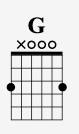
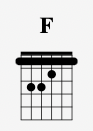
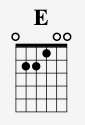
To play “Runaway”, as recorded by Del Shannon, you’ll only need to know 7 main chords they are Am, G, F, E, A, F#m, and D. The majority of these chords can be played as open position shapes. Let’s take a look at a few ways these chords can be played on the fretboard:
Am is played from the 5th string down like this:
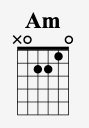
G I play in more of a folk-style like this:
F can be played using all 6 strings as a bar chord in 1st position like this:
E is a wonderful chord using all 6 strings. I play it like this:
A is the parallel major of the song’s key. This shape is played from the 5th string down like so:
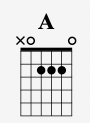
(Note: if you watch the live version on David Letterman in 1987, Del reaches up and adds the 5th fret on the first string to this chord. It’s a great sound.)
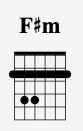
F#m is played using all 6 strings and in 2nd position like this:
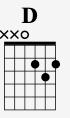
Finally, D is played from the 4th string down like this:
If you’ve struggled to understand the fretboard for RHYTHM and LEAD guitar, and want to discover the easiest and fastest way. Then get your hands on my free Fretboard Guide PDF right here now:
Is Runaway hard to play on guitar?
I would say playing “Runaway” on guitar is going to require a solid intermediate to advanced skill level. It’s got a number of sections and rhythms to nail. Plus, it moves at a pretty brisk tempo. So, take your time with this one.
What key is Runaway in?
“Runaway,” as recorded by Del Shannon, is in the key of A minor. However, after it was recorded, the track was sped up just a little bit. This altered the pitch and makes the final recording sound in the key of Bb minor – one half step up. But live, you can see and hear the musicians are playing in A minor. Another twist is that in the Chorus section, the song changes keys to the parallel major, A major. Then it transitions back to A minor.
The main scale for the song is the A natural minor scale, which is built using the notes A, B, C, D, E, F, and G. The majority of the chords used in the song fit the diatonic scale. However, there are a few twists and turns. Let’s tackle them as they come. Here’s a quick look at how all these chords relate in the key of A minor:
Am
Notes: A, C, E
Function: This is the i chord in A minor — the tonic or “home” chord. It’s the foundation of the key, giving a minor, bluesy feel that defines the key.
G
Notes: G, B, D
Function: This is the ♭VII chord (flat seven) in A minor. It’s borrowed from the natural minor scale (Aeolian mode). It has a strong dominant function without the harshness of a V7.
F
Notes: F, A, C
Function: This is the ♭VI chord in A minor. Another chord from the natural minor scale. This one gives a rich, somewhat dramatic sound.
E
Notes: E, G♯, B
Function: This is the V chord in A minor, but with a major or dominant quality due to the G♯ note (raised 7th in A harmonic minor). This chord creates strong tension that wants to resolve back to Am, giving that classic minor key "leading tone" pull.
Here’s where we transition to the chords in the key of A major:
A
Notes: A, C♯, E
Function: This is the I chord (tonic) in the key of A major.
It’s the “home” chord that everything resolves to — bright, stable, and foundational.
F#m
Notes: F♯, A, C♯
Function: This is the vi chord (relative minor) in A major.
It adds a softer, more introspective minor color while still fitting naturally within the key.
D
Notes: D, F♯, A
Function: This is the IV chord (subdominant) in A major.
It provides a sense of movement away from the tonic and often leads back to the I chord or to the V chord, creating a strong progression.
So that’s the theory. Next, let’s look at…
What is the strumming pattern for Runaway?
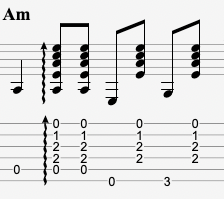
The main underlying groove for “Runaway” is a driving 8th-note rock feel. In 4/4 time, 8th notes divide each beat into two equal parts, creating a rocking, steady rhythm like this:
1 & 2 & 3 & 4 &
The numbers (1, 2, 3, 4) represent the main beats in the measure, while the "&" represents the offbeats that add energy and momentum.
When counted out loud, it sounds like:
"One-and, Two-and, Three-and, Four-and."
This gives a strong and consistent forward motion to the tune. Here’s an example of a “Runaway”style strumming pattern that blends both quarter notes and 8th notes:
Conclusion
Bottom line, “Runaway” is an epic guitar song. Whether you want to do your own cover or play along with the recording, mastering the guitar parts is a blast!
Keep practicing, and if you want to learn songs way faster, better understand the fretboard for lead and rhythm, and not waste years spinning your wheels with guitar, grab my free fretboard guide here right now:
Jon MacLennan
Like this blog post? Get Jon’s best guitar lessons straight to your inbox.
Discover the 5 easiest and fastest ways to play the blues scale anywhere on the neck with this FREE PDF GUIDE
