The ULTIMATE Sara Smile LEAD & RHYTHM Guitar Lesson
If you're a fan of music from the '70s, then you've probably heard this iconic tune.
It's a beautiful song about a 30-year-long-term relationship.
Below, I’m going to share some insider tips on the guitar style behind it.
So grab your axe, and let’s dive into this “Sara Smile” chords and guitar lesson!
Who Wrote Sara Smile?
“Sara Smile” was originally written by Daryl Hall and John Oates. However, Oates has said it’s primarily a Daryl Hall song. Hall had most of it written, and then Oates contributed some minor lyric editing.
The inspiration for this song came from Hall’s girlfriend, Sara Allen. They stayed together for 30 years. This song was sent as a heartfelt farewell postcard to Sara after their breakup.
It was released in August 1975 on the album Daryl Hall & John Oates. (This record is sometimes called The Silver Album because of its metal-looking cover.) “Sara Smile” was recorded at a few different studios in Hollywood, California, with Daryl Hall, John Oates, and Christopher Bond all producing.
Engineer Barry Rudolph said Hall sang the lead vocal live with the band, and they only did one “punch”. They replaced one single “Sara” in the second chorus, and that was it.
Hall wanted to go for a doo-wop background vocals style, something akin to The Dells. This gave the track a soulful feel.
Originally, it wasn’t considered single material by RCA. But the song ended up gaining traction on many smaller radio stations and from there took on a life of its own. Once the RCA executives saw this happening, they changed their tune and released it as the album’s third single in 1976.
“Sara Smile” went on to become Hall & Oates’ first Top 10 hit. It peaked at number 4 on the Billboard Hot 100 in mid‑1976. It also reached number 6 on the Cash Box Top 100, number 18 on the Easy Listening chart, and number 23 on the Hot Soul Singles chart.
Over 50 years later, “Sara Smile” has become one of Hall & Oates' most beloved songs.
Now, you may be wondering…
What is the tuning for Sara Smile?
The tuning for "Sara Smile," as recorded by Hall & Oates, is standard tuning. Standard tuning is spelled: E, A, D, G, B, and E.
Here are the strings:
- E (6th string, lowest pitch)
- A (5th string)
- D (4th string)
- G (3rd string)
- B (2nd string)
- E (1st string, highest pitch)
All right!
Now that you know the tuning for “Sara Smile”, let’s next talk about…
Sara Smile Chords
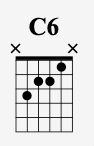
To play “Sara Smile”, as recorded by Hall & Oates, you’ll need to know 10 main chords they are Dm7, Am7, Gm7, C11, C6, Bbmaj7, A7sus4, A7, Eb7, and Db9. Many of these chords come from jazz and R&B harmony and are played using the bar technique. If bar chords are giving you all kinds of aches and pains, and you haven’t yet discovered how to play them effortlessly, go here: https://www.jonmaclennan.com/7mistakes
Let’s take a look at a few ways these shapes can be played on the fretboard.
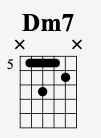
Dm7 is played as a bar chord in 5th position like this:
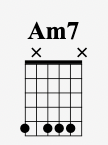
Am7 is a great jazzy sound chord played in 5th position as well, like this:
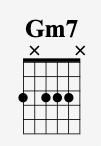
Gm7 simply shifts Am7 down two frets like so:
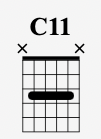
C11 is played with (again with the bar technique), just use the index finger in the fretting hand, like this:
C6 looks like a simple open Am chord, but with the C in the bass like so:
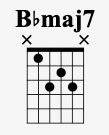
Bbmaj7 is a standard 4-note jazz chord played on the middle strings like this:
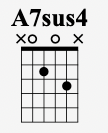
A7sus4 is played in open position like this:
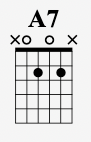
A7 changes just one note (the note of the 2nd string shifts down 1 fret) like this:
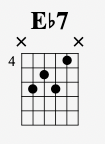
Eb7 is a beautiful change that comes in the pre-chorus. I play it like this:
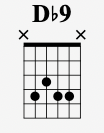
Finally, we have Db9. I play this on the middle strings like so:
If you’ve struggled to understand the fretboard for RHYTHM and LEAD guitar, and want to discover the easiest and fastest way. Then get your hands on my free Fretboard Guide PDF right here now:
Is Sara Smile hard to play on guitar?
I would say playing “Sara Smile” on guitar is going to require an advanced skill level. There are quite a few roadblocks guitarists will need to overcome to play it. For example, there are many chords to learn, and almost all of them come from jazz harmony. This means chords like Bbmaj7, C11, C6, and so on. Plus, there is an opening guitar solo that requires accurate string bending, and many syncopated rhythms and changes throughout. So, take your time with this one.
What key is Sara Smile in?
“Sara Smile,” as recorded by Hall & Oates, is in the key of D minor. The primary scale used in the song is the D natural minor scale, which is built from the notes D, E, F, G, A, Bb, and C.
Let’s break down how these chords function in the key of D minor:
Dm7 (D minor 7)
Notes: D, F, A, C
Function: This is the tonic i7 chord in D natural minor. It establishes the key and sounds like “home”.
Am7 (A minor 7)
Notes: A, C, E, G
Function: This is the v7 chord in D natural minor. It has a softer dominant function compared to A7 (which comes later in the tune). This chord keeps you strictly in the natural minor scale.
Gm7 (G minor 7)
Notes: G, Bb, D, F
Function: This is the iv7 chord. It’s a subdominant chord and adds a nice progression away from the i chord.
C11 (C dominant 11)
Notes: C, E, G, Bb, D, F
Function: Built on the ♭VII degree. In natural minor, C7 or C11 serves as a dominant-function chord leading to F (the III in D minor). The 11th (F) adds a jazzy or gospel flavor. However, in “Sara Smile” this chord returns to the Dm chord.
Bbmaj7 (B♭ major 7)
Notes: Bb, D, F, A
Function: This is the VImaj7 chord. Diatonic to D natural minor. It creates a lush sound and is often used to pivot to the relative major (F major).
A7sus4 (A suspended 4th dominant 7)
Notes: A, D, E, G
Function: A suspended variation of the V7 chord. This chord delays the resolution to A7 by replacing the C♯ with a D, and creates tension. Then, it resolves to…
A7 (A dominant 7)
Notes: A, C♯, E, G
Function: This is the V7 chord in D harmonic minor. The C♯ is borrowed from harmonic minor to create a strong leading tone moving the progression back to D. This chord is more powerful than the previous Am7.
Eb7 (E♭ dominant 7)
Notes: Eb, G, Bb, Db
Function: This is a chromatic (non-diatonic) chord in D minor. It could be used as a tritone substitution (for A7), a passing chord, or just a nice surprise chord.
Db9 (D♭ dominant 9)
Notes: Db, F, Ab, Cb (B), Eb
Function: Another chromatic dominant chord. Not diatonic to D minor. This one works as a passing chord between C11, and Dm.
C11 –> Db9 → Dm
So that’s the theory. Next, let’s look at…
What is the strumming pattern for Sara Smile?
The main underlying groove for “Sara Smile” is a soulful 8th-note feel. In 4/4 time, 8th notes divide each beat into two equal parts, creating a driving, steady rhythm like this:
1 & 2 & 3 & 4 &
The numbers (1, 2, 3, 4) represent the main beats in the measure, while the "&" represents the offbeats that add energy and momentum.
When counted out loud, it sounds like:
"One-and, Two-and, Three-and, Four-and."
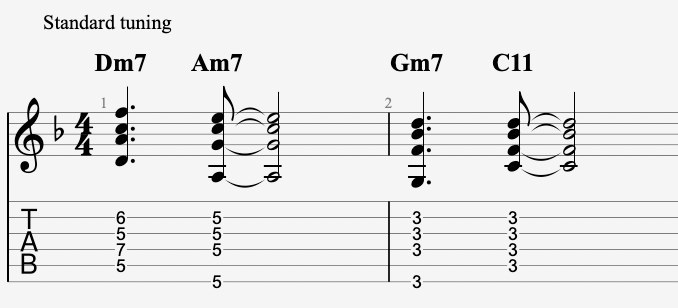
However, I wouldn’t strum all 8th notes. That’s going to sound TOO rock. Instead, I play syncopations and work with the drums and bass. Here’s an example of a strumming pattern (using all downstrokes) in the style of “Sara Smile”:
Conclusion
To wrap it up, in real life, Sara’s smile must have been pretty good. This song is a beautiful homage to it.
Keep practicing, and if you want to learn songs way faster, better understand the fretboard for lead and rhythm, and not waste years spinning your wheels with guitar, grab my free fretboard guide here right
now:
Jon MacLennan
Like this blog post? Get Jon’s best guitar lessons straight to your inbox.
Discover the 5 easiest and fastest ways to play the blues scale anywhere on the neck with this FREE PDF GUIDE
