Stevie Wonder - Sir Duke Chords & Guitar Lesson
Not too many people know this, but…
This song was written about the great Duke Ellington.
He is…
“Sir Duke”
My old mentor Kenny Burrell (who is friends with Stevie Wonder and has worked with him a lot) told me this directly.
Below, I’m going to share some insider tips on the guitar style behind it.
So grab your axe, and let’s dive into this “Sir Duke” chords and guitar lesson!
Who Wrote Sir Duke?
"Sir Duke" was written by the legendary Stevie Wonder. It’s a tribute to the power of music and the jazz legends he admires.
It was primarily dedicated to jazz musician and composer Duke Ellington, who had passed away in 1974. But there are also other explicit lyric mentions to Count Basie, Glenn Miller, Louis "Satchmo" Armstrong, and Ella Fitzgerald as well.
The song is a celebration of music, and Wonder’s joyous laughter in the middle says it all.
"Sir Duke" was recorded as part of Wonder's monumental 1976 album, Songs in the Key of Life. This album was recorded at several locations, primarily at Crystal Recording Studios in Hollywood, with additional sessions at The Record Plant and Studio 55 in Los Angeles. The album was a BIG project, and "Sir Duke" was one of its standout tracks, featuring a full horn section and a tight rhythm section that perfectly captured the swing and R&B feeling Wonder was aiming for.
"Sir Duke" helped propel Songs in the Key of Life to its legendary status.
Upon release, “Sir Duke” reached number one on both the U.S. Billboard Hot 100 and Black Singles charts in 1977. Since then it’s become a staple of party bands, and even jazz bands as well.
Now, you may be wondering…
What is the tuning for Sir Duke?
The tuning for "Sir Duke," as recorded by Stevie Wonder, is standard tuning. Standard tuning is spelled: E, A, D, G, B, and E.
Here are the strings:
- E (6th string, lowest pitch)
- A (5th string)
- D (4th string)
- G (3rd string)
- B (2nd string)
- E (1st string, highest pitch)
All right!
Now that you know the tuning for “Sir Duke”, let’s next talk about…
Sir Duke Chords
To play “Sir Duke”, as recorded by Stevie Wonder, you’ll need to know 13 main chords they are B, G#m, G9, F#9, F9, E9, Eb9, D9, C#9, Fm7, Emaj7, D#m7, and C#m7. These chords are all played as closed-position chords (bar chords), and 7 of them use the same shape just shifted around the neck. If bar chords are giving you all kinds of aches and pains, and you haven’t yet discovered how to play them effortlessly, go here: https://www.jonmaclennan.com/7mistakes
Let’s take a look at a few ways these shapes can be played on the fretboard.
B is played in 7th position from the 4th string down like this:
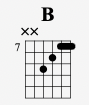
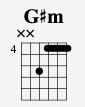
G#m goes is a minor variation of the B shape above, but in 4th position, like so:
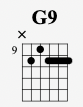
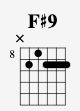
G9, F#9, F9, E9, Eb9, D9, C#9, all use the same shape; they are just played in different locations on the neck, like this:
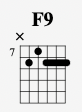
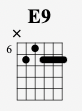
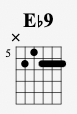
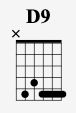
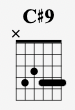
Fm7 (within the context of the key of B major) is an unusual choice. In fact, many might consider going to this chord downright crazy. But somehow, Wonder flows in and out of it masterfully in the chorus. For this one, I play it from the 5th string down and in 8th position like this:
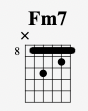
Emaj7 is another jazzier chord voicing. This one is played in 7th position like so:
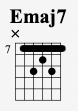
D#m7 is another common jazz chord. This one is played from the 5th string down like this:
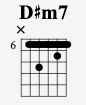
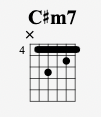
Finally, C#m7 simply shifts D#m7 down 2 frets like this:
If you’ve struggled to understand the fretboard for RHYTHM and LEAD guitar, and want to discover the easiest and fastest way. Then get your hands on my free Fretboard Guide PDF right here now:
Is Sir Duke hard to play on guitar?
I would say playing “Sir Duke” on guitar is going to require a solid intermediate to advanced skill level. There are many hurdles a player must overcome, like knowing sophisticated jazz chords, syncopated rhythms, and then, of course, the line based on the pentatonic scale is not easy to nail. So, take your time with this one.
What key is Sir Duke in?
“Sir Duke,” as recorded by Stevie Wonder, is in the key of B major. The primary scale used in the song is the B major scale, which is built with the notes B, C#, D#, E, F#, G#, and A#.
Let’s take a look at how these chords relate in the key of B major. (Note: I have pared down the chords to simplify the chromatic run of chords in the pre-chorus section.)
B (B major)
Notes: B, D♯, F♯
Function: This is the I chord (tonic) in B major. It’s the tonal center and provides a sense of "home" for the progression. All the other chords in this analysis relate back to this one.
G#m (G♯ minor)
Notes: G♯, B, D♯
Function: This is the vi chord in B major. The vi is a common chord in major keys, often used to create a melancholic feel. It’s also the relative minor of B major, and shares the same key signature.
===
All of these chords (G9, F#9, F9, E9, Eb9, D9, and C#9) function as basically one chromatic run moving up and down the fretboard. So don’t worry about categorizing them all individually. Just see it as a chromatic run going up and down every note in order, but with chords. It’s quite genius.
===
Fm7 (F♯ minor 7th)
Notes: F♯, A, C♯, E
Function: This chord is a bit outside of the B major scale. In fact, musically, it’s almost diabolical. It’s a minor 7th chord, a tritone away from the root. However, Wonder flows through this chord, and you barely even notice how out of the key it is, in the 2nd bar of the chorus. It’s sheer genius.
Emaj7 (E major 7th)
Notes: E, G♯, B, D♯
Function: This is the IVmaj7 chord in B major. The IV chord is a very common and stable chord that provides a sense of movement away from the tonic without creating a lot of tension. The added major 7th (D♯) gives it a jazzy sound.
D#m7 (D♯ minor 7th)
Notes: D♯, F♯, A♯, C♯
Function: This is the iii7 chord in B major. The iii chord is a stable chord that is often used as a passing chord or to add a different color to a progression.
C#m7 (C♯ minor 7th)
Notes: C♯, E, G♯, B
Function: This is the ii7 chord in B major. The ii chord is a pre-dominant chord, meaning it is used to set up the V chord (F#) or the tonic (B). It has a clear, forward-moving sound and is a fundamental part of the ii-V-I progression, which appears in “Sir Duke” right before the riff.
All right!
So that’s the theory. Next, let’s look at…
What is the strumming pattern for Sir Duke?
The main underlying feel for “Sir Duke” is a groovy 16th note feel. In 4/4 time, 16th notes divide each beat into four equal parts, creating a flowing rhythm like this:
1 e & a 2 e & a 3 e & a 4 e & a
The numbers (1, 2, 3, 4) represent the main beats in the measure. The syllables “e,” “&,” and “a” divide each beat into evenly spaced subdivisions, giving the rhythm more detail and energy.
When counted out loud, it sounds like:
“One-e-and-a, Two-e-and-a, Three-e-and-a, Four-e-and-a.”
Sir Duke Guitar Lesson (The Riff)
The riff is an integral part of playing Sir Duke. It’s primarily based on the B major pentatonic scale.
Conclusion
To wrap it up, “Sir Duke” is a powerful tribute to “Duke Ellington” and also many other musical legends.
However, it ain’t easy to play.
So, keep practicing, and if you want to learn songs way faster, better understand the fretboard for lead and rhythm, and not waste years spinning your wheels with guitar, grab my free fretboard guide here right now:
Jon MacLennan
Like this blog post? Get Jon’s best guitar lessons straight to your inbox.
Discover the 5 easiest and fastest ways to play the blues scale anywhere on the neck with this FREE PDF GUIDE
