The ULTIMATE Slow Dancing In A Burning Room Chords & Guitar Lesson
Picture this…
You’re slow dancing with the love of your life. Your #1 girl.
But suddenly you look around at the room you're dancing in… and it’s on fire.
The whole place is going down, and you know you’re doomed.
That’s what John Mayer sings about in his powerful song, “Slow Dancing In A Burning Room.”
Below, I’m going to share some insider tips on the tasty guitar style behind it.
So grab your axe, and let’s dive into this “Slow Dancing In A Burning Room” chords and guitar lesson!
Who Wrote Slow Dancing In A Burning Room?
“Slow Dancing in a Burning Room” is an epic song written by singer-songwriter/guitarist John Mayer. It’s from Mayer’s 2006 album Continuum. Although it was never released as a single, it’s become one of Mayer's most acclaimed tracks, celebrated for its emotional depth and masterful guitar work.
John Mayer wrote “Slow Dancing in a Burning Room” as a metaphor for a relationship on the brink of collapse. The vivid image of a couple dancing while everything around them burns captures the denial and inevitable end of a failing relationship. Lyrics like “We’re going down, and you can see it too” convey the mutual recognition of the relationship's demise.
“Slow Dancing In A Burning Room” was recorded in 2006 at The Village Studios in Los Angeles, California. Mayer co-produced the track with drummer and producer extraordinaire Steve Jordan.
It also features Mayer's signature Fender guitar tone – before he moved to playing PRS guitars. To me, it sounds like some sort of Fender Stratocaster through maybe another Fender or Dumble amp. The guitar parts were meticulously captured using a combination of close and room microphones to create a rich, immersive sound.
While the song itself didn't win individual awards, it contributed to the success of Continuum, which won the Grammy Award for Best Pop Vocal Album in 2007. “Slow Dancing in a Burning Room” has been certified platinum in the United States, silver in the UK, and gold in Denmark.
The song has also been a staple in Mayer's live performances. Because of the chord progression and groove, it’s a perfect guitar song to play extended solos. In 2021, K-pop singer Rosé of BLACKPINK covered the song during a live performance, earning praise from Mayer himself, who described her rendition as "gorgeous."
Despite not being a commercial single, “Slow Dancing in a Burning Room” has amassed over 564 million streams on Spotify, reflecting its enduring popularity. Its haunting melody and relatable lyrics have resonated with listeners worldwide, solidifying its place as a modern classic in Mayer's discography.
Now, you may be wondering…
What is the tuning for Slow Dancing In A Burning Room?
The tuning for "Slow Dancing In A Burning Room," as recorded by John Mayer is standard tuning. Standard tuning is spelled: E, A, D, G, B, and E.
Here are the strings:
- E (6th string, lowest pitch)
- A (5th string)
- D (4th string)
- G (3rd string)
- B (2nd string)
- E (1st string, highest pitch)
All right!
Now that you know the “Slow Dancing In A Burning Room” tuning, let’s next talk about the…
Slow Dancing In A Burning Room Chords
To play “Slow Dancing In A Burning Room,” you only need to know 5 main chords they are C#m, A, E, B, and F#m7. Now, many of these chords Mayer plays as thumb chords. This is similar to Jimi Hendrix, Eric Clapton, Stevie Ray Vaughan, and many other masters. Let’s take a look at a few ways these shapes can be played on the fretboard.
C#m is played in the 9th position like this:
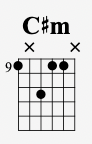
A shifts down to a major thumb chord in 5th position like so:
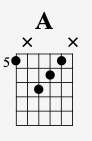
E is a very common guitar shape played like this:
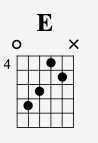
B is the same as A, just shifted up 2 frets like so:
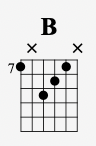
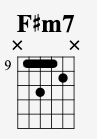
Finally, we have F#m7, which is a slightly jazzier chord played in 9th position like this:
If you’ve struggled to understand the fretboard for RHYTHM and LEAD guitar and want to discover the easiest and fastest way. Then get your hands on my free Fretboard Guide PDF right here now:
Is Slow Dancing In A Burning Room hard to play on guitar?
100% “Slow Dancing In A Burning Room” is hard to play on guitar. The chord shapes are stretchy and require advanced fretting hand thumb techniques in the style of Hendrix, Clapton, SRV, and more. Plus, the groove and solos are top rate as well. So, take your time with this one. Rome wasn’t built in a day.
What key is Slow Dancing In A Burning Room in?
“Slow Dancing In A Burning Room” as recorded John Mayer is in the key of C# minor. The primary scale used is the C# natural minor scale, which uses the notes:
C♯ – D♯ – E – F♯ – G♯ – A – B
All of the chords fit into the diatonic scale of C# natural minor. Here’s a quick look at how they all relate:
1. C♯ minor (C♯ – E – G♯)
Function: i chord (tonic minor)
This is the home base—the root chord of the key. It gives the song its moody, introspective feel typical of minor keys.
2. A major (A – C♯ – E)
Function: VI chord
The A major chord is built on the sixth scale degree of C♯ minor. It shares almost the exact same notes as the tonic minor.
3. E major (E – G♯ – B)
Function: III chord
The E major chord is the relative major of C♯ minor. This chord is built on the mediant (3rd degree) of the scale. It helps brighten the progression.
4. B major (B – D♯ – F♯)
Function: VII chord (in natural minor)
In natural minor, B major is the VII chord. It adds energy and tension, often acting as a lead-up back to the tonic.
5. F♯m7 (F♯ – A – C♯ – E)
Function: iv7 chord
This is the minor subdominant seventh chord. In natural minor, the iv chord is minor, and adding the 7th gives it a jazzier, more soulful feel. This chord only comes in during the bridge section.
So that’s the theory. Next, let’s look at…
What is the strumming pattern for Slow Dancing In A Burning Room?
The main underlying feel for “Slow Dancing In A Burning Room” is a slow sixteenth note feel. In 4/4 time, sixteenth notes divide each beat into four equal parts. This creates a rhythmic subdivision against the main pulse of the song. Doing this creates movement and energy to the rhythm like this:
1 e & a 2 e & a 3 e & a 4 e & a
The numbers (1, 2, 3, 4) represent the main beats in the measure.
The “e,” “&,” and “a” divide each beat further, adding drive and detail to the rhythm.
When counted out loud, it sounds like:
"One-e-and-a, Two-e-and-a, Three-e-and-a, Four-e-and-a."
This is the underlying feel. Here’s an example of how it might be strummed in the style of “Slow Dancing In A Burning Room.”

Conclusion
Bottom line, “Slow Dancing In A Burning Room” is a deeply emotional and powerful song. The musicianship is also top rate.
So, keep practicing, and if you want to learn songs way faster, better understand the fretboard, and not waste years spinning your wheels with guitar, grab my free fretboard guide here right now:
Jon MacLennan
Like this blog post? Get Jon’s best guitar lessons straight to your inbox.
Discover the 5 easiest and fastest ways to play the blues scale anywhere on the neck with this FREE PDF GUIDE
