Stir It Up Chords & Guitar Lesson (Most Accurate)
Here's a classic tune that became Bob Marley's first global hit.
It all started in Kingston, Jamaica. Shortly after, it was covered by Johnny Nash, who brought Marley’s music to a broader audience.
Below, I’m going to share some insider tips on the guitar style behind it.
So grab your axe, and let’s dive into this “Stir It Up” chords and guitar lesson!
Who Wrote Stir It Up?
“Stir It Up” was originally written by reggae legend Bob Marley in 1967. It’s a simple song with a great vibe. The original version was recorded at West Indies Studio in Kingston, Jamaica, engineered by Carlton Lee, and produced by The Wailers.
It was first released as a single in 1967. However, it was not a big hit. A few years later, in 1972, Johnny Nash released an incredible cover version on his album I Can See Clearly Now, which became a major hit.
At this point, Nash’s cover made “Stir It Up” the first Marley song to chart internationally. It reached #12 on the US Billboard Hot 100 and also charted well in several other countries.
Then, later in 1973, Marley & Wailers re-recorded it and included this new version on their Catch a Fire record. From then on, it’s become a reggae staple despite not charting initially.
"Stir It Up" created a unique bridge between Jamaica and the pop world of music.
Now, you may be wondering…
What is the tuning for Stir It Up?
The tuning for "Stir It Up" as recorded by Bob Marley & The Wailers is standard tuning. Standard tuning is spelled: E, A, D, G, B, and E.
Here are the strings:
- E (6th string, lowest pitch)
- A (5th string)
- D (4th string)
- G (3rd string)
- B (2nd string)
- E (1st string, highest pitch)
All right!
Now that you know the tuning for “Stir It Up”, let’s next talk about…
Stir It Up Chords
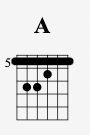
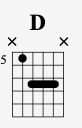
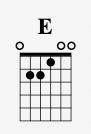
To play “Stir It Up”, as recorded by Bob Marley & The Wailers, you only need to know 3 main chords they are A, D, and E. I play these 3 shapes as bar chords. However, if you are just getting started, you can play them as open position shapes as well. Let’s take a look at a few ways these chords can be played on the fretboard.
A is played in the 5th position using all 6 strings like this:
D is played in 5th position as well, but this time the root is on the 5th string like this:
Then we have E, which is the same shape as D, just shifted up 2 frets like so:

If bar chords are giving you all kinds of aches and pains, and you’ve haven’t yet discovered how to play them effortlessly yet, go here: https://www.jonmaclennan.com/7mistakes
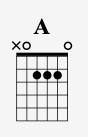
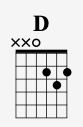
As I said, these same shapes can also be played as open position chords as well. But when using open position shapes, it’s important to note that muting is much more difficult. Open shapes are not what are played on the recording. But they are easier, so here are those as well.
A is played from the 5th string down like this:
D is played from the 4th string down like this:
And finally, E is played using all 6 strings like this:
If you’ve struggled to understand the fretboard for RHYTHM and LEAD guitar, and want to discover the easiest and fastest way. Then get your hands on my free Fretboard Guide PDF right here now:
Is Stir It Up hard to play on guitar?
I would say playing “Stir It Up” on guitar is going to require a solid intermediate skill level. Although it does not have a lot of chords (just 3), getting the 16th note rhythms, muting, and groove right is quite tricky. You want to be very percussive and not let the notes ring out too much. They need to be muted. So, take your time with this one.
What key is Stir It Up in?
“Stir It Up,” as recorded by Bob Marley & The Wailers, is in the key of A major. All of the chords fit into the diatonic scale of A major, which is built from the notes A, B, C#, D, E, F#, and G#. There are three sharps in the key of A major. Here’s a quick look at how all these chords relate in the key:
A
Notes: A, C♯, E
Function: This is the I chord (tonic) in A major — the “home” chord. It’s the point of resolution and gives the key its bright, stable sound.
D
Notes: D, F♯, A
Function: This is the IV chord (subdominant) in A major. It creates movement away from the tonic and often leads to the V chord, building tension in a progression.
E
Notes: E, G♯, B
Function: This is the V chord (dominant) in A major. It contains the leading tone (G♯) and creates strong tension that wants to resolve back to the tonic (A), making it the most powerful setup for resolution in the key.
So that’s the theory. Next, let’s look at…
What is the strumming pattern for Stir It Up?
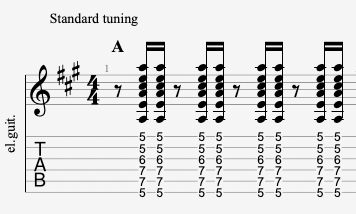
The main underlying groove for “Stir It Up” is a funky 16th-note reggae feel. In 4/4 time, 16th notes divide each beat into four equal parts, creating a tighter, percolating rhythm like this:
1 e & a 2 e & a 3 e & a 4 e & a
The numbers (1, 2, 3, 4) still represent the main beats in the measure. The “e,” “&,” and “a” are the subdivisions that fall between the beats.
When counted out loud, it sounds like:
“One-e-and-a, Two-e-and-a, Three-e-and-a, Four-e-and-a.”
This rhythm adds more detail and motion. The tempo isn’t fast, it’s a laid-back groove. But these 16th notes keep the feel moving along. Here’s an example of a “Stir It Up” style strumming pattern:
Conclusion
There ya have it! Bob Marley’s first global hit. It’s a great song to learn for guitarists of all levels.
Keep practicing, and if you want to learn songs way faster, better understand the fretboard for lead and rhythm, and not waste years spinning your wheels with guitar, grab my free fretboard guide here right now:
Jon MacLennan
Like this blog post? Get Jon’s best guitar lessons straight to your inbox.
Discover the 5 easiest and fastest ways to play the blues scale anywhere on the neck with this FREE PDF GUIDE
