The ULTIMATE – “Summer Breeze” Chords & Guitar Lesson
Seals & Crofts sang:
===
Summer breeze makes me feel fine
Blowin' through the jasmine in my mind...
===
I’ve always enjoyed this tune.
However, it’s quite sophisticated – musically speaking. I’ve played it many times at summer parties. Summer parties are a PERFECT opportunity for guitar players to play.
In this post, I’m going to share some insider tips on the guitar style behind it.
So grab your axe, and let’s dive into this “Summer Breeze” chords and guitar lesson!
Who wrote Summer Breeze?
“Summer Breeze” was originally written by soft-rock duo Jim Seals and Dash Crofts. They formed Seals and Crofts in 1969 in Los Angeles, California, and this song became their biggest hit.
It was released in 1972 on their album of the same name. The song is vivid. It paints a picture of coming home after a long day and finding comfort in simple, peaceful moments. The imagery of the “summer breeze” blowing through the jasmine in the mind is a peaceful transition from the stress of the outside world into the calm of home.
The song was recorded in Los Angeles during the sessions for the album with producer Louie Shelton, who also played guitar on the track. Shelton was a well-known member of the Los Angeles session musician community and helped shape the sound of the recording.
The arrangement has great vocal harmonies, tasteful keyboards, and smooth guitars.
“Summer Breeze” became a major radio hit, reaching number six on the Billboard Hot 100 in the United States in 1972. It helped establish Seals and Crofts as one of the defining acts of the early-1970s era, alongside artists like James Taylor and Carole King.
Over time, the song has become a staple of classic rock and adult contemporary radio.
The inspiration for the song reportedly came from Jim Seals reflecting on the simple pleasure of coming home after work and enjoying the calm of the evening. Another interesting detail is that Seals and Crofts were known for their spiritual beliefs as members of the Baháʼí Faith, and some listeners have interpreted the peaceful tone of the song as reflecting their philosophy of harmony and balance in life.
Now, you may be wondering…
What is the tuning for Summer Breeze?
The tuning for "Summer Breeze” as recorded by Seals & Crofts is standard tuning. Standard tuning is spelled: E, A, D, G, B, and E.
Here are the strings:
- E (6th string, lowest pitch)
- A (5th string)
- D (4th string)
- G (3rd string)
- B (2nd string)
- E (1st string, highest pitch)
However, one thing to note is that the recording sounds about 12 cents sharp. This means each string should be tuned up just a hair past the standard pitch A440hz.
All right!
Now that you know the tuning for “Summer Breeze,” let’s next talk about…
Summer Breeze Chords
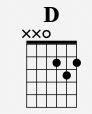
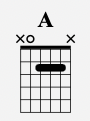
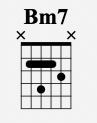
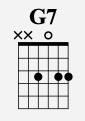
To play “Summer Breeze”, as recorded by Seals & Crofts, you’ll need to know 12 main chords they are Em, Am7, E, G, D, A, Bm7, G7, G6, D11, E11, and B11. These chords are a mix of bar and non-bar chord shapes.
If bar chords are giving you all kinds of aches and pains, and you haven’t yet discovered how to play them effortlessly, go here: https://www.jonmaclennan.com/barchords
Let’s take a look at a few ways these shapes might show up on the fretboard.
Em is a beautiful open-sounding chord. It uses all 6 strings like this:
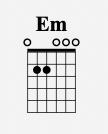
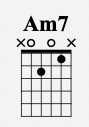
Am7 is played from the 5th string down like this:
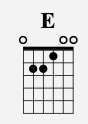
E makes just a slight change from the Em. This one uses all 6 strings like so:
G is played in 3rd position like this:
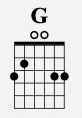
D is played in a simple (campfire) style like this:
A I play with just my index finger in the fretting hand like this:
Bm7 is a jazzy-sounding bar chord played in 2nd position like this:
G7 is an interesting chord played from the 4th string down like so:
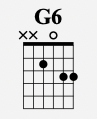
G6 moves the index finger to the note E on the 4th string like so:
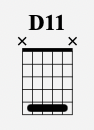
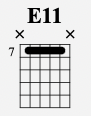
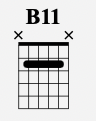
Finally, we have three 11 chords, D11, E11, and B11 like this:
If you’ve struggled to understand the fretboard for RHYTHM and LEAD guitar, and want to discover the easiest and fastest way. Then get your hands on my free Fretboard Guide PDF right here now:
Is Summer Breeze hard to play on guitar?
I would say playing “Summer Breeze” on guitar, as recorded by the Seals & Crofts, is going to require an intermediate skill level. The trickiest parts are the bar chords, the irregular bar lengths, and the lead lines. Locking it all in and getting it to sound like the recording is no easy feat. So, take your time with this one.
What key is Summer Breeze in?
“Summer Breeze”, as recorded by Seals & Crofts, is in the key of Em/G major. The primary scale for the song would be the G major scale, which is built using the notes G, A, B, C, D, E, and F#.
Let’s take a closer look at how these chords relate in the key of G major. Starting with…
Em
Notes: E, G, B
Function: Em is the vi chord (or relative minor) in the key of G major. It shares two notes with the tonic chord (G and B). Because of this, transitions between the two are very smooth.
Am7
Notes: A, C, E, G
Function: Am7 is the ii7 chord in G major. Adding the minor seventh (G) softens the sound and makes it more jazzy.
E
Notes: E, G#, B
Function: E major is not diatonic to G major because of the G#. This chord acts as a secondary dominant, typically functioning as V/ii depending on context. Most commonly it pushes toward Am (the ii chord). The G# introduces chromatic tension that wants to resolve upward to A.
G
Notes: G, B, D
Function: G is the tonic of the key. It’s the “home” chord. All the other chords revolve around this tonal center.
D
Notes: D, F#, A
Function: D is the V chord in G major. This is the dominant chord and creates tension that naturally resolves back to the tonic (G). The note F# is the leading tone, and this pulls strongly upward to G.
A
Notes: A, C#, E
Function: A major is a non-diatonic chord in G major because of the C#. It usually functions as a secondary dominant (V/V), meaning it leads toward the dominant chord D.
Bm7
Notes: B, D, F#, A
Function: Bm7 is the iii7 chord in G major. It shares two notes with the tonic (B and D). It often acts as a smooth connecting chord between G, Em, or D. The added seventh gives it a jazzier sound.
G7
Notes: G, B, D, F
Function: G7 is a dominant seventh version of the tonic chord. In strict G major harmony this is non-diatonic because of the F natural. But it’s a part of a bluesy walk-down in the chorus.
G6
Notes: G, B, D, E
Function: G6 is a tonic variation. This chord adds the sixth (E) to the basic G triad, and is a part of a walk-down progression in the chorus.
D11
Notes: D, F#, A, C, G
Function: D11 is an extended dominant chord built on the V. The core of the chord is D7 (D, F#, A, C), and the added 11th (G) adds extra tension and color.
E11
Notes: E, G#, B, D, A
Function: E11 is an extended version of E7. This is a variation that comes in during the bridge. It moves around 11 chords.
B11
Notes: B, D#, F#, A, E
Function: B11 is another non-diatonic extended dominant chord. The D# is outside the key of G major and creates strong tension. It resolves back to the major VI chord in the verse.
Taken together, these chords show a mix of diatonic harmony and alternate colors.
All right!
That’s my theory breakdown.
Next, let’s look at…
What is the strumming pattern for Summer Breeze?
The main underlying groove for “Summer Breeze” is a light ‘70s acoustic rock feel. The primary rhythm would be 8th notes. Remember, in 4/4 time, 8th notes divide each beat into two equal parts, creating a driving, steady rhythm like this:
1 & 2 & 3 & 4 &
The numbers (1, 2, 3, 4) represent the main beats in the measure, while the "&" represents the offbeats that add energy and momentum.
When counted out loud, it sounds like:
"One-and, Two-and, Three-and, Four-and."
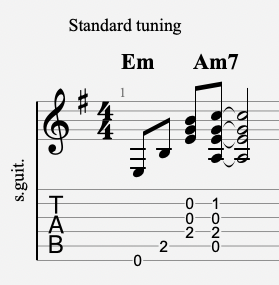
A great option is to break up the strings in the rhythm like this:
Conclusion
To wrap it up, “Summer Breeze” is classic from the ‘70s; between the lead lines and the unique chord progression, this tune has so much to offer guitar students.
Keep practicing, and if you want to learn songs way faster, better understand the fretboard for lead and rhythm, and not waste years spinning your wheels with guitar, grab my free fretboard guide here right now:
Jon MacLennan
Like this blog post? Get Jon’s best guitar lessons straight to your inbox.
Discover the 5 easiest and fastest ways to play the blues scale anywhere on the neck with this FREE PDF GUIDE
