The ULTIMATE Summer of '69 Chords & Guitar Lesson
Ever dream of being in a band?
Hanging out with friends, playing music, groupies… the works.
Well, here’s a song about some kids doing just that back in 1969.
So grab your axe, and let’s dive into this “Summer of '69” chords and guitar lesson!
Who Wrote Summer of '69?
"Summer of '69" was written by Bryan Adams (Canadian singer-songwriter and musician) and his longtime songwriting collaborator, Jim Vallance. It’s one of Bryan’s most iconic songs from his fourth studio album, Reckless released in 1984. "Summer of '69" sings of the excitement around forming a band and chasing musical dreams. The lyrics have a feeling of longing for the past and the bittersweet nature of reminiscence.
The recording of "Summer of '69" was done in 1984 at Little Mountain Sound Studios in Vancouver, Canada. It was produced by both Adams and Bob Clearmountain. The recording process involved multiple takes to perfect its distinctive sound.
It was later released as a single in June 1985 and the song achieved significant success. It peaked at number five on the U.S. Billboard Hot 100, and consistently ranks among the top Canadian songs – streaming and radio play.
In August 2018, Adams performed a duet of "Summer of '69" with pop icon Taylor Swift during her Reputation Tour in Toronto. This highlights its cross-generational appeal. And its lasting popularity has etched its status as a legendary classic rock tune.
Now, you may be wondering…
What is the tuning for Summer of '69?
The tuning for "Summer of '69," as recorded by Bryan Adams, is standard tuning. Bryan kept things simple. Standard tuning is spelled: E, A, D, G, B, and E.
Here are the strings:
- E (6th string, lowest pitch)
- A (5th string)
- D (4th string)
- G (3rd string)
- B (2nd string)
- E (1st string, highest pitch)
Now that you know the “Summer of '69” tuning, let’s next talk about the…
Summer of '69 Chords
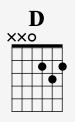
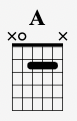
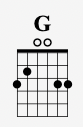
Besides a few variations on the D and A chords (demonstrated in the video above), to play “Summer of '69” you’ll only need to know 7 main chords they are D, A, Bm, G, F, Bb, and C. Let’s take a look at a few ways these chords can be played on the fretboard.
D is played from the 4th string down like this:
A is played from the 5th string down like so:
Bm is a bar chord played in 2nd position like this:

G uses all 6 strings and can be played like this:
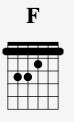
Those are the chords used during the main parts of the song. However, the bridge section changes keys to the key of F. Then we have 3 more chords starting with F in the 1st position like this:
Bb shifts down and focuses on the middle strings (strings 5-2) like this:
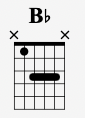
Finally, we have C which simply takes the Bb shape and moves it up 2 frets like this:

If you’ve struggled to understand the fretboard for RHYTHM and LEAD guitar and want to discover the easiest and fastest way. Then get your hands on my free Fretboard Guide PDF right here now:
Is Summer of '69 hard to play on guitar?
“Summer of '69” I would say requires a solid intermediate skill level to play. There are many essential rock techniques guitar players must have under their belt to pull it off. The trickiest part would be the keyboard instrumental section. Now, you don’t have to play the note-for-note keyboard part on guitar, however, it sounds really cool. So, take your time.
What key is Summer of '69 in?
“Summer of '69” as recorded Bryan Adams is in the key of D major. The D major scale uses the notes D - E - F# - G - A - B - C#.
Most of the chords fit the diatonic scale of D major. However, the bridge modulates. It changes keys to the key of F major (a minor third away) and then transitions back to end the song. It’s a powerful songwriting move. Let’s break down each part accordingly.
1. D major
Notes: D – F# – A
Function: I chord (tonic)
- D is the root of the key.
- F# is the major third.
- A is the perfect fifth.
- This is the tonal center, the most stable and resolved chord. Everything feels "at home" on this chord.
2. A major
Notes: A – C# – E
Function: V chord (dominant)
- A is the fifth degree of the D major scale.
- C# is the major third of A, and also the major seventh of the key.
- E is the ninth of D (or second).
- This chord creates tension and wants to resolve back to the tonic (D). It’s the strongest cadential chord in tonal harmony.
3. B minor
Notes: B – D – F#
Function: vi chord (relative minor)
- B is the sixth degree of the scale.
- D is the root of the key.
- F# is the third.
- This is the relative minor of D major. It shares two notes with the tonic chord and adds a more emotional or introspective quality.
4. G major
Notes: G – B – D
Function: IV chord (subdominant)
- G is the fourth degree of the scale.
- B is the sixth.
- D is the root.
- The IV chord adds movement away from the tonic and typically leads to the V chord or back to I. It provides a sense of lift or openness.
All right! Those are the chords in the key of D major, but as I mentioned above, the song modulates in the bridge to the key of F major.
Then we have the following 3 chords:
1. F major
Notes: F – A – C
Function: I chord (tonic)
- F is the root of the key.
- A is the major third.
- C is the perfect fifth.
- This is the home base chord in the key of F major. It feels the most resolved and stable.
2. B♭ major
Notes: B♭ – D – F
Function: IV chord (subdominant)
- B♭ is the fourth degree of the scale.
- D is the major sixth.
- F is the root.
- The IV chord gives a nice digression from the tonic (F) and often leads to the dominant (C) or returns smoothly back to the tonic (F).
3. C major
Notes: C – E – G
Function: V chord (dominant)
- C is the fifth degree of the scale.
- E is the major seventh.
- G is the second (or ninth).
- The dominant chord builds tension and wants to resolve back to the tonic. In traditional harmony, it’s the strongest setup for a return to F.
These last 3 chords make up the I, IV, and V chords in the key of F major.
So that’s the theory. Next, let’s look at…
What is the strumming pattern for Summer of '69?
The main underlying feel for “Summer of '69” is 8th-note rock. In 4/4 time, 8th notes divide each beat into two equal parts, creating a driving, steady rhythm like this:
1 & 2 & 3 & 4 &
The numbers (1, 2, 3, 4) represent the main beats in the measure, while the "&" represents the offbeats that add energy and momentum.
When counted out loud, it sounds like:
"One-and, Two-and, Three-and, Four-and."
This gives a strong and consistent forward motion to the tune. You can play 8th notes through the entire song. However, I might add some palm muting and some accents to play in the style of “Summer of '69”. Here’s an example of that”

Conclusion
There ya have it – that’s a quick look at the guitar stylings behind the iconic song “Summer of '69”.
Keep practicing, and if you want to learn songs way faster, better understand the fretboard, and not waste years spinning your wheels with guitar, grab my free fretboard guide here right now:
Jon MacLennan
Like this blog post? Get Jon’s best guitar lessons straight to your inbox.
Discover the 5 easiest and fastest ways to play the blues scale anywhere on the neck with this FREE PDF GUIDE
