The Kinks – Sunny Afternoon Chords & Guitar Lesson
They say that two things in life are unavoidable: death and taxes.
Here’s a song about a guy feeling down from the ladder.
The guitar part blends fun bass lines, swinging rhythms, and even some bluesy chord changes to boot.
Below, I’m going to share some insider tips on the guitar style behind it.
So grab your axe, and let’s dive into this “Sunny Afternoon” chords and guitar lesson!
Who Wrote Sunny Afternoon?
“Sunny Afternoon” was originally written by Ray Davies, the lead songwriter of the English rock band The Kinks. The song’s lyrics have a similar theme to “Taxman” by The Beatles, which was released earlier the same year, 1966. With lyrics like:
The tax man's taken all my dough,” expressing the pain of higher tax bills.
Davies captures the plight of a man who has lost his fortune and must adjust to a more modest way of living, capturing both humor and a subtle critique of social and economic circumstances. Despite the troubled circumstances, the protagonist in the song still finds joy in the simple pleasures of life, like “Lazin' on a sunny afternoon…”
“Sunny Afternoon” was recorded at Pye Studios in London, featuring the classic Kinks lineup of Dave Davies on lead guitar, Pete Quaife on bass, Mick Avory on drums, and Ray Davies on vocals and rhythm guitar.
The song is built around a light swing and descending bass lines that come in and out throughout the tune. Upon its release, “Sunny Afternoon” became a major hit, reaching number one on the UK Singles Chart and staying there for three weeks, solidifying The Kinks’ reputation as one of the defining British rock bands of the 1960s.
Over the years, “Sunny Afternoon” has been included in numerous compilations and greatest hits collections, making it one of The Kinks’ most iconic songs.
Now, you may be wondering…
What is the tuning for Sunny Afternoon?
The tuning for "Sunny Afternoon,” as recorded by The Kinks, is standard tuning. Standard tuning is spelled: E, A, D, G, B, and E.
Here are the strings:
- E (6th string, lowest pitch)
- A (5th string)
- D (4th string)
- G (3rd string)
- B (2nd string)
- E (1st string, highest pitch)
All right!
Now that you know the tuning for “Sunny Afternoon,” let’s next talk about…
Sunny Afternoon Chords
To play “Sunny Afternoon”, you’ll need to know 6 main chords they are Dm, C7, F, D7, G7, and A7.
Some of these chords will be played as open chords and others as bar chord shapes. If bar chords are giving you all kinds of aches and pains, and you haven’t yet discovered how to play them effortlessly, go here: https://www.jonmaclennan.com/7mistakes
Let’s take a look at a few ways these shapes can be played on the fretboard:
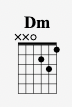
Dm is a simple open chord played from the 4th string down like this:
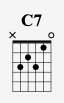
C7 is a great-sounding bluesy-style chord. This one takes a standard open C chord, but adds the pinky down on the 3rd fret of the 3rd string like this:
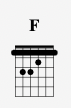
F is a bar chord played in 1st position like this:
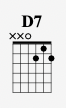
D7 is played from the 4th string down like this:
G7 uses all 6 strings like so:
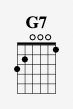
Finally, A7 is played from the 5th string down like this:
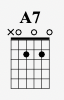
If you’ve struggled to understand the fretboard for RHYTHM and LEAD guitar, and want to discover the easiest and fastest way. Then get your hands on my free Fretboard Guide PDF right here now:
Is Sunny Afternoon hard to play on guitar?
I would say playing “Sunny Afternoon” on guitar is going to require an intermediate skill level. The 3 most difficult parts are 1) getting the strumming right with a light swing, 2) properly applying the bar technique, and 3) being able to transition from strumming to bass lines. So, take your time with this one.
What key is Sunny Afternoon in?
“Sunny Afternoon”, as recorded by The Kinks, is in the key of D minor. The primary scale for the song is the D natural minor scale, which is built using the notes D, E, F, G, A, Bb, and C.
However, not all the chords fit the diatonic scale of D natural minor. Let’s take a look at a quick breakdown of how the chords relate in the key of D minor. Starting with…
Dm
Notes: D, F, A
Function: This is the i chord, the tonic minor. (A.K.A “home” or the resolution chord).
C7
Notes: C, E, G, B♭
Function: This is the VII7 chord, the subtonic dominant 7th. This chord is diatonic to the D natural minor (Aeolian) scale. It often functions as a backdoor dominant, leading strongly back to the tonic (Dm). Or, in the case of “Sunny Afternoon” it resolves to F, which is the relative major of Dm.
F
Notes: F, A, C
Function: This is the III chord, the mediant major. It is built on the third degree of the D minor scale. As the relative major of D minor, it shares many notes with the tonic. It gives you a nice departure point and can also work as a substitute for the Dm chord.
D7
Notes: D, F♯, A, C
Function: This is the I7 chord, the tonic dominant 7th. Here it just gets bluesy. It changes the i minor chord to now a dominant seventh. Which is a non-diatonic chord, as it uses F♯ (not in D minor). This chord wants to go to some kind of G, which is where we are headed next…
G7
Notes: G, B, D, F
Function: This is the IV7 chord, the subdominant dominant 7th. This is a non-diatonic chord, as it uses B natural (not in D minor). However, here we are just seeing the influence of the blues. It’s a simple IV chord in a blues in the key of D.
A7
Notes: A, C♯, E, G
Function: This is the V7 chord, the dominant 7th. This chord is typically borrowed from the D harmonic minor scale, as it uses C♯ (the raised seventh degree or leading tone). It is the most functionally important chord outside the tonic, creating maximum tension and a powerful, traditional pull back to the Dm tonic. This is how the chorus section ends…
All right!
That’s my theory breakdown. Next, let’s look at…
What is the strumming pattern for Sunny Afternoon?
The main underlying feel for “Sunny Afternoon” is a light 8th note swing feel. In 4/4 time with a swing feel, 8th notes are played unevenly, where the first 8th note of the beat is longer (closer to a dotted quarter note) and the second 8th note is shorter (closer to an eighth note). This creates a characteristic loping, jazz, or blues rhythm. The counting for swung 8th notes in a measure still uses the standard notation, but the performance is based on a triplet subdivision:
1 (trip-let) 2 (trip-let) 3 (trip-let) 4 (trip-let)
The actual duration of the notes divides the beat into a triplet figure, with the first 8th note taking up two-thirds of the beat and the second 8th note taking up the final one-third.
"One-trip-let, Two-trip-let, Three-trip-let, Four-trip-let."
However, the guitar rhythm doesn’t just play all 8th notes. Here’s an example of a rhythm pattern in the style of “Sunny Afternoon”:
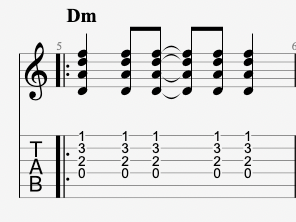
Conclusion
To wrap it up. “Sunny Afternoon” has become a Kinks classic. It’s got a great sound and contains many opportunities for guitarists to improve their playing by learning it.
So keep practicing, and if you want to learn songs way faster, better understand the fretboard for lead and rhythm, and not waste years spinning your wheels with guitar, grab my free fretboard guide here right now:
Jon MacLennan
Like this blog post? Get Jon’s best guitar lessons straight to your inbox.
Discover the 5 easiest and fastest ways to play the blues scale anywhere on the neck with this FREE PDF GUIDE
