The ULTIMATE Sunny Chords & Guitar Lesson (Bobby Hebb)
Let's go back in time to 1963...
Here's a funky, soulful tune that's been played and recorded by tons of phenomenal artists.
Below, I’m going to share some insider tips on the guitar style behind it.
So grab your axe, and let’s dive into this “Sunny” chords and guitar lesson!
Who Wrote Sunny?
“Sunny” was originally written by Bobby Hebb in 1963. However, the song has been recorded by so many different artists that it is now considered a standard.
The original inspiration for “Sunny” came from some pretty terrible circumstances in Hebb’s life. His brother was stabbed, and his mother passed away, so he wanted to write something positive, something to bring some light into the darkness.
The song was originally recorded in Nashville, Tennessee, and featured Bobby Hebb on vocals with a backing band that had more of a soulful groove to it.
Upon its release in 1966, “Sunny” became an international hit, topping the charts in the United States and Europe. In addition to this success, “Sunny” has also been used in many films, television shows, and commercials, further etching its place into musical history.
It’s now considered a classic and still resonates with new listeners across the globe.
Now, you may be wondering…
What is the tuning for Sunny?
The tuning for "Sunny,” as recorded by Bobby Hebb, is standard tuning. Standard tuning is spelled: E, A, D, G, B, and E.
Here are the strings:
- E (6th string, lowest pitch)
- A (5th string)
- D (4th string)
- G (3rd string)
- B (2nd string)
- E (1st string, highest pitch)
All right!
Now that you know the tuning for “Sunny,” let’s next talk about…
Sunny Chords
To play “Sunny”, you’ll need to know 8 main chords they are Em, G7, Cmaj7, F#m7b5, B7, F13, Em#5, and Em6. Most of these chord shapes are played as bar chords.
This becomes especially important as well, as the song changes keys.
If bar chords are giving you all kinds of aches and pains, and you haven’t yet discovered how to play them effortlessly, go here: https://www.jonmaclennan.com/7mistakes
Let’s take a look at a few ways these shapes can be played on the fretboard:
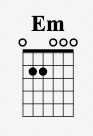
Em is a beautiful sounding chord using all 6 strings like this:
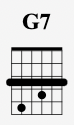
G7 is a standard bar chord shape played in the 3rd position like so:
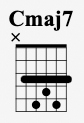
Cmaj7 is played from the 5th string down like this:
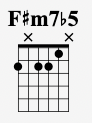
F#m7b5 is like an Am chord but with an F# in the bass:
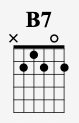
B7 is a standard bluesy chord played from the 5th string down like this:
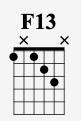
F13 is definitely a trickier chord, but it gets a great sound. Here’s a way of playing it in the 1st position:
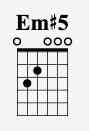
Em#5 is part of a James Bond-style chord sequence. Here’s one way of playing it:
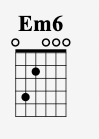
Finally, we have Em6, which uses all 6 strings and is an absolutely beautiful minor chord:
If you’ve struggled to understand the fretboard for RHYTHM and LEAD guitar, and want to discover the easiest and fastest way. Then get your hands on my free Fretboard Guide PDF right here now:
Is Sunny hard to play on guitar?
I would say playing “Sunny” on guitar is going to require an intermediate skill level. The most difficult parts are the chord changes, as they are more sophisticated chords like Em#5 and F#m7b5. And also the modulation, which means all the chords are going to shift around the neck. So, take your time with this one.
What key is Sunny in?
“Sunny”, as recorded by Bobby Hebb, is originally in the key of E minor. The primary scale for the song is the E natural minor scale, which is built using the notes E, F#, G, A, B, C, and D.
However, as the song progresses, it changes keys. It’s going to start in E minor, and then modulates up in 1/2 steps many times until fade-out.
Let’s take a quick look at how these chords relate in the key of E minor. Starting with…
Em
Notes: E, G, B
Function: This is the i chord (tonic) in E minor. It establishes the home key and provides a sense of resolution within the progression.
G7
Notes: G, B, D, F
Function: This chord is not diatonic to E minor. G7 contains an F natural, which acts as a borrowed dominant or a secondary dominant, often leading to C, which is exactly what happens in “Sunny”.
Cmaj7
Notes: C, E, G, B
Function: This is the VI chord (submediant) in E minor. It shares two notes with the tonic (E and G), providing a smooth, melodic shift while giving a more sophisticated, jazzy color with the major 7th.
F#m7b5
Notes: F#, A, C, E
Function: This is the iiø7 chord (half-diminished) in E minor. It functions as a pre-dominant chord leading naturally to the V7 (B7), adding tension and harmonic interest. It’s very common in minor key progressions.
B7
Notes: B, D#, F#, A
Function: This is the V7 chord (dominant 7) in E minor. It creates strong tension that resolves back to the tonic Em, giving a sense of forward motion and resolution.
F13
Notes: F, A, C, Eb, D
Function: This chord is not diatonic to E minor. But it functions like a IV chord coming off of the Cmaj7. Then, it creates a cool chromatic bass line as the next chord in the progression is F#m7b5. All of this adds to the jazzy feel.
Em#5
Notes: E, G#, B# (C)
Function: This is a tonic variant with a raised fifth. It’s a part of the James Bond-style progression I explain in the video above.
Em6
Notes: E, G, B, C#
Function: This is the tonic minor chord with an added 6th. The sixth (C#) creates a dark minor sound and is again a part of the James Bond-style progression.
All right!
That’s my theory breakdown.
Next, let’s look at…
What is the strumming pattern for Sunny?
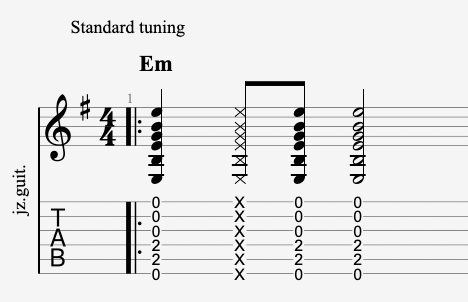
The main underlying feel for “Sunny” is a funky 8th note feel. In 4/4 time, 8th notes divide each beat into two equal parts, creating a steady, walking rhythm. The counting for 8th notes in a measure looks like this:
1 & 2 & 3 & 4 &
The numbers (1, 2, 3, 4) represent the main beats in the measure. The "&" divides each beat into two evenly spaced subdivisions.
When counted out loud, it sounds like:
"One-and, Two-and, Three-and, Four-and."
Here’s an example of a simple backbeat strumming pattern in the style of “Sunny”:
Conclusion
To wrap it up, “Sunny” is a true piece of art. It’s a legendary song that started with tragedy, then Bobby Hebb flipped it into something beautiful, and the rest is history.
Keep practicing, and if you want to learn songs way faster, better understand the fretboard for lead and rhythm, and not waste years spinning your wheels with guitar, grab my free fretboard guide here right now:
Jon MacLennan
Like this blog post? Get Jon’s best guitar lessons straight to your inbox.
Discover the 5 easiest and fastest ways to play the blues scale anywhere on the neck with this FREE PDF GUIDE
