The ULTIMATE “Take It To The Limit” Chords & Guitar Lesson
Here’s one of the Eagles’ most epic ballads.
The song was inspired by real-life tensions within the band. Shortly after, the lead vocalist on this track left the group.
Below, I’m going to share with you some insider tips on the guitar style behind it.
So grab your axe, and let’s dive into this “Take It To The Limit” chords and guitar lesson!
Who Wrote Take It To The Limit?
“Take It to the Limit” was originally written by Randy Meisner, Don Henley, and Glenn Frey of the Eagles. It was first released on their iconic 1975 album titled One of These Nights. “Take It to the Limit” is a slow ballad in a triple meter that’s become one of the Eagles’ most signature tunes.
The song was inspired by touring musicians pushing life to the limits. The road can be brutal with endless weeks of travel, limited sleep, and powerhouse performances expected every night. That's the big idea behind "Take It To The Limit".
Randy Meisner sang the lead and delivered a soaring performance, recorded at the Record Plant in Los Angeles. However, this is easier to do in the studio, with plenty of rest, and on a good day. But recreating it live night after night was unrealistic. Meisner felt a lot of tension, and this added to many conflicts in the band, which eventually led to his departure from the Eagles in 1977.
“Take It to the Limit” was released as a single in 1975 and quickly became a hit, reaching number four on the Billboard Hot 100. It has since been recognized as one of the Eagles’ definitive songs. The track has been covered by multiple artists over the years, including Willie Nelson and Waylon Jennings, emphasizing its influence across country and rock genres.
Now, you may be wondering…
What is the tuning for Take It To The Limit?
The tuning for "Take It To The Limit” is standard tuning. Standard tuning is spelled: E, A, D, G, B, and E.
Here are the strings:
- E (6th string, lowest pitch)
- A (5th string)
- D (4th string)
- G (3rd string)
- B (2nd string)
- E (1st string, highest pitch)
However, for my guitar lesson, I place a capo on the 4th fret. This changes the tuning to:
- G# (6th string, lowest pitch)
- C# (5th string)
- F# (4th string)
- B (3rd string)
- D# (2nd string)
- G# (1st string, highest pitch)
All right!
Now that you know the tuning for “Take It To The Limit,” let’s next talk about…
Take It To The Limit Chords
To play “Take It To The Limit”, you’ll need to know 9 main chords they are G, C, D, B7, Em, Csus2, G/B, D/A, and Am. Keep in mind these are the capo chords. Because of the capo, all these chords can be played in open position.
G is played using all 6 strings like this:
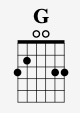
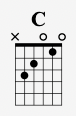
C is played from the 5th string down like so:
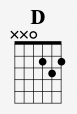
D is played from the 4th string down like this:
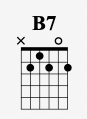
B7 is a great bluesy-sounding chord shape that builds tension in the song. I play it like this:
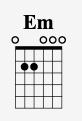
Em uses all 6 strings and is played like this:
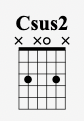
Csus2 is a variation on the C chord above. This one comes in as part of a walk-down progression. I play it like this:
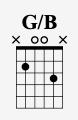
G/B is played on the middle strings like so:
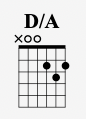
D/A is the same as the D chord above; however, this time we’ll include the open 5th string like this:
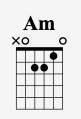
Finally, Am is played from the 5th string down like this:
If you’ve struggled to understand the fretboard for RHYTHM and LEAD guitar, and want to discover the easiest and fastest way. Then get your hands on my free Fretboard Guide PDF right here now:
Is Take It To The Limit hard to play on guitar?
I would say playing “Take It To The Limit” on guitar is going to require an intermediate skill level. The chords themselves are not too difficult. However, the trickiest parts are playing in the triple meter and catching all the walk-ups, walk-downs, and rhythm breaks.So, take your time with this one.
What key is Take It To The Limit in?
“Take It To The Limit”, as recorded by the Eagles, is in the key of B major. The primary scale would be the B major scale, which is built using the notes B, C#, D#, E, F#, G#, and A#.
But I use a capo on the 4th fret and play it in G.
The key of G capo’d up 4 frets is the same as the key of B major.
Let’s take a closer look at how all these (capo) chords relate in the key of G major. Starting with…
G (G major)
Notes: G, B, D
Function: This is the I chord, the tonic of the key. It’s the “home” chord. All the other chords revolve around this one.
C (C major)
Notes: C, E, G
Function: This is the IV chord in the key. The IV moves the harmony away from the tonic without creating tension. It has a beautiful open sound that often leads either back to G or forward to D. It’s the classic subdominant of the key and one of the essential chords in folk, pop, and rock chord progressions.
D (D major)
Notes: D, F#, A
Function: This is the V chord, the dominant. The V creates the strongest pull back to G because F# (its major third) leads upward to G. F# is sometimes called the leading tone. When you want lift, movement, or a sense of “arrival,” the V is the go-to chord.
B7 (B dominant seven)
Notes: B, D#, F#, A
Function: This chord is not in the diatonic key of G major. The dead giveaway is the D# note. This chord functions as a secondary dominant, specifically V7/vi, meaning the dominant of the vi chord (Em). It’s used to add drama and forward motion.
Em (E minor”)
Notes: E, G, B
Function: This is the vi chord, the relative minor of G major. Because it shares two notes with the tonic (G and B), it blends smoothly within the key and often substitutes for G when you want more emotional depth. It commonly appears after B7, since B7 resolves directly into Em.
Csus2 (C suspended 2nd)
Notes: C, D, G
Function: This is a suspended version of the IV chord. The added 2 (D) replaces the usual E, giving the chord a more open, modern sound.
G/B (G with B in the bass)
Notes: B, D, G
Function: Still a I chord, but with the third (B) in the bass. This gives it a more melodic, stepwise quality. In “Take It To The Limit” this is used as a passing chord between C and D/A.
D/A (D with A in the bass)
Notes: A, D, F#
Function: This is still the V chord, but with its fifth (A) in the bass. Putting A in the bass creates a strong sound, and often resolves down to G.
Am (A minor)
Notes: A, C, E
Function: This is the ii chord in the key of G major or the supertonic.
Together, these chords make up some of the most common sets of chords in popular music. Millions of songs use them…
All right!
That’s my theory breakdown.
Next, let’s look at…
What is the strumming pattern for Take It To The Limit?
The main underlying groove for “Take It To The Limit” is a rock groove in triple meter. This can be counted in 3/4, 6/8, or even 12/8. The main idea is groups of 3 quarter notes.
The counting for these quarter notes in a measure looks like this:
1 2 3
1 2 3
1 2 3
1 2 3
Here’s an example of a strumming pattern in the style of “Take It To The Limit”:

Conclusion
To wrap it up, “Take It To The Limit” is one of the Eagles' most powerful ballads.
Keep practicing, and if you want to learn songs way faster, better understand the fretboard for lead and rhythm, and not waste years spinning your wheels with guitar, grab my free fretboard guide here right now:
Jon MacLennan
Like this blog post? Get Jon’s best guitar lessons straight to your inbox.
Discover the 5 easiest and fastest ways to play the blues scale anywhere on the neck with this FREE PDF GUIDE
