Tangled Up In Blue Chords & Guitar Lesson (MOST ACCURATE)
Behold... the opening cut from “Blood on the Tracks,” one of my favorite albums of all time.
Dylan’s lyrics and songwriting are some of the best I’ve ever heard.
Below, I’m going to share some insider tips on the guitar style behind this masterpiece.
So grab your axe, and let’s dive into this “Tangled Up In Blue” chords and guitar lesson!
Who Wrote Tangled Up In Blue?
“Tangled Up In Blue” was written by Bob Dylan and released in early 1975 as the opening track of his legendary album Blood on the Tracks. He wrote the song in the summer of 1974, after a comeback tour with The Band and during a separation from his wife, Sara.
The lyrics are a whimsical masterpiece.
They reflect all kinds of scenes. It's like a hologram of complex and romantic memories. Dylan was also studying painting with artist Norman Raeben during this time. Raeben’s methods emphasized an experience of past, present, and future all simultaneously. And that’s what happens throughout the song’s lyrics. This concept influenced his writing.
Dylan even said himself that “there’s a code in the lyrics, and there’s also no sense of time. You’ve got yesterday, today, and tomorrow all in the same room.”
It’s in part a reflection of a relationship, but it skips around through different stages. From when the woman was first married, to her later working as a cook in the north woods, to a chance meeting in a topless bar, and eventually to life together in a basement apartment on Montague Street.
However, each verse ends with “Tangled Up In Blue,” and ties everything together.
Dylan recorded several versions of the song in various studios but wasn’t happy with how they were turning out. Until he got the most famous Blood On The Tracks version, which was cut at Sound 80 Studios in Minneapolis, on December 30, 1974. In February 1975, the song was released as a single and reached number 31 on the Billboard Hot 100.
Blood on the Tracks is often considered one of Dylan’s best albums. I don’t disagree. It also marked a powerful comeback after a few releases that didn’t take as well.
“Tangled Up In Blue” is a standout on the album.
Now, you may be wondering…
What is the tuning for Tangled Up In Blue?
The tuning for "Tangled Up In Blue," as recorded by Bob Dylan, is standard tuning. Standard tuning is spelled: E, A, D, G, B, and E.
Here are the strings:
- E (6th string, lowest pitch)
- A (5th string)
- D (4th string)
- G (3rd string)
- B (2nd string)
- E (1st string, highest pitch)
All right!
Now that you know the tuning for “Tangled Up In Blue”, let’s next talk about…
Tangled Up In Blue Chords
To play “Tangled Up In Blue”, as recorded by Bob Dylan, you’ll need to know 6 main chords they are A, Asus4, G, D, E, and F#m. Now, the majority of these chords can be played open. However, there is one bar chord. Let’s take a look at a few ways these shapes can be played on the fretboard.
A is played from the 5th string down like this:
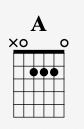
To change to Asus4, you only move one note, the C# on the 2nd string, moves up one fret to the note D, like this:
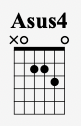
G can be played in a folk style like so:
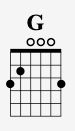
D is played as a standard (campfire) chord from the 4th string down like this:
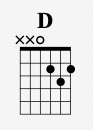
E is a beautiful chord played using all 6 strings like this:

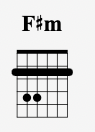
Finally, F#m is the one bar chord. I play it using all 6 strings like this:
If you’ve struggled to understand the fretboard for RHYTHM and LEAD guitar, and want to discover the easiest and fastest way. Then get your hands on my free Fretboard Guide PDF right here now:
Is Tangled Up In Blue hard to play on guitar?
I would say playing “Tangled Up In Blue” on guitar is going to require an intermediate skill level. While the majority of the chords in the song are open position (campfire) chords. There is one bar chord, a 2/4 bar, and also some 16th note syncopations that push this song out of the beginner level. So, take your time with this one.
What key is Tangled Up In Blue in?
“Tangled Up In Blue,” as recorded by Bob Dylan, is in the key of A major. The primary scale used in the song is the A major scale, which is built from the notes A, B, C#, D, E, F#, and G#.
Let’s break down how these chords function in the key of A major:
A major
Notes: A, C♯, E
Function: This is the I chord. It’s the tonal center and provides a strong sense of resolution and “home.”
Asus4 (A suspended 4th)
Notes: A, D, E
Function: A variation of the I chord. The third (C♯) is replaced with the fourth (D), which creates tension that usually resolves back to A major. This is common in rock and folk styles.
G major
Notes: G, B, D
Function: G is not diatonically in the key of A major. It’s a ♭VII chord or sub-tonic. This comes from the Mixolydian mode and is used as a borrowed chord. It creates a strong, contrasting color, and it’s used during the refrain when Dylan sings, “Tangled Up In Blue”. It’s the one chord that’s not in the key and has a strong emotional impact.
D major
Notes: D, F♯, A
Function: This is the IV chord (subdominant) in A major. It gives a sense of movement away from the I chord, and often leads to the V chord (E) or resolves back to the I chord (A). It shares two notes with A (A and F♯), which helps it sound stable.
E major
Notes: E, G♯, B
Function: This is the V chord (dominant) in A major. It naturally leads back to the tonic (A) due to the leading tone (G♯). It's the strongest chord to create tension and resolution back home.
F♯ minor
Notes: F♯, A, C♯
Function: This is the vi chord (relative minor) in A major. It shares two notes with A (A and C♯) and provides a more melancholic sound without changing keys.
So that’s the theory. Next, let’s look at…
What is the strumming pattern for Tangled Up In Blue?
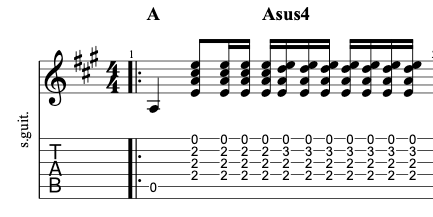
The main underlying groove for “Tangled Up In Blue” is a grooving folk 16th-note feel. In 4/4 time, 16th notes divide each beat into four equal parts. This creates a faster, more detailed rhythm like this:
1 e & a 2 e & a 3 e & a 4 e & a
The numbers (1, 2, 3, 4) represent the main beats in the measure.
The syllables "e," "&," and "a" fill in the subdivisions between each beat.
When counted out loud, it sounds like:
"One-e-and-a, Two-e-and-a, Three-e-and-a, Four-e-and-a."
Here’s an example of a strumming pattern in the style of “Tangled Up In Blue”, that reflects this rhythm heavily:
Conclusion
Bottom line, “Tangled Up In Blue” is some of Dylan’s best work. The lyrics paint pictures in your mind, and the guitar style is a lot of fun to play.
Keep practicing, and if you want to learn songs way faster, better understand the fretboard for lead and rhythm, and not waste years spinning your wheels with guitar, grab my free fretboard guide here right now:
Jon MacLennan
Like this blog post? Get Jon’s best guitar lessons straight to your inbox.
Discover the 5 easiest and fastest ways to play the blues scale anywhere on the neck with this FREE PDF GUIDE
