Crosby, Stills, Nash, & Young – “Teach Your Children” Chords & Guitar Lesson
Here's a song from the classic Crosby, Stills, Nash, and Young album released in 1970 called Déjà Vu.
It’s perfect for creating a sing-along.
And it’s also great for newer players because you only need 4 chords to start jamming it.
Below, I want to share with you some insider tips on the guitar style behind it.
So grab your axe, and let’s dive into this “Teach Your Children” chords and guitar lesson!
Who wrote Teach Your Children?
“Teach Your Children” was originally written by Graham Nash while he was in the band The Hollies. But it wasn’t recorded until he was with Crosby, Stills, Nash & Young. “Teach Your Children” is a song about a timeless struggle – the relationship between kids and parents, and how the world really changes by family dynamics and communication.
The lyrics reflect how parents teach their children, but also how children shape their parents. Earlier versions of this song were performed. But once CSNY started recording it, for their landmark 1970 album Déjà Vu, that’s when it developed into its final form.
Another interesting note is the collaboration between CSNY and the Grateful Dead. You see, Jerry Garcia played pedal steel on this song. This definitely gave the song a more country sound.
The recording took place on November 11, 1969, at Wally Heider Studios, with engineering by Bill Halverson.
Upon its release in 1970, the song reached the Top 20 on the Billboard Hot 100 and also performed strongly on adult contemporary charts. While it wasn’t the group’s highest-charting hit, it became one of their most beloved songs culturally and emotionally, often overshadowing its chart performance in long-term significance.
The arrangement is quite simple. Just acoustic guitars strumming, great vocal harmonies, a simple rhythm section and Jerry Garcia on pedal steel.
Now, you may be wondering…
What is the tuning for Teach Your Children?
The tuning for "Teach Your Children” as recorded by Crosby, Stills, Nash, & Young is standard tuning. They kept things simple. Standard tuning is spelled: E, A, D, G, B, and E.
Here are the strings:
- E (6th string, lowest pitch)
- A (5th string)
- D (4th string)
- G (3rd string)
- B (2nd string)
- E (1st string, highest pitch)
All right!
Now that you know the tuning for “Teach Your Children,” let’s next talk about…
Teach Your Children Chords
To play “Teach Your Children”, as recorded by Crosby, Stills, Nash, & Young, you only need to know 4 main chords they are D, G, A, and Bm. These chords are a mixture of open and bar chord shapes.
If bar chords are giving you all kinds of aches and pains, and you haven’t yet discovered how to play them effortlessly, go here: https://www.jonmaclennan.com/barchords
Let’s take a look at a few ways these shapes might show up on the fretboard.
D is played from the 4th string down like this:

G is played in a folk style using all 6 strings like so:

A is played in a standard (campfire) style from the 5th string down like this:

Finally, Bm is played as a bar chord in 2nd position like this:

If you’ve struggled to understand the fretboard for RHYTHM and LEAD guitar. and want to discover the easiest and fastest way. Then get your hands on my free Fretboard Guide PDF right here now:
Is Teach Your Children hard to play on guitar?
I would say playing “Teach Your Children” as recorded by Crosby, Stills, Nash, & Young on guitar is going to require a late beginner to intermediate skill level. There are not a lot of chords in the song, so it’s good for newer players. However, there is one bar chord (Bm) that makes it slightly trickier. So, take your time with this one.
What key is Teach Your Children in?
“Teach Your Children”, as recorded by Crosby, Stills, Nash, & Young, is in the key of D major. The primary scale for the song is the D major scale, which is built using the notes D, E, F#, G, A, B, and C#.
Let’s take a look at how these chords all function in the key of D major, starting with…
D
Notes: D, F#, A
Function: This is the I chord, the tonic of D major. It is the harmonic home base. Everything else in the progression is heard in relation to this chord, either moving away from it or resolving to it.
G
Notes: G, B, D
Function: This is the IV chord in D major, the subdominant. It moves away from the tonic without creating strong tension. It provides a nice resting point of openness and expansion. It is one of the most stable supporting chords in the key and often sets up motion toward A or back to D.
A
Notes: A, C#, E
Function: A is the V chord in D major, also known as the dominant. The dominant creates strong forward tension because of the C#, which is the leading tone. The leading tone pulls you towards D. This chord is the primary driver of resolution in the key and strongly wants to return to the tonic.
Bm
Notes: B, D, F#
Function: This is the vi chord in D major, the relative minor. It shares two notes with the tonic chord (D and F#), making it closely related and smooth in movement. It adds a more introspective or emotional quality while still staying inside the diatonic key center.
Taken together, these chords create an awesome journey that the song goes on.
All right!
That’s my theory breakdown.
Next, let’s look at…
What is the strumming pattern for Teach Your Children?
The main underlying groove for “Teach Your Children” is a lilting acoustic swing feel. In swing feel, 8th notes are not evenly spaced like in straight time. Instead of dividing each beat into two equal parts, the beat is felt as a long-short “triplet-like” pulse, where the first note of the pair is stretched and the second is clipped shorter.
In 4/4 time, swing 8ths feel more like:
1 – a 2 – a 3 – a 4 – a
The numbers (1, 2, 3, 4) are still the main beats in the measure, but the “&” is no longer equal. It’s pushed closer to the next beat.
When you count it out loud, it often sounds more like:
“ONE - anduh, TWO - anduh, THREE - anduh, FOUR - anduh”
or even more accurately in a jazz swing feel:
“DAH - da, DAH - da, DAH - da, DAH - da”
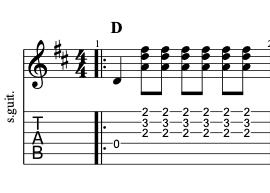
However, instead of strumming all the 8th notes, what I would do is a mixture of quarter notes and 8th notes like this:
Conclusion
To wrap it up, “Teach Your Children” is a powerful song that puts on display the dynamics that happen in a family.
Keep practicing, and if you want to learn songs way faster, better understand the fretboard for lead and rhythm, and not waste years spinning your wheels with guitar, grab my free fretboard guide here right now:
Jon MacLennan
Like this blog post? Get Jon’s best guitar lessons straight to your inbox.
Discover the 5 easiest and fastest ways to play the blues scale anywhere on the neck with this FREE PDF GUIDE
