Eagles – “Tequila Sunrise” Chords & Guitar Lesson
Here’s a song off one of the most iconic albums from the ‘70s.
It’s got a great groove and a timeless sound.
In this post, I’m going to share some insider tips on the guitar style behind it.
So grab your axe, and let’s dive into this “Tequila Sunrise” chords and guitar lesson!
Who wrote Tequila Sunrise?
“Tequila Sunrise” was originally written by Don Henley and Glenn Frey of the Eagles. It was released on their 1973 album Desperado. This song has the classic Eagles sound. It was recorded at Island Studios in London, England, with producer Glyn Johns at the helm. This studio is famous for being home to countless celebrity artists.
The arrangement is pretty simple. It features steady strumming acoustic guitars, light electric leads, and great vocals.
Upon its initial release as a single, “Tequila Sunrise” reached number 64 on the Billboard Hot 100. Although it wasn’t the most massive chart-topping hit compared to later Eagles singles, it became a staple of the band’s live performances and a fan favorite over time.
One other interesting note is that the song inspired the title of the 1988 film Tequila Sunrise, starring Mel Gibson and Michelle Pfeiffer.
Now, “Tequila Sunrise” is considered a classic example of early ’70s California rock. It combines country, rock, and a smooth melodic sound.
Now, you may be wondering…
What is the tuning for Tequila Sunrise?
The tuning for "Tequila Sunrise” as recorded by the Eagles is standard tuning. Standard tuning is spelled: E, A, D, G, B, and E.
Here are the strings:
- E (6th string, lowest pitch)
- A (5th string)
- D (4th string)
- G (3rd string)
- B (2nd string)
- E (1st string, highest pitch)
All right!
Now that you know the tuning for “Tequila Sunrise,” let’s next talk about…
Tequila Sunrise Chords
To play “Tequila Sunrise”, as recorded by the Eagles, you’ll need to know 11 main chords they are G, G6, Am, D, Em, C, Dsus4, Bm, E, B, and A7. These chords are a mix of bar and non-bar chord shapes.
If bar chords are giving you all kinds of aches and pains, and you haven’t yet discovered how to play them effortlessly, go here: https://www.jonmaclennan.com/barchords
Let’s take a look at a few ways these shapes might show up on the fretboard.
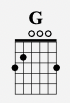
G is played in a folk style using all 6 strings like this:
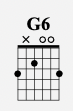
G6 moves the index finger to the note E on the 4th string like so:
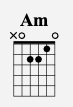
Am is played from the 5th string down like this:
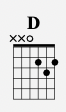
D is played in a simple (campfire) style like so:
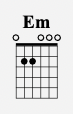
Em is a beautiful open-sounding chord. It uses all 6 strings like this:
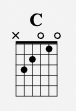
C is played in a typical (campfire) style like this:
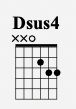
Dsus4 makes just a slight change from the D chord and adds the pinky finger on the 1st string like this:
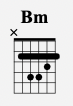
Bm is played as a bar chord in 2nd position like this:
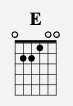
E is another beautiful-sounding open chord that uses all 6 strings like so:
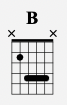
B is a bar chord played on the middle strings in 2nd position like this:
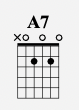
Finally, we have A7. This one is played from the 5th string down like so:
If you’ve struggled to understand the fretboard for RHYTHM and LEAD guitar, and want to discover the easiest and fastest way. Then get your hands on my free Fretboard Guide PDF right here now:
Is Tequila Sunrise hard to play on guitar?
I would say playing “Tequila Sunrise” on guitar, as recorded by the Eagles, is going to require an intermediate skill level. Now, there are ways to simplify it and turn it into an easier version. But the trickiest parts are going to be the bar chords and the quick 16th note rhythms in the strumming pattern. Locking it all in and getting it to sound like the recording is no easy feat. So, take your time with this one.
What key is Tequila Sunrise in?
“Tequila Sunrise”, as recorded by the Eagles, is in the key of G major. The primary scale for the song would be the G major scale, which is built using the notes G, A, B, C, D, E, and F#.
Let’s take a closer look at how these chords relate in the key of G major. Starting with…
G
Notes: G, B, D
Function: This is the I chord, the tonic in the key of G major. It serves as the harmonic home base. It’s the central point of resolution.
G6
Notes: G, B, D, E
Function: This is a tonic variation, adding the sixth (E) to the I chord. G6 softens the sound of the tonic, giving it a slightly jazzier or more open feel while still functioning as the “home” chord.
Am
Notes: A, C, E
Function: This is the ii chord in G major. As a minor chord, it provides gentle tension and motion away from the tonic, often leading to the V chord (D) or back to G.
D
Notes: D, F♯, A
Function: D is the V chord in G major. It creates tension that naturally resolves to G. The F♯ note (sometimes called the leading tone) pulls strongly back to the tonic.
Em
Notes: E, G, B
Function: Em is the vi chord or relative minor of G major. It shares two notes with the tonic (G and B), which makes transitions smooth. Em adds a reflective or slightly melancholic quality to the sound while remaining in the key.
C
Notes: C, E, G
Function: C is the IV chord, the subdominant in G major. This one gives you a sense of movement away from the tonic while still being in the key.
Dsus4
Notes: D, G, A
Function: This is simply a suspended version of the V chord. The third (F♯) being replaced by the fourth (G), creates unresolved tension that usually resolves back to D.
Bm
Notes: B, D, F♯
Function: This is the iii chord in G major. It is a minor chord that shares two notes with the tonic (B and D), allowing smooth movement to other chords like Em or C.
E
Notes: E, G♯, B
Function: E is a non-diatonic chord in G major. The G♯ creates tension against the tonic and is used as a secondary dominant (V/ii) leading toward Am next.
B
Notes: B, D♯, F♯
Function: Another non-diatonic chord. The D♯ introduces strong tension that can resolve to Em (vi chord) or serve as a secondary dominant (V/vi).
A7
Notes: A, C♯, E, G
Function: This is one more secondary dominant (V/V) in the key of G major. It introduces tension that wants to resolve to D (the V chord).
This set of chords allows for a lot of possibilities in the key of G major. It blends diatonic and non-diatonic elements for a rich sound.
All right!
That’s my theory breakdown.
Next, let’s look at…
What is the strumming pattern for Tequila Sunrise?
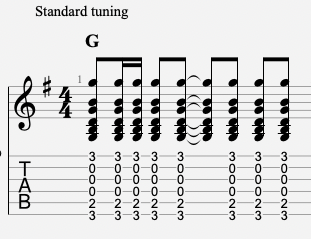
The main underlying groove for “Tequila Sunrise” is a light ‘70s acoustic rock feel. The primary rhythm would be 8th notes. Remember, in 4/4 time, 8th notes divide each beat into two equal parts, creating a driving, steady rhythm like this:
1 & 2 & 3 & 4 &
The numbers (1, 2, 3, 4) represent the main beats in the measure, while the "&" represents the offbeats that add energy and momentum.
When counted out loud, it sounds like:
"One-and, Two-and, Three-and, Four-and."
A great option is to strum all 8th notes. Or, you could also add in some 16th notes as well.
Conclusion
To wrap it up, “Tequila Sunrise” is classic Eagles repertoire. There are so many great guitar fundamentals you can learn from studying great recordings.
Keep practicing, and if you want to learn songs way faster, better understand the fretboard for lead and rhythm, and not waste years spinning your wheels with guitar, grab my free fretboard guide here right now:
Jon MacLennan
Like this blog post? Get Jon’s best guitar lessons straight to your inbox.
Discover the 5 easiest and fastest ways to play the blues scale anywhere on the neck with this FREE PDF GUIDE
