Steve Miller Band – The Joker Chords & Guitar Lesson
Here’s a legendary song from the ‘70s recorded at Capitol Records in Hollywood.
It’s only got 2 sections.
And it’s for sure to get the crowd going.
Below, I’m going to share some insider tips on the guitar style behind it.
So grab your axe, and let’s dive into this “The Joker” chords and guitar lesson!
Who Wrote The Joker?
"The Joker" by the Steve Miller Band was primarily written by Steve Miller himself. However, he did use lyrics from the 1954 R&B song "Lovey Dovey," so he ended up crediting Eddie Curtis and Ahmet Ertegun as well.
“The Joker” is one of the most iconic songs of the 1970s. It’s got a great laid-back groove and feel that defined a new era for the band.
The song is a bit vague in its meaning. It sings of nicknames Miller had picked up, drugs, and women in a playful manner.
"The Joker" was recorded in the United States and marked a pivotal point in the Steve Miller Band's career. It was part of the album of the same name and was released in 1973.
This track showed a shift for the band from a psychedelic blues-rock sound to a more mainstream, pop-friendly style that would define their later success.
"The Joker" was a massive success. It reached No. 1 on the Billboard Hot 100 chart in 1974. And the song is still played today in countless cover bands and at parties.
Now, you may be wondering…
What is the tuning for The Joker?
The tuning for "The Joker” is down a whole step. This allows the song to be played in the key of G on guitar. Down 1 step is spelled: D, G, C, F, A, and D.
Here are the strings:
- D (6th string, lowest pitch)
- G (5th string)
- C (4th string)
- F (3rd string)
- A (2nd string)
- D (1st string, highest pitch)
If you don’t want to tune down, you can play it in standard as well. (See alternative lesson below).
All right!
Now that you know the tuning for “The Joker”, let’s next talk about…
The Joker Chords
To play “The Joker”, you only need to know 3 main chords they are G, C, and D. All of these chords can be played in open position, using nice (campfire) style chords.
Let’s take a look at a few ways these shapes can be played on the fretboard.
G is played using all 6 strings like this:

C is played from the 5th string down like so:
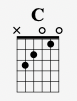
Finally, D is played from the 4th string down like this:
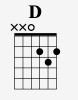
If you’ve struggled to understand the fretboard for RHYTHM and LEAD guitar, and want to discover the easiest and fastest way. Then get your hands on my free Fretboard Guide PDF right here now:
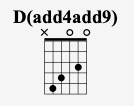
Note: In the video above, I also use another variation on the D chord. This D chord has a fancier name. You could call it D(add4add9). However, it’s simply the C chord above shifted up 2 frets like this:
Is The Joker hard to play on guitar?
I would say playing “The Joker” on guitar is going to require a late beginner to intermediate skill level. There are only 3 chords, so from a chord progression standpoint it could be considered beginner. However, the 16th notes in the riff are where things get trickier. Because, to play these 16th notes up to speed, a player should have some alternate picking skills, which is usually not in a beginner’s wheelhouse. At least at this tempo. So, take your time with this one.
What key is The Joker in?
“The Joker”, as recorded by Steve Miller Band, is in the key of F major. However, the acoustic guitar is tuned down 1 whole step and plays it in G.
G down 1 whole step = F concert pitch
However, for all practical (guitar) purposes, I simply think of it as being in the key of G when I play it.
Let’s break down the chords and how they function in the key of G:
G major (G)
Notes: G, B, D
Function: This is the I chord, the tonic. It is the central, most stable chord in the key of G major. It provides a sense of rest and resolution. Any progression in this key will feel like it is "home" when it resolves back to the G major chord.
C major (C)
Notes: C, E, G
Function: This is the IV chord, the subdominant. It is built on the fourth degree of the G major scale. The C major chord is a very common chord to show up in the key of G. It often leads to the dominant (D) chord, or back to G in some way.
D major (D)
Notes: D, F♯, A
Function: This is the V chord, the dominant. It is built on the fifth degree of the G major scale. The D major chord creates the most tension and a strong pull back to the tonic (G). The F♯, which is the leading tone of the G major scale, gives this chord its powerful drive toward resolution. This V to I movement (D to G) is the most fundamental and important cadence in Western music, and, to determine a key center.
All right!
So that’s the theory. Next, let’s look at…
What is the strumming pattern for The Joker?
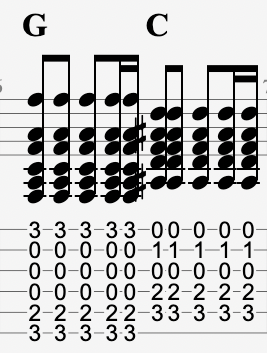
The main underlying feel for “The Joker” is a light 16th note rock feel. It’s got a hint of funkyness to it. In 4/4 time, 16th notes divide each beat into four equal parts, creating a quicker, more flowing rhythm. The counting for 16th notes in a measure looks like this:
1 e & a 2 e & a 3 e & a 4 e & a
The numbers (1, 2, 3, 4) represent the main beats in the measure. The "e," "&," and "a" divide each beat into four evenly spaced subdivisions.
When counted out loud, it sounds like:
"One-ee-and-a, Two-ee-and-a, Three-ee-and-a, Four-ee-and-a."
Here’s an example of a strumming pattern in the style of “The Joker”:
The Joker Guitar Lesson (Standard tuning)
For those who want to play the song in the original key, and NOT tune down.
Check out this lesson below. This lesson changes the guitar part and plays it in the key of F. This means you won’t have to tune down to be in key. However, it does present the issue of now requiring bar chords.
If bar chords are giving you all kinds of aches and pains, and you haven’t yet discovered how to play them effortlessly, go here: https://www.jonmaclennan.com/7mistakes
Conclusion
Bottom line, “The Joker” is a great crowd pleaser. It’s sure to get people up on the dance floor and having a good time.
So keep practicing, and if you want to learn songs way faster, better understand the fretboard for lead and rhythm, and not waste years spinning your wheels with guitar, grab my free fretboard guide here right now:
Jon MacLennan
Like this blog post? Get Jon’s best guitar lessons straight to your inbox.
Discover the 5 easiest and fastest ways to play the blues scale anywhere on the neck with this FREE PDF GUIDE
