Cindy Lauper – Time After Time Chords & Guitar Lesson
Here’s one of Cyndi Lauper’s biggest hits.
It’s a powerful ballad that later became an important crossover tune between pop and jazz.
There’s only a handful of chords you’ll need to know.
Below, I’m going to share with you some insider tips on the guitar style behind it.
So grab your axe, and let’s dive into this “Time After Time” chords and guitar lesson!
Who Wrote Time After Time?
“Time After Time” was written by American singer-songwriter Cyndi Lauper and musician Rob Hyman. It was released in 1983 as part of Lauper’s debut album She’s So Unusual.
The story behind “Time After Time” is quite lucky.
You see, Lauper had essentially finished recording her debut album with hits like "Girls Just Want to Have Fun" and "She Bop" already in the can. But producer Rick Chertoff felt the record was short just one more song. The initial inspiration for the title came when Lauper saw an ad in the TV Guide for the 1979 science fiction film Time After Time, starring Malcolm McDowell as H.G. Wells.
She used this title as a temporary placeholder, but then ended up keeping it. “Time After Time” really reflected the deeper meaning of the song about unconditional love. Through thick and thin.
The song was recorded fast at the Record Plant studio in New York City in June 1983. Hyman said they "just caught the lightning," and much of the instrumentation was lock in on either the first or second take.
When "Time After Time" was released as the second single from the album, it became a smash hit. It was Lauper's first number-one single on the prestigious U.S. Billboard Hot 100 chart, where it remained for two weeks. It also reached number three on the UK Singles Chart.
Over the years, there have been many cover versions, including a moody version done by the famous jazz trumpet player Miles Davis. This marked an interesting crossover between pop and jazz, which still continues to this day.
Now, you may be wondering…
What is the tuning for Time After Time?
The tuning for "Time After Time” is standard tuning. Standard tuning is spelled: E, A, D, G, B, and E.
Here are the strings:
- E (6th string, lowest pitch)
- A (5th string)
- D (4th string)
- G (3rd string)
- B (2nd string)
- E (1st string, highest pitch)
All right!
Now that you know the tuning for “Time After Time”, let’s next talk about…
Time After Time Chords
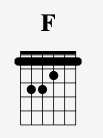
To play “Time After Time”, you only need to know 5 main chords they are F, G, Em, Dm/C, and C. Most of these chords can be played in open position. However, the F is the one bar chord.
If bar chords are giving you all kinds of aches and pains, and you haven’t yet discovered how to play them effortlessly, go here: https://www.jonmaclennan.com/7mistakes
Let’s take a look at a few ways these shapes can be played on the fretboard:
F is the one bar chord here, I play it in 1st position using all 6 strings like this:
G is played using all 6 strings like this:
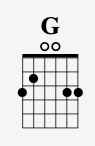
(Note: In the video above, I often omit the 5th string from the above chord. However, either version is acceptable. Use what one feels best for you.)
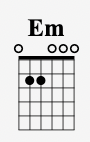
Em is a beautiful chord that uses all 6 strings like this:
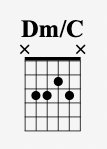
Dm/C is a tricky one. I play it on the middle strings like so:
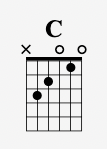
Finally, we have good ole C, which I play in a standard (campfire) position like this:
If you’ve struggled to understand the fretboard for RHYTHM and LEAD guitar, and want to discover the easiest and fastest way. Then get your hands on my free Fretboard Guide PDF right here now:
Is Time After Time hard to play on guitar?
I would say playing “Time After Time” on guitar is going to require an intermediate skill level. The trickiest parts are the verse chord progression using the Dm/C to C change, the rhythm, and then, of course, the F bar chord. Because of these difficulties, I would place it out of the beginner level and into intermediate. So, take your time with this one.
What key is Time After Time in?
“Time After Time”, as recorded by Cyndi Lauper, is in the key of C major. The primary scale for the song is the C major scale, which is built using the notes C, D, E, F, G, A, and B.
Let’s break down the chords and how they function in the key of C major:
C
Notes: C, E, G
Function: This is the I chord, the tonic. It is the "home" chord in the key of C major. Playing this one will give you a sense of stability and resolution.
Dm/C
Notes: D, F, A (over a C bass note)
Function: This is the ii chord, the supertonic, with a C in the bass, one of the trickier chords to play in the song. The root chord (Dm) is built on the second degree of the C major scale. The sound functions much like a suspension chord, creating motion back toward the I chord, C.
Em
Notes: E, G, B
Function: This is the iii chord, the mediant. It is built on the third degree of the C major scale. It can act as a substitute for the tonic chord (C), as it shares notes (E and G) with the I chord, but provides a slightly different, more open sound.
F
Notes: F, A, C
Function: This is the IV chord in the key of C, the subdominant. This one creates a feeling of movement away from the tonic, without being too dissonant.
G
Notes: G, B, D
Function: This is the V chord, the dominant. It is built on the fifth degree of the C major scale. G creates the strongest pull back to the tonic (C). This establishes the key.
All right!
So that’s the theory. Next, let’s look at…
What is the strumming pattern for Time After Time?
The main underlying feel for “Time After Time” is a light 8th-note rock ballad feel. In 4/4 time, 8th notes divide each beat into two equal parts, creating a steady, walking rhythm. The counting for 8th notes in a measure looks like this:
1 & 2 & 3 & 4 &
The numbers (1, 2, 3, 4) represent the main beats in the measure. The "&" divides each beat into two evenly spaced subdivisions.
When counted out loud, it sounds like:
"One-and, Two-and, Three-and, Four-and."
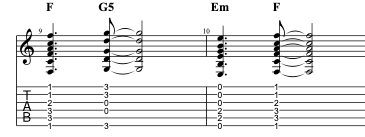
However, I don’t play on all the 8th notes. That’s just the main feel. Instead, a great approach for a “Time After Time” strumming pattern is to use a syncopated rhythm like this:
Conclusion
To wrap it up, “Time After Time” is a legendary song that propelled Cyndi Lauper’s music career in the ‘80s. The fact that many jazz musicians and pop bands still cover it today shows the power of its legacy.
Keep practicing, and if you want to learn songs way faster, better understand the fretboard for lead and rhythm, and not waste years spinning your wheels with guitar, grab my free fretboard guide here right now:
Jon MacLennan
Like this blog post? Get Jon’s best guitar lessons straight to your inbox.
Discover the 5 easiest and fastest ways to play the blues scale anywhere on the neck with this FREE PDF GUIDE
