Pink Floyd – “Time” Chords & Guitar Lesson
One of my favorite albums of all time is Pink Floyd’s “Dark Side Of The Moon”.
From the sound design to the guitar parts to the songwriting, it’s a complete masterclass from top to bottom.
Below, I’m going to share some insider tips on the guitar style behind one of the most popular songs off the album.
So grab your axe, and let’s dive into this “Time” chords and guitar lesson!
Who wrote Time?
“Time” was written by all four members of Pink Floyd – Roger Waters, David Gilmour, Nick Mason, and Richard Wright. It was included on their most legendary album, The Dark Side of the Moon, released in 1973.
While all four members share writing credit, the lyrics were primarily written by Roger Waters. The song is about the passage of time. It hits many generations differently. Younger kids hear it as a warning, while older people may hear it as a confession. The central idea centers around how people often assume there will always be more time later.
But this isn’t the case.
Life flies by in the blink of an eye.
By the early 1970s, the band members were in their late twenties and early thirties, and Waters has said that he began to feel the weight of adulthood and responsibility creeping in. Unlike many rock songs about rebellion or romance, “Time” confronts an age-old truth no one escapes… mortality.
One of my favorite parts of the track is the opening, which is all sound effects. Engineer Alan Parsons recorded real clocks, alarms, and timepieces from an antique shop owned by sound engineer Peter Watts, who happened to be Roger Waters’ father. Each clock was recorded separately and then carefully synced up on tape so they would all ring at once.
It’s an incredible sound and is a great metaphor to wake up to the message of the song.
“Time” was recorded at Abbey Road Studios in London between 1972 and 1973. Pink Floyd put to work the studio’s advanced multitrack capabilities for the time. They spent endless hours refining the sound, and it shows.
While “Time” itself was not released as a single, when The Dark Side of the Moon was released, it became one of the most successful and influential albums in music history.
Now, you may be wondering…
What is the tuning for Time?
The tuning for "Time” is standard tuning. Standard tuning is spelled: E, A, D, G, B, and E.
Here are the strings:
- E (6th string, lowest pitch)
- A (5th string)
- D (4th string)
- G (3rd string)
- B (2nd string)
- E (1st string, highest pitch)
All right!
Now that you know the tuning for “Time,” let’s next talk about…
Time Pink Floyd Chords
To play “Time”, as recorded by Pink Floyd, you’ll need to know 15 main chords they are F#m, A, E, Dmaj7, Amaj7, C#m, Bm, Bm7, F/B, Em9, Cmaj7, Fmaj7, G, D7#9, and Ebdim.
These chords are a combination of open and bar chords.
If bar chords are giving you all kinds of aches and pains, and you haven’t yet discovered how to play them effortlessly, go here: https://www.jonmaclennan.com/barchords
Let’s take a look at a few ways these shapes might show up on the fretboard.
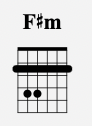
F#m is a bar chord played in 2nd position and using all 6 strings like this:
A is played from the 5th string down like so:

E is a beautiful-sounding open chord that uses all 6 strings like so:

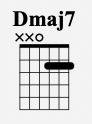
Dmaj7 is played with one finger in the fretting hand like this:
Amaj7 takes the A chord above and makes it slightly jazzy, like so:

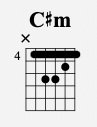
C#m is a bar chord played from the 5th string down like this:
Bm is played as a bar chord in 2nd position like this:

Bm7 takes the previous shape and makes it a little more jazzy, like so:

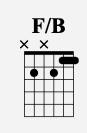
F/B is a dissonant but beautiful-sounding chord. I play it like this:
From there we have...
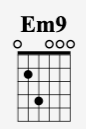
Em9, which is a big open-sounding chord that uses all 6 strings. It’s very close to an open Em chord you just change one note like this:
Then we have Cmaj7 like this:

For Fmaj7, I use my fretting hand thumb on the low 6th string. If this is uncomfortable for you, just remove the bass note and play from the 4th string down.
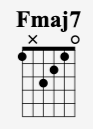
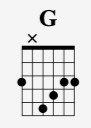
Then I take the same shape and shift it up 2 frets to the 3rd fret. I also bar down and cover the 1st string on the 3rd fret like this:
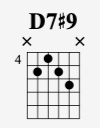
D7#9 (aka the “Jimi Hendrix chord”) is played in the 4tth position like this:
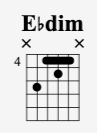
And finally, Ebdim (a chord a lot of lessons don’t play right) is played like this:
If you’ve struggled to understand the fretboard for RHYTHM and LEAD guitar, and want to discover the easiest and fastest way. Then get your hands on my free Fretboard Guide PDF right here now:
Is Time hard to play on guitar?
I would say playing “Time” on guitar is going to require an advanced guitar skill level. There are many tricky parts from the funky rhythm, to the soaring guitar solos, to the complex harmony with chords like F/B and Ebdim. Putting everything together and getting a clean sound with a tight rhythm is going to require many skills. So, take your time with this one.
What key is Time in?
“Time”, as recorded by Pink Floyd, is in the key of F# minor. The primary scale for the song would be the F# minor scale, which is built using the notes F#, G#, A, B, C#, D, and E.
Let’s take a closer look at how these chords relate in the key of F# minor. Starting with…
F#m
Notes: F#, A, C#
Function: This is the i chord, the tonic of F# minor. It’s “home”. All the chords revolve around this center.
A
Notes: A, C#, E
Function: This is the III chord in F# minor, sometimes called the relative major. It shares two notes with F#m, which makes the move between them very smooth and natural. This is one of the first moves in “Time”.
E
Notes: E, G#, B
Function: This is the VII chord in F# minor. It’s diatonic and often functions as a dominant substitute in minor keys, especially in rock and folk styles.
Dmaj7
Notes: D, F#, A, C#
Function: This is the VImaj7 chord in F# minor. The basic VI chord (D major) is fully diatonic, and adding the major seventh (C#) gives it a lush, and jazzy sound.
C#m
Notes: C#, E, G#
Function: This is the v chord in F# minor. In natural minor, the v chord is minor rather than dominant, so it creates gentler tension compared to a major V.
Bm
Notes: B, D, F#
Function: This is the iv chord in F# minor. It’s a diatonic minor chord that creates a move away from the i chord but still stays in key.
F/B
Notes: B, F, A, C
Function: This is a highly non-diatonic slash chord with B in the bass and an F major triad on top. The F natural clashes strongly with the key of F# minor, creating sharp tension. As ugly as it is, this transitions into the next chord beautifully…
Em9
Notes: E, G, B, D, F#
Function: This chord is built on the VII degree but uses E minor instead of E major, introducing the non-diatonic G natural.
Cmaj7
Notes: C, E, G, B
Function: At this point, we’ve left the key of F#m and are now in a Em/Gmajor tonality, which would make this a IV chord.
Fmaj7
Notes: F, A, C, E
Function: This chord is a subtonic to G major or a half step below the F#m tonic.
G
Notes: G, B, D
Function: This is the relative major or Em the new key…
Then we transition to the next song with these two chromatic chords.
D7#9
Notes: D, F#, A, C, F
Ebdim
Notes: Eb, Gb, A
Taken together, these chords show how F# minor can support both strict diatonic harmony and a wide array of borrowed, chromatic, and blues-influenced chords.
All right!
That’s my theory breakdown.
Next, let’s look at…
What is the strumming pattern for Time?
The main underlying groove for “Time” is a slow, funky rock feel. It’s primarily 8th note driven; however, some 16th notes do slip in. Remember – in 4/4 time, 8th notes divide each beat into two equal parts, creating a steady, driving rhythm. The counting for 8th notes in a measure looks like this:
1 & 2 & 3 & 4 &
The numbers (1, 2, 3, 4) represent the main beats in the measure. The "&" divides each beat into two evenly spaced subdivisions.
When counted out loud, it sounds like:
"One-and, Two-and, Three-and, Four-and."
This gives the tune a strong and consistent forward motion
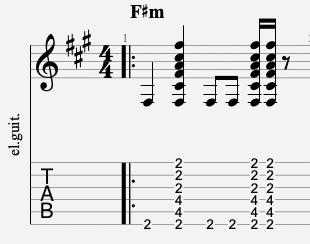
Here’s an example of a strumming pattern using 1/4ths, 8ths, and 16th notes in the style of “Time”:
Conclusion
To wrap it up, “Time” is an incredible tune from one of the highest-selling albums of all time.
Keep practicing, and if you want to learn songs way faster, better understand the fretboard for lead and rhythm, and not waste years spinning your wheels with guitar, grab my free fretboard guide here right now:
Jon MacLennan
Like this blog post? Get Jon’s best guitar lessons straight to your inbox.
Discover the 5 easiest and fastest ways to play the blues scale anywhere on the neck with this FREE PDF GUIDE
