Cat Stevens – Wild World Chords & Guitar Lesson
If you like blending rhythm and lead, then I think you’re going to enjoy this post.
It’s on a song that’s become a singer-songwriter classic.
Below, I’m going to share some insider tips on the guitar style behind it.
So grab your axe, and let’s dive into this “Wild World” chords and guitar lesson!
Who Wrote Wild World?
Wild World” is a classic acoustic folk tune written and recorded by the English singer-songwriter Cat Stevens (a.k.a Yusuf Islam). It was placed on his iconic album Tea for the Tillerman, released in 1970.
The song sings about a man losing his girl. She extracted all she could from him and then left for greener pastures. Somehow still in love, the man offers her a mixture of well-wishes and cautionary advice. He tries to warn her of the bad out there, and still shows masculine virtue and care for her.
The story most closely associated with the song's inspiration is the end of Stevens' relationship with American actress Patti D'Arbanville. They had been a couple for about two years, and the breakup was much harder on Stevens. "Wild World" was recorded as part of the sessions for the Tea for the Tillerman album, which was most likely done somewhere in London around 1970.
"Wild World" was released as a single in late 1970 and performed well. It peaked at No. 11 on the US Billboard Hot 100 chart in 1971. It is credited with giving the entire album the commercial "kick" it needed to become widely played on FM radio.
Since then, it’s become a staple of many covers bands and, of course, singer-songwriter musicians.
Now, you may be wondering…
What is the tuning for Wild World?
The tuning for "Wild World,” as recorded by Cat Stevens, is standard tuning. Standard tuning is spelled: E, A, D, G, B, and E.
Here are the strings:
- E (6th string, lowest pitch)
- A (5th string)
- D (4th string)
- G (3rd string)
- B (2nd string)
- E (1st string, highest pitch)
All right!
Now that you know the tuning for “Wild World,” let’s next talk about…
Wild World Chords
To play “Wild World”, you’ll need to know 7 main chords they are Am, D7, G, C, F, Dm, and E7.
Some of these chords will be played as open chords and others as bar chord shapes. If bar chords are giving you all kinds of aches and pains, and you haven’t yet discovered how to play them effortlessly, go here: https://www.jonmaclennan.com/7mistakes
Let’s take a look at a few ways these shapes can be played on the fretboard:
Am is played in open position from the 5th string down like so:
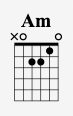
D7 is a great folk and blues style chord played from the 4th string down like this:
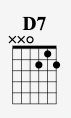
G I play with a 2-finger style like this:
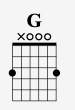
C is the chord for the key. The best way to play it is just to use this cowboy chord like so:
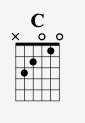
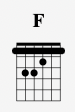
F is a bar chord played in 1st position using all 6 strings like this:
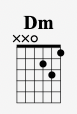
Dm is played from the 4th string down like so:
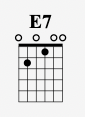
Finally, E7 is played using all 6 strings like this:
If you’ve struggled to understand the fretboard for RHYTHM and LEAD guitar, and want to discover the easiest and fastest way. Then get your hands on my free Fretboard Guide PDF right here now:
Is Wild World hard to play on guitar?
I would say playing “Wild World” on guitar is going to require an intermediate skill level. The chords are not too difficult. But getting the rhythms right, and the quick 16th note fills in between the chords, are the trickiest parts. So, take your time with this one.
What key is Wild World in?
“Wild World”, as recorded by Cat Stevens, is in the key of C major. The primary scale for the song is the C major scale, which is built using the notes C, D, E, F, G, A, and B.
However, not all the chords fit the diatonic scale of C major. Let’s look at a quick breakdown of how the chords relate in the key of C major. Starting with…
Am (A minor)
Notes: A, C, E
Function: This is the vi chord, the relative minor. The song begins on this chord, it also tonicizes Am at times throughout the tune.
D7 (D dominant 7th)
Notes: D, F♯, A, C
Function: This chord is not diatonic to C major (the diatonic ii chord is Dm). It is a secondary dominant, specifically the V7 of the V chord (Dominant 7th of the Dominant). The F♯ (the raised 3rd) acts as the leading tone to G. It creates a strong, temporary pull toward the G major (V) chord, which eventually resolves to C.
G (G major)
Notes: G, B, D
Function: This is the V chord, the dominant. It is the most functionally powerful chord in the key, creating the strongest harmonic tension. The B (the leading tone of the C scale) gives the chord a clear, driving force that screams to resolve back to the I chord or “home”.
C (C major)
Notes: C, E, G
Function: This is the I chord, the tonic or “home”. It is the center of the key.
F (F major)
Notes: F, A, C
Function: This is the IV chord, the subdominant. It is a fundamental, stable, diatonic chord that is often used to begin movement away from the tonic.
Dm (D minor)
Notes: D, F, A
Function: This is the ii chord, the supertonic minor. This one often precedes the V (G) chord.
E7 (E dominant 7th)
Notes: E, G♯, B, D
Function: This chord is not diatonic to C major (the diatonic iii chord is Em). It is a secondary dominant, specifically the V7 of the vi chord (Dominant 7th of the relative minor). The G♯ (the raised 3rd) acts as the leading tone to A. This chord is used to tonicize the Am. This occurs during the transition from the chorus to the verse.
All right!
That’s my theory breakdown. Next, let’s look at…
What is the strumming pattern for Wild World?
The main underlying feel for “Wild World” is a slow, percolating 16th note folk feel. In 4/4 time, 16th notes divide each beat into four equal parts, creating a quicker, more flowing rhythm. The counting for 16th notes in a measure looks like this:
1 e & a 2 e & a 3 e & a 4 e & a
The numbers (1, 2, 3, 4) represent the main beats in the measure. The "e," "&," and "a" divide each beat into four evenly spaced subdivisions.
When counted out loud, it sounds like:
"One-ee-and-a, Two-ee-and-a, Three-ee-and-a, Four-ee-and-a."
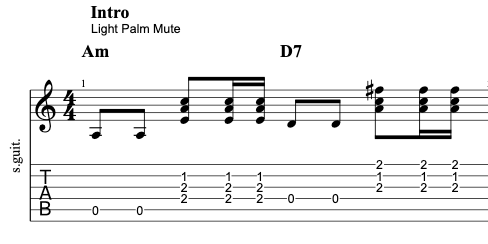
However, the guitar rhythm doesn’t just play all 16th-notes. It blends bass-note strums, palm muting, 8th notes, 16th notes, and even fills in the chorus section. Here’s an example of a rhythm pattern in the style of “Wild World”:
Conclusion
To wrap it up. “Wild World” has become a singer-songwriter classic. From its original inception, demonstrating male protection and provision for someone he loved, to a staple of many cover bands and party song setlists.
So keep practicing, and if you want to learn songs way faster, better understand the fretboard for lead and rhythm, and not waste years spinning your wheels with guitar, grab my free fretboard guide here right now:
Jon MacLennan
Like this blog post? Get Jon’s best guitar lessons straight to your inbox.
Discover the 5 easiest and fastest ways to play the blues scale anywhere on the neck with this FREE PDF GUIDE
